The jurema plant is a fascinating tropical species known for its history, ecological adaptability, and traditional importance in parts of Latin America. Scientifically known as Mimosa tenuiflora, it belongs to the legume family, Fabaceae, and occurs naturally across parts of Mexico, Central America, northern South America, and Brazil.
Also known by names such as jurema preta, the plant has attracted interest because of its distinctive botanical characteristics and its long association with traditional plant knowledge.
In this guide, we will explore the jurema plant, including its scientific classification, natural range, physical characteristics, habitat, traditional significance, and how it relates to other plants sometimes called jurema.
Internal link opportunity: Link the phrase “Mimosa tenuiflora” to your existing botanical or Mimosa Hostilis educational article.
What Is the Jurema Plant?
The jurema plant generally refers to Mimosa tenuiflora, a woody member of the Fabaceae family.
Kew’s Plants of the World Online recognizes Mimosa tenuiflora as the accepted scientific name. The species has historically appeared under several other names, including Mimosa hostilis and Acacia jurema.
This is important because older books, websites, herbarium records, and commercial descriptions may use different botanical names for the same species.
Basic botanical classification
| Classification | Name |
|---|---|
| Kingdom | Plantae |
| Family | Fabaceae |
| Genus | Mimosa |
| Species | Mimosa tenuiflora |
| Common names | Jurema, Jurema Preta, Tepezcohuite |
| Growth form | Shrub or small tree |
Kew records the species as a shrub or tree and places it within the Fabaceae family and Mimosa genus.
Kew Plants of the World Online — Mimosa tenuiflora
Why Is It Called Jurema?
The name jurema is a traditional common name associated with Mimosa tenuiflora. Kew’s botanical resources also list Jurema Preta as a vernacular name.
However, common plant names can vary significantly between countries and regions. A name used for one species in one location may occasionally be applied to another related species elsewhere.
For that reason, scientific identification is more reliable than relying only on a common name.
When researching the jurema plant, the scientific name Mimosa tenuiflora is particularly useful because it helps distinguish the plant from other species that may also be called jurema.
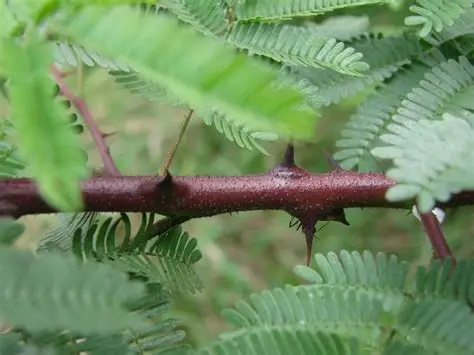
Where Does the Jurema Plant Grow?
The natural distribution of the this tree extends from southern Mexico through parts of Central and northern South America, including northeastern Brazil. Kew records the species as native to countries including Mexico, Colombia, El Salvador, Honduras, Nicaragua, Panama, Venezuela, and several regions of Brazil.
Its distribution demonstrates the plant’s ability to survive in tropical environments with varying conditions.
Natural range includes:
- Mexico
- Central America
- Colombia
- Venezuela
- northeastern Brazil
- other areas within its documented native range
The species is particularly associated with tropical environments, and Kew describes it as growing primarily in the wet tropical biome.
What Does the Jurema Plant Look Like?
One of the easiest ways to understand the jurema plant is to look at its overall growth form.
Mimosa tenuiflora can grow as a shrub or small tree, developing woody stems and branches. Its foliage belongs to the characteristic leaf structure associated with members of the Mimosa genus.
Like other legumes, the plant belongs to a large botanical family that includes numerous trees, shrubs, herbs, and economically important plants.
When identifying a this plant, researchers should consider multiple characteristics rather than relying on a single feature.
Important identification characteristics include:
- Overall shrub or tree growth
- Woody branches
- Compound foliage
- Fine leaflets
- Characteristic flowering structures
- Habitat and geographic location
- Bark and stem characteristics
- Botanical comparison with related species
Because several Mimosa species can have superficially similar characteristics, geographic location and botanical identification are important when determining a species.
Jurema Plant and the Fabaceae Family
The jurema plant belongs to the Fabaceae, commonly called the legume or bean family.
Fabaceae is one of the world’s major flowering-plant families and contains a remarkable range of species. Members include trees, shrubs, vines, and herbaceous plants.
Being part of Fabaceae also places Mimosa tenuiflora within a group of plants that are ecologically important in many tropical ecosystems.
Jurema Plant Habitat
Understanding the natural habitat of the jurema plant helps explain its distribution and ecological role.
The species occurs in tropical regions and has demonstrated an ability to establish itself across different environments within its native range. Kew describes Mimosa tenuiflora as primarily associated with wet tropical biomes.
The plant’s natural environment can influence:
- Plant size
- Branch development
- Leaf growth
- Flowering
- Reproduction
- Local ecological relationships
Environmental factors such as rainfall, temperature, soil conditions, sunlight, and competition from surrounding vegetation can all influence plant development.
Traditional Importance of Jurema
The jurema plant has a long history of association with traditional plant knowledge in Latin America.
Historical and ethnobotanical sources have documented social and medicinal uses of Mimosa tenuiflora. Kew’s database records uses associated with medicine, animal food, fuel, materials, and social practices.
It is important, however, to distinguish traditional use from scientifically established medical treatment.
Traditional knowledge can provide valuable information about how communities have interacted with plants over generations, but traditional use alone does not establish that a plant product is safe or medically effective for a particular condition.
Jurema Plant and Tepezcohuite
Another interesting name associated with Mimosa tenuiflora is tepezcohuite.
Kew’s botanical database lists tepezcohuite among the common names associated with this species.
This name is particularly associated with traditional and cosmetic discussions surrounding the plant.
tepezcohuite cream and skincare
Jurema Plant vs. Mimosa Hostilis
People researching the jurema plant may encounter the name Mimosa hostilis.
This is because Mimosa hostilis is listed by Kew as a synonym of Mimosa tenuiflora.
You may therefore encounter several names in older literature and commercial descriptions:
- Mimosa tenuiflora
- Mimosa hostilis
- Acacia jurema
- Jurema
- Jurema Preta
- Tepezcohuite
Using the currently accepted botanical name helps reduce confusion when researching scientific literature.
Internal link opportunity: Link “Mimosa hostilis” to your existing comprehensive article about Mimosa Hostilis.
This is particularly useful for SEO because it creates a natural connection between your jurema plant topic and your broader Mimosa content cluster.
Is Jurema the Same as Every Plant Called Jurema?
No.
This is an important point for anyone researching the subject online.
Common names are not standardized scientific classifications. Several plants can share similar local names, while the same species can have completely different common names in different regions.
Therefore, if you are researching the jurema plant for botanical purposes, the scientific name Mimosa tenuiflora provides a much more precise reference.
This is also why botanical databases are valuable when researching plants with multiple common names.
Ecological Importance of the Jurema Plant
Beyond traditional applications, the jurema plant is part of tropical plant communities and contributes to the biodiversity of its native regions.
Kew records Mimosa tenuiflora as having uses connected with fuel, materials, animal food, medicine, and social practices.
Plants such as jurema can have broader ecological importance by contributing organic material, providing habitat, interacting with insects and other organisms, and participating in local plant communities.
Studying plants from this perspective helps demonstrate that their importance extends beyond commercial products.