Acacia root bark is a botanical material obtained from the roots or root bark of plants belonging to the legume family, Fabaceae. However, the term can be confusing because Acacia is a large botanical genus containing many different species, each with its own characteristics, geographic range, traditional uses and chemical profile. Kew’s Plants of the World Online currently recognizes more than 1,000 accepted species within Acacia.
For this reason, researching acacia root bark should always begin with identifying the exact plant species.
Different Acacia species can vary substantially in appearance, habitat, traditional applications and chemical composition. A product simply labeled “Acacia root bark” without a botanical species name therefore provides less information than a properly identified botanical material.
This guide explains what acacia root bark is, why botanical identification matters, where Acacia species occur, how root bark differs from other parts of the plant, documented traditional uses, quality considerations and important safety principles….
Important: This article is intended for botanical and educational purposes. It does not provide instructions for extracting, concentrating or preparing psychoactive substances from Acacia or other plants.
What Is Acacia Root Bark?
Acacia root bark refers to the bark or outer tissues associated with the roots of an Acacia species.
The bark is one of several plant parts that may be collected for botanical, traditional or commercial purposes. Other commonly encountered Acacia materials include:
- Leaves
- Flowers
- Seeds
- Pods
- Stems
- Trunk bark
- Gum
- Root material
Each plant part can contain a different combination of naturally occurring compounds.
Therefore, acacia root bark should not automatically be treated as interchangeable with Acacia leaves, seeds, gum or stem bark.
The exact characteristics depend on the species and the part of the plant collected.
Why the Acacia Species Matters
The most important consideration when buying or researching acacia root bark is botanical identity.
The name Acacia alone does not identify one plant.
Kew recognizes Acacia as a genus in the family Fabaceae and lists a large number of accepted species. The genus has a broad distribution and is particularly diverse across regions including Australia and other tropical and subtropical areas.
Consequently, two products both labeled “Acacia root bark” may come from different species.
When researching a botanical material, look for:
- Accepted scientific name
- Synonyms
- Plant part
- Geographic origin
- Supplier information
- Batch identification
- Botanical authentication
Clear identification is particularly important when the material is intended for research, education or cosmetic formulation.
Acacia Root Bark and Botanical Taxonomy
Botanical names can change as scientific knowledge develops.
Some plants historically classified within Acacia have subsequently been moved into other genera. This means older publications may use a name that differs from the name used in modern botanical databases.
Kew’s database, for example, documents accepted Acacia species together with historical synonyms and taxonomic information.
This creates an important research principle:
Always search both the accepted name and relevant synonyms.
Doing so can help you find:
- Older scientific papers
- Herbarium specimens
- Historical ethnobotanical records
- Older botanical descriptions
- Regional plant names
This is particularly useful when researching Acacia species that have been known by different scientific names over time.
Where Do Acacia Species Grow?
There is no single “Acacia habitat.”
Different species occupy different environments.
Kew’s overview describes Acacia as a diverse genus whose native range includes areas from the western Indian Ocean through parts of Asia and the Pacific, with many species occurring in Australia.
Depending on the species, Acacias may occur in environments such as:
- Tropical woodland
- Dry forest
- Savanna
- Grassland
- Semi-arid regions
- Subtropical woodland
- Coastal environments
- Open forest
Some species have also been introduced outside their original native ranges.
Therefore, geographic information can be an important part of botanical identification.
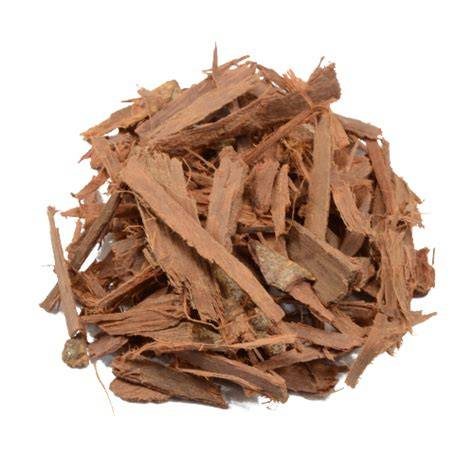
What Does Acacia Root Bark Look Like?
The appearance of root bark depends heavily on the species, age of the plant and processing method.
Dried bark may appear in forms such as:
- Whole pieces
- Strips
- Chips
- Coarse shredded material
- Ground powder
Color can range from light brown and tan to darker brown or reddish-brown depending on the species and processing conditions.
However, appearance alone is not enough to identify an Acacia species reliably.
Color, texture and smell can change after:
- Drying
- Storage
- Cutting
- Grinding
- Exposure to moisture
- Exposure to sunlight
For reliable botanical identification, a combination of morphological information, geographic information and, where necessary, laboratory or herbarium confirmation is preferable.
Acacia Root Bark vs. Acacia Bark
The phrase Acacia bark is broader than acacia root bark.
“Acacia bark” may refer to bark collected from:
- Roots
- Stems
- Branches
- Trunks
In contrast, acacia root bark specifically refers to bark associated with the roots.
This distinction matters because different plant tissues can have different chemical compositions.
A research paper describing stem bark should therefore not automatically be interpreted as evidence about root bark from the same species.
Likewise, information about one Acacia species should not automatically be applied to every member of the genus.
Traditional Uses of Acacia Bark
Acacia species have a long history of traditional use in different parts of the world.
However, the specific uses vary considerably between species.
For example, scientific reviews of Vachellia nilotica, a species historically known as Acacia nilotica, document a wide range of traditional applications involving different plant parts.
This illustrates why the phrase “Acacia traditional uses” should always be followed by the species name.
Traditional use may provide valuable ethnobotanical information, but it does not automatically establish modern medical effectiveness.
A traditional preparation should therefore not be described as a proven treatment simply because historical sources document its use.
Acacia Root Bark in Ethnobotanical Research
Ethnobotany examines how people interact with and use plants.
Acacia species are particularly interesting from an ethnobotanical perspective because different communities have developed uses for their:
- Bark
- Roots
- Gum
- Seeds
- Leaves
- Flowers
- Pods
Researchers may investigate these uses to understand historical plant knowledge and identify subjects for further scientific research.
However, ethnobotanical documentation and clinical evidence are different categories of information.
A traditional use can be documented without there being sufficient clinical evidence to recommend the plant for treating a disease.
Naturally Occurring Compounds in Acacia Species
Acacia species contain a variety of naturally occurring plant compounds.
Depending on the species and plant part, researchers may investigate compounds such as:
- Tannins
- Flavonoids
- Phenolic compounds
- Terpenoid compounds
- Alkaloids
- Polysaccharides
- Other secondary metabolites
The exact chemical profile can vary according to:
- Species
- Genetics
- Geography
- Soil
- Climate
- Plant age
- Plant part
- Harvesting conditions
- Processing
This is another reason why acacia root bark should not be treated as one chemically uniform material.
Why Geography Can Affect Botanical Materials
Plants respond to their environment.
Rainfall, temperature, soil conditions, elevation and seasonal changes can all influence plant growth.
For commercial botanical materials, geographic origin can therefore provide useful information about the material’s history.
A responsible botanical description should ideally identify:
Species → plant part → geographic origin → processing method
This creates a clearer chain of botanical identity.
How to Identify Acacia Root Bark More Carefully
If you are researching an Acacia root-bark material, begin with the supplier’s botanical information.
Look for the following:
1. Scientific name
The label should ideally provide the complete scientific name rather than simply “Acacia.”
2. Plant part
Confirm whether the material is:
- Root bark
- Stem bark
- Trunk bark
- Root
- Leaf
- Seed
3. Geographic origin
The country or region where the plant was grown can provide useful context.
4. Botanical documentation
A reputable supplier should be able to explain how the botanical identity was established.
5. Batch information
Batch numbers make it easier to trace a particular material.
6. Laboratory documentation
Depending on the intended application, laboratory testing may provide additional information about identity, contaminants and quality.
[INTERNAL LINK: Link “certificate of analysis (COA)” to your COA educational article.]
Why a Certificate of Analysis Can Be Useful
A Certificate of Analysis (COA) is a laboratory or quality-control document associated with a particular batch of material.
Depending on the product and testing program, a COA may provide information such as:
- Batch number
- Test date
- Identification testing
- Appearance
- Moisture
- Microbiological results
- Heavy-metal testing
- Other quality specifications
The exact tests should be appropriate to the botanical material and its intended use.
A COA should not be treated as a substitute for botanical identification, but it can be an important part of a broader quality-control system.
Acacia Root Bark Powder vs. Whole Bark
Acacia root bark may be sold in different physical forms.
Whole or Cut Bark
Larger pieces retain more of their original physical structure.
Potential advantages include:
- Easier visual inspection
- Less surface area exposed to air
- Easier examination of texture
- Useful for botanical reference
Shredded Bark
Shredded material provides smaller pieces while retaining some recognizable structure.
Powdered Bark
Powder is much finer and can be convenient for certain legitimate applications.
However, once bark is powdered, visual identification becomes more difficult because many of the plant’s recognizable physical characteristics are no longer visible.
This makes documentation and supplier traceability especially important.
How Should Acacia Root Bark Be Stored?
Proper storage can help maintain the quality of dried botanical materials.
Generally, dried plant materials should be protected from:
- Excess moisture
- Direct sunlight
- Excessive heat
- Contamination
- Insects and pests
A clean, sealed container can help protect dried bark from environmental exposure.
Storage conditions should also follow the supplier’s recommendations because different botanical materials can have different stability characteristics.
Common Problems With Poorly Identified Acacia Root Bark
Buying or researching a botanical material without a clear species name can create several problems.
Misidentification
A material may be incorrectly labeled as an Acacia species.
Confusion between plant parts
Root bark and stem bark may be treated as though they are identical.
Outdated taxonomy
An older scientific name may be used without identifying its modern equivalent.
Inconsistent quality
Materials from different species or regions may have substantially different characteristics.
Unsupported claims
Traditional information about one species can sometimes be incorrectly applied to another.
For these reasons, good botanical documentation should always begin with accurate identification.
Is Acacia Root Bark Safe?
Safety depends on the exact species, plant part, preparation, intended use and individual circumstances.
It would therefore be inappropriate to describe all Acacia root bark as either universally safe or universally unsafe.
Some Acacia and related species have documented traditional uses, while others have been investigated for different purposes.
The fact that a plant is natural does not automatically establish that it is safe for ingestion or topical application.
People who are pregnant, breastfeeding, taking medication or managing a medical condition should consult an appropriately qualified healthcare professional before using unfamiliar botanical materials.
Acacia Root Bark for Cosmetic Research
Some Acacia species and their botanical compounds are of interest in cosmetic and personal-care research.
Potential areas of investigation include:
- Plant-based formulations
- Botanical extracts
- Antioxidant research
- Skin-care ingredients
- Natural colorants
- Traditional cosmetic preparations
However, research involving an Acacia species should not automatically be generalized to every species within the genus.
For cosmetic applications, ingredients should ideally be sourced and prepared according to the requirements appropriate for topical use.
Why Scientific Names Are Important When Buying Botanical Materials
A common name can describe several different plants.
Scientific nomenclature provides a more precise way to identify a species.
For example, Kew’s database contains extensive information about accepted Acacia species and their taxonomic relationships.
Therefore, instead of asking only:
“Is this Acacia root bark?”
a better botanical question is:
“Which Acacia species is this root bark from?”
That small difference can significantly improve the quality of botanical research.
Acacia Root Bark and Sustainability
Sustainable harvesting is an important consideration whenever roots or root bark are collected.
Removing roots or large amounts of root bark can potentially affect individual plants more severely than collecting renewable plant parts such as leaves or naturally shed material.
Responsible sourcing should therefore consider:
- Cultivation practices
- Harvesting methods
- Regeneration
- Local ecosystems
- Traceability
- Supplier transparency
The conservation status of a plant should also be assessed at the species level, rather than assuming that all Acacia species have the same conservation status.