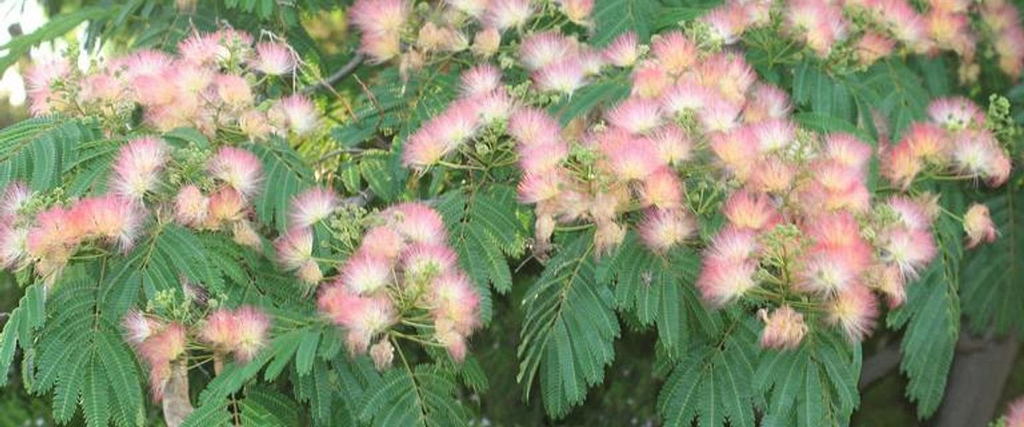
Mimosa bark has attracted considerable scientific and botanical interest because some species of the Mimosa genus contain naturally occurring alkaloids. One of the best-known examples is Mimosa tenuiflora, a tree historically and botanically associated with names including mimosa root and commonly known as jurema or jurema preta in parts of Brazil.
So, does Mimosa bark contain DMT?
Yes. Scientific research has detected N,N-dimethyltryptamine (DMT) in the bark of Mimosa tenuiflora. However, the amount can vary considerably depending on the plant material, geographic origin, plant part, age, season, and analytical method used.
This article explains what researchers have found, what DMT is, why bark chemistry varies, and what the scientific literature can—and cannot—tell us about Mimosa bark.
What Is Mimosa Tenuiflora?
Mimosa tenuiflora is a thorny leguminous tree native to parts of northeastern Brazil and other regions of Latin America. It is particularly associated with the Caatinga biome, where it is adapted to relatively dry environmental conditions.
The plant has been known under several names in botanical and ethnobotanical literature. Older literature and commercial references frequently use the name Mimosa hostilis, while Mimosa tenuiflora is the name commonly used in modern botanical and scientific publications.
The plant has attracted research for several reasons, including its traditional uses, ecological characteristics, tannin content, and diverse phytochemical composition.
Does Mimosa Bark Naturally Contain DMT?
Research indicates that it does.
Scientific investigations have identified N,N-dimethyltryptamine (DMT) in bark from Mimosa tenuiflora. For example, researchers have used analytical techniques including gas chromatography–mass spectrometry (GC-MS) and nuclear magnetic resonance (NMR) to detect and characterize compounds in the plant’s bark.
A study published in the Journal of Chromatography B also investigated DMT in the inner bark of Mimosa tenuiflora and detected measurable concentrations across samples. The researchers reported variation between the samples analyzed, demonstrating an important point: plant chemistry is not necessarily uniform from one sample to another.
This means that it is scientifically accurate to say that Mimosa bark from Mimosa tenuiflora can naturally contain DMT.
However, it is important not to assume that every piece of bark contains the same concentration.
What Is DMT?
DMT stands for N,N-dimethyltryptamine. It is a naturally occurring indole alkaloid belonging to the tryptamine family of compounds.
DMT has been studied in a number of plant species and has also been associated with traditional and ceremonial practices involving certain plants.
From a chemistry perspective, DMT is one component of a much larger group of natural compounds found in plants. Bark is not simply a source of one chemical; it contains a complex mixture of compounds that can include tannins, phenolic compounds, flavonoids, alkaloids, and other constituents.
A 2025 study of Mimosa tenuiflora reported multiple classes of secondary metabolites in both stem bark and root samples, including saponins, tannins, phenolic compounds, flavonoids, steroids, triterpenes, alkaloids, quinones, and coumarins.
Is DMT Found Specifically in Mimosa Root Bark?
Research has investigated different parts of Mimosa tenuiflora, including bark and root material.
Earlier research examining different plant organs found DMT in the plant’s bark and reported that concentrations varied according to the plant organ, season, and age of the material.
More recent research has specifically compared root bark and stem bark as plant matrices for chemical analysis. The study confirmed the presence of alkaloids and other phytochemical groups in both types of material.
This is why statements such as “all Mimosa root bark contains exactly X% DMT” should be treated cautiously. Scientific studies have demonstrated natural variability, and results from one sample should not automatically be applied to every batch of Mimosa bark.
Why Does the DMT Content Vary?
One of the most important things to understand about Mimosa bark is that plant chemistry can vary naturally.
Several factors may influence the chemical profile of botanical material:
1. Plant part
The concentration and composition of secondary metabolites can differ between roots, root bark, stem bark, leaves, flowers, and other parts of a plant.
Research on Mimosa tenuiflora has documented differences between plant organs.
2. Geographic origin
Plants growing in different environments may experience different soil conditions, rainfall patterns, temperatures, and ecological pressures.
These environmental differences can influence the production and accumulation of secondary metabolites.
3. Plant age
The chemical profile of a plant can change as it develops.
Scientific research on Mimosa tenuiflora has reported variation associated with the age of plant material.
4. Season
Seasonal conditions can also influence the concentration of naturally occurring compounds.
This is another reason why results from a single laboratory sample should not automatically be interpreted as a universal value for all Mimosa bark.
5. Analytical method
Different scientific methods measure different characteristics of plant material.
Researchers studying Mimosa tenuiflora have used techniques such as GC-MS and NMR to identify and quantify compounds. One study specifically concluded that both approaches could identify and quantify DMT, while NMR provided advantages for absolute quantification in that investigation.
What Other Compounds Are Found in Mimosa Bark?
DMT is only one component of the plant’s chemical profile.
Research has identified numerous other classes of natural compounds in Mimosa tenuiflora. These include:
- Tannins
- Phenolic compounds
- Flavonoids
- Saponins
- Alkaloids
- Steroids
- Triterpenes
- Coumarins
- Quinones
The exact chemical profile depends on the plant material and the analytical method used.
This broader chemical profile is particularly important when discussing Mimosa bark from a botanical perspective because the plant should not be viewed as simply a source of one compound.
Internal link opportunity: Link “natural compounds in Mimosa bark” to your existing article discussing the phytochemical composition or traditional botanical properties of Mimosa tenuiflora.
Mimosa Hostilis vs. Mimosa Tenuiflora
You may encounter both names when researching Mimosa bark.
Historically, the plant has commonly been referred to as Mimosa hostilis, particularly in commercial and ethnobotanical literature. Modern scientific publications commonly use Mimosa tenuiflora.
For someone researching botanical information, this means that searches for:
- Mimosa hostilis
- Mimosa tenuiflora
- Mimosa hostilis root bark
- Mimosa tenuiflora bark
- Jurema
- Jurema preta
may lead to literature discussing the same plant or closely related terminology.
When writing scientifically, it is useful to mention the botanical name being used by the particular source rather than treating different names as automatically referring to different plants.