Acacia formosa is a historical botanical name for a plant that is now generally accepted as Zapoteca formosa (Kunth) H.M.Hern. It belongs to the legume family, Fabaceae, and has a native range extending through tropical and subtropical parts of the Americas.
Although the name Acacia formosa continues to appear in older botanical literature, plant databases, herbarium records, and online searches, understanding its current taxonomy is important when researching the species.
This guide explores the identity of Acacia formosa, its botanical characteristics, natural distribution, habitat, traditional and documented uses, taxonomy, and how it differs from other plants that may also be called Acacia.
What Is Acacia Formosa?
Acacia formosa Kunth is a historical name for the species currently accepted by Plants of the World Online as Zapoteca formosa (Kunth) H.M.Hern. Kew lists Acacia formosa among the species’ synonyms.
The species belongs to:
- Kingdom: Plantae
- Order: Fabales
- Family: Fabaceae
- Genus: Zapoteca
- Accepted species: Zapoteca formosa
- Historical name: Acacia formosa Kunth
The species was originally described under the name Acacia formosa in the early nineteenth century. Later taxonomic work placed it in the genus Zapoteca.
Acacia Formosa vs. Zapoteca Formosa
One of the most important things to understand about Acacia formosa is that the two names generally refer to the same species in modern botanical databases.
Kew currently accepts Zapoteca formosa and lists Acacia formosa Kunth as a synonym. The International Plant Names Index also records the nomenclatural history connecting the two names.
This means that someone researching Acacia formosa should also search for:
- Zapoteca formosa
- Zapoteca formosa subsp. formosa
- Acacia formosa Kunth
- Calliandra formosa
- Other historical synonyms
Where Does this plant Grow?
The accepted species, Zapoteca formosa, has a broad native distribution across tropical and subtropical America.
Kew records the species from numerous regions, including parts of:
- Mexico
- Central America
- The Caribbean
- Colombia
- Venezuela
- Peru
- Bolivia
- Paraguay
- Northern Argentina
Its native range also includes Arizona and several Caribbean islands.
The species is particularly associated with tropical and subtropical environments and is described by Kew as growing primarily in seasonally dry tropical vegetation.
This broad geographic distribution helps explain why the plant can appear under different local names and why descriptions may vary between regions.
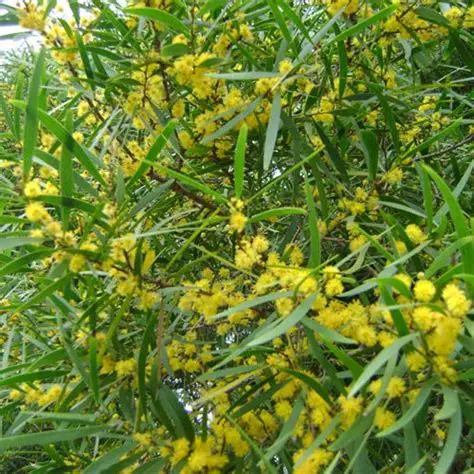
Acacia Formosa in Mexico
Mexico is an important part of the natural range of Acacia formosa / Zapoteca formosa.
Mexican botanical resources record the plant under names including escobilla, while regional sources also document names such as barba de chino, barba de chivo, and the Maya name taman che’.
The Flora of the Yucatán Peninsula records Zapoteca formosa in Campeche, Quintana Roo and Yucatán and describes it as a herb or shrub that can reach several metres in height.
Mexican herbarium records also document specimens from several states, demonstrating the species’ wide distribution within the country.
What Does Acacia Formosa Look Like?
The plant can occur as a shrub or small tree.
A botanical treatment of the species in northeastern Mexico describes Zapoteca formosa as an erect shrub reaching up to approximately 4 metres, with relatively thin stems. The leaves are divided into several pairs of pinnae, with multiple leaflets on each pinna.
Other regional botanical sources describe plants reaching approximately 3–5 metres under suitable conditions.
Leaves
The leaves are compound rather than simple.
They are divided into:
- A main leaf stalk
- Several smaller branches called pinnae
- Multiple leaflets attached to each pinna
This type of divided foliage is characteristic of many members of the former mimosoid group of legumes.
Flowers
The flowers are arranged in characteristic clusters.
Botanical descriptions of Zapoteca formosa report flowers with elongated staminal filaments, which contribute to the visually distinctive appearance of the flowering plant.
Fruits
The plant produces elongated pods.
A northeastern Mexican botanical treatment describes fruits approximately 13–15 cm long and around 1–1.3 cm wide.
What Habitat Does Acacia Formosa Prefer?
Acacia , under its accepted name Zapoteca formosa, is associated with tropical and subtropical habitats.
Kew classifies it primarily within seasonally dry tropical environments.
Regional sources also report the plant in:
- Dry forest
- Subhumid vegetation
- Shrubland
- Savanna-like environments
- Secondary vegetation
- Disturbed areas
Its ability to occur in different environments contributes to its relatively broad distribution.
A plant’s appearance can also change according to rainfall, soil, elevation and surrounding vegetation, so photographs from one region should not necessarily be treated as a universal identification guide.
Acacia Formosa and Seasonal Conditions
Seasonality plays an important role in tropical dry ecosystems.
During wetter periods, many plants produce new leaves and flowers, while the dry season can produce very different visual conditions.
Regional botanical information for Zapoteca formosa records flowering and fruiting patterns that vary during the year.
This is one reason botanical identification should consider several characteristics rather than relying on whether a plant is flowering at a particular time.
Documented Uses of this plant
The uses documented for Acacia formosa / Zapoteca formosa vary between regions.
Kew’s current species profile identifies the plant as being used as animal food.
The Flora of the Yucatán Peninsula additionally records historical or regional uses including forage and medicinal use.
A Mexican biodiversity source records Zapoteca formosa as having domestic use in certain regional contexts.
These records should be understood as documented regional uses, rather than evidence that the plant has established medical benefits.
Traditional plant use and modern clinical evidence are not interchangeable.
Acacia Formosa as a Forage Plant
One documented use of Zapoteca formosa is as animal forage.
Kew’s Useful Plants and Fungi of Colombia data specifically lists the species under animal food.
The Flora of the Yucatán Peninsula also records it as forage for livestock.
This illustrates an important aspect of tropical legumes: many species contribute to local agricultural systems by providing vegetation that can be used by livestock.
However, forage suitability depends on the animal species, plant identification, local conditions and preparation. A plant should not automatically be introduced into animal diets solely because a database records a traditional forage use.
Is Acacia Formosa a Medicinal Plant?
Some regional botanical sources record medicinal use for Zapoteca formosa.
However, it is important to distinguish between:
- Traditional use
- Ethnobotanical documentation
- Laboratory research
- Animal studies
- Human clinical evidence
A record of traditional medicinal use does not establish that a plant is safe or effective for treating a particular disease.
Therefore, this plant should not be presented as a proven treatment for a medical condition without appropriate clinical evidence.
Anyone considering a plant for medicinal purposes should consult a qualified healthcare professional, particularly when taking medications or managing a health condition.
Why Botanical Names Matter
Common names can create confusion.
One plant may have several local names, while completely different plants can share the same common name.
Scientific names help researchers, growers, herbalists and suppliers communicate about a particular species.
In the case of Acacia, this is especially important because the accepted scientific name is now Zapoteca formosa.
Using both names in educational content makes the information easier to find while reducing confusion.
Acacia Formosa Is Not the Same as Every Acacia
The word “Acacia” refers to a large and diverse group of legumes.
Kew currently treats Acacia as a separate accepted genus, with its native range extending primarily across regions from the western Indian Ocean through parts of Asia and the Pacific.
That means the presence of the word “Acacia” in the historical name Acacia f does not mean that the plant is identical to modern species currently classified within the genus Acacia.
This is a common source of confusion in online botanical information.
When researching botanical materials, always check the complete scientific name rather than relying on the genus alone.
How to Identify Acacia Formosa More Carefully
If you are researching a plant believed to be Acacia formosa, several characteristics can help with preliminary identification.
Look at:
1. Growth form
The species can occur as an erect shrub or small tree.
2. Compound leaves
The leaves are divided into pinnae and smaller leaflets.
3. Flower arrangement
Examine the structure and arrangement of the flowers rather than relying only on color.
4. Fruit shape
The elongated pods are another useful characteristic.
5. Geographic location
Location is extremely important because the natural range can help eliminate species that do not occur in the area.
6. Herbarium or botanical confirmation
For reliable identification, comparison with authenticated herbarium specimens or consultation with a qualified botanist is preferable to relying solely on photographs.
Why Confusing Acacia Species Can Be a Problem
Different plants can have similar appearances, especially when they are young or when only leaves are available.
Confusing species can result in:
- Incorrect botanical information
- Incorrect product labeling
- Misleading traditional-use claims
- Problems with research
- Potential safety issues
This is particularly important when a botanical material is intended for human or animal use.
Correct identification should therefore be treated as the first step before discussing properties or applications.
Conservation and Environmental Considerations
Kew’s current profile incorporates an IUCN assessment listing Zapoteca formosa as Least Concern.
However, a species’ overall conservation category does not mean that every local population is unaffected by habitat loss, land-use changes or other environmental pressures.
Sustainable botanical sourcing should still consider:
- Habitat protection
- Local harvesting practices
- Regeneration
- Land-use changes
- Traceability
- Responsible collection
For commercial botanical materials, transparent sourcing can help consumers understand where an ingredient comes from and how it was obtained.
Acacia Formosa in Botanical Research
The taxonomic history of this species makes it an interesting subject for botanical research.
Older literature may refer to:
- Acacia formosa
- Calliandra formosa
- Anneslia formosa
- Feuilleea formosa
Modern sources may instead use Zapoteca formosa. Kew and IPNI document these nomenclatural connections.
When conducting research, searching both the accepted name and historical synonyms can uncover older publications and herbarium records that would otherwise be difficult to locate.
Frequently Asked Questions About Acacia Formosa
What is Acacia formosa?
Acacia formosa is a historical botanical name for Zapoteca formosa, a legume native to tropical and subtropical parts of the Americas.
Is Acacia formosa the accepted scientific name?
No. Kew currently accepts Zapoteca formosa (Kunth) H.M.Hern. and lists Acacia formosa Kunth as a synonym.
Where does Acacia formosa grow?
Its native range extends across tropical and subtropical America, including Mexico, Central America, the Caribbean and parts of South America.
What does Acacia formosa look like?
It is generally an erect shrub or small tree with compound leaves, distinctive flower clusters and elongated seed pods. Regional descriptions report plants reaching several metres in height.
What is Acacia formosa used for?
Documented uses include animal forage, while some regional botanical sources record domestic or traditional medicinal uses.
Is Acacia formosa the same as Acacia confusa?
No. They are different botanical names referring to different taxa. The fact that both names contain “Acacia” does not make them the same species.
Why do some websites call it Acacia formosa?
Because Acacia formosa is an older botanical name that remains in historical literature, databases and search results. Modern taxonomic databases generally use Zapoteca formosa.