Mimosa Pudica Seeds: How to Germinate and Grow the Sensitive Plant
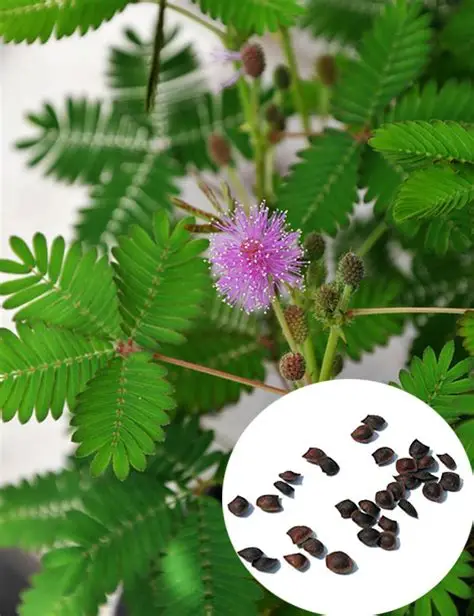
Mimosa pudica seeds are an interesting way to grow one of the world’s most fascinating plants. Commonly known as the sensitive plant, touch-me-not, or shy plant, Mimosa pudica is famous for its delicate compound leaves that fold inward when touched. The plant is also known for its attractive pink or purple flower heads and relatively quick growth under suitable conditions.
Growing Mimosa pudica from seed can be rewarding, but successful germination requires an understanding of the plant’s hard seed coat. Research has shown that Mimosa pudica seeds have physical dormancy, meaning their outer coating can restrict water from entering the seed. Scarification can therefore significantly improve germination.
This guide explains what Mimosa pudica seeds are, how to prepare them for planting, how to germinate them, and how to care for the young plants as they develop.
What Are Mimosa Pudica Seeds?
Mimosa pudica seeds are the reproductive seeds of Mimosa pudica, a tropical plant belonging to the legume family, Fabaceae.
The species is commonly called the:
- Sensitive plant
- Touch-me-not
- Shameplant
- Sleeping plant
- Bashful plant
The plant is particularly interesting because its leaflets can fold in response to physical stimulation. This movement is known as thigmonasty or touch-induced leaf movement.
Mature Mimosa pudica seeds are small and generally brownish or yellow brown. Scientific research has found that the seeds have a water-resistant seed coat, which is one reason untreated seeds may germinate slowly or irregularly.
Why Grow Mimosa Pudica From Seed?
Starting a sensitive plant from seed allows gardeners to observe the complete development of the plant, from germination to mature foliage and flowering.
There are several reasons gardeners and plant enthusiasts grow Mimosa pudica:
1. The leaves respond to touch
The most recognizable feature of Mimosa pudica is its rapid leaf movement. When stimulated, the leaflets fold together and may cause the entire leaf to droop temporarily.
This makes the plant particularly interesting for children, botanical demonstrations, classroom projects, and curious gardeners.
2. It can be grown in containers
Mimosa pudica can be grown in pots or containers, making it suitable for gardeners who want to observe the plant indoors or in a protected outdoor environment.
3. It has attractive flowers
Mature plants can produce rounded pinkish-purple flower clusters that contrast nicely with their green foliage.
4. Seeds provide an inexpensive propagation method
Growing from seed allows gardeners to produce new plants without purchasing an established specimen.
However, the plant can behave aggressively in some tropical and subtropical environments. Before planting outdoors, gardeners should check local guidance regarding its invasive potential.
Why Do Mimosa Pudica Seeds Sometimes Take Time to Germinate?
One of the biggest challenges when growing Mimosa pudica from seed is the hard outer seed coat.
Researchers have classified the seeds as having physical dormancy. In simple terms, the seed coat can be sufficiently water-resistant that moisture cannot easily reach the embryo.
Water is essential for germination because seeds need to absorb moisture before the biological processes associated with germination can begin.
This is why scarification is often useful.
Scarification means deliberately weakening or scratching the seed coat so that water can enter more easily.
Research specifically examining Mimosa pudica found that mechanical scarification was effective at breaking this dormancy.
How to Prepare Mimosa Pudica Seeds for Germination
There are several approaches to preparing the seeds.
Method 1: Mechanical scarification
Mechanical scarification involves carefully scratching or nicking the outer surface of the seed.
For small quantities of seeds, a gardener can gently rub the seed coat with fine sandpaper.
The objective is not to cut deeply into the seed. You only want to weaken a small section of the outer coating.
After scarification, soak the seeds in clean water.
Research on Mimosa pudica found that mechanically scarified seeds absorbed water much more readily than untreated seeds and showed substantially higher germination under the tested conditions.
Method 2: Warm-water treatment
Warm-water treatment is another approach used with Mimosa seeds.
The Royal Botanic Gardens, Kew reports that its tropical nursery propagates Mimosa pudica from seed using scarification followed by an overnight water soak.
For home gardeners, avoid excessively hot or uncontrolled treatments because temperatures that are too high can damage seeds.
How to Germinate Mimosa Pudica Seeds Step by Step
Once your seeds have been prepared, planting them is relatively straightforward.
Step 1: Choose a suitable container
Use a small seed tray, propagation tray, or individual pot with drainage holes.
Good drainage is important because constantly waterlogged growing media can encourage fungal problems and damage young roots.
Step 2: Use a light seed-starting mix
Choose a clean, well-draining seed-starting medium.
A suitable mixture should retain enough moisture for germination without remaining saturated.
A general-purpose seed-starting mix can work well for beginning gardeners.
Step 3: Plant the seeds shallowly
Place the prepared seeds on or just beneath the surface of the growing medium.
Avoid burying them deeply.
Research on Mimosa pudica found that seedling emergence declined as burial depth increased, with the study reporting no emergence at an 8 cm depth.
Step 4: Moisten the growing medium
Water gently after sowing.
The growing medium should remain consistently moist but should not become saturated.
A spray bottle or gentle watering method can help prevent small seeds from being displaced.
Step 5: Provide warmth
Mimosa pudica is a tropical species and generally benefits from warm growing conditions.
Place the container somewhere warm and protected from cold temperatures.
During germination, avoid exposing the container to extreme temperature fluctuations.
Step 6: Provide suitable light
Once seedlings emerge, provide bright light.
If growing indoors, a bright window or suitable grow light can help prevent seedlings from becoming excessively tall and weak.
General seed-starting guidance recommends moving newly emerged seedlings into strong light and avoiding excessive watering.
Step 7: Wait for germination
Germination time can vary according to seed quality, temperature, moisture, and preparation.
Prepared seeds can germinate relatively quickly under suitable conditions. Kew notes that scarified and soaked Mimosa pudica seeds can germinate easily, with early root growth sometimes visible very soon after sowing.
How to Care for Mimosa Pudica Seedlings
Once your Mimosa pudica seeds have germinated, the young seedlings need appropriate care.
Light
Young plants need plenty of light for healthy growth.
Indoor plants can be placed near a bright window or grown beneath an appropriate plant light.
If seedlings become unusually tall and thin, insufficient light may be one possible cause.
Water
Keep the growing medium moderately moist while the seedlings establish.
Avoid allowing the roots to sit in standing water.
Overwatering can create conditions that encourage root problems and seedling diseases.
Temperature
Mimosa pudica prefers warm conditions.
Protect young plants from cold temperatures, especially if they are grown outdoors in regions with cool nights.
Soil
Use a loose, well-draining growing medium.
The roots need access to both moisture and air. Compact or constantly saturated soil can make healthy root development more difficult.
Pot size
Do not immediately move a tiny seedling into an extremely large container.
A small pot allows you to manage moisture more easily. As the root system develops, the plant can be moved into a larger container.
When Should Mimosa Pudica Seedlings Be Transplanted?
Transplanting is best done once the young plants are sufficiently established and have developed several healthy leaves.
Handle the seedlings carefully because young roots are easily damaged.
When moving a plant to a larger container:
- Prepare the new pot with fresh growing medium.
- Make a hole large enough for the root system.
- Remove the seedling carefully.
- Place it at approximately the same depth.
- Gently firm the growing medium around the roots.
- Water lightly.
- Keep the newly transplanted plant protected while it adjusts.
If seedlings are eventually moved outdoors, gradually acclimate them to outdoor conditions rather than immediately exposing tender plants to strong sunlight, wind, and temperature changes.
This process is called hardening off. General horticultural guidance recommends gradually increasing outdoor exposure over approximately one to two weeks.
Common Problems When Growing Mimosa Pudica From Seed
Seeds do not germinate
The most common issue may be inadequate preparation of the hard seed coat.
Because Mimosa pudica has physical seed dormancy, untreated seeds may absorb water poorly.
Try using careful mechanical scarification before soaking and planting.
Seeds become moldy
Excessive moisture and poor air circulation can contribute to fungal growth.
Use clean containers, fresh growing medium, and avoid keeping the seed-starting mix saturated.
Seedlings become tall and weak
This can indicate insufficient light.
Move the seedlings into a brighter location or provide suitable supplemental lighting.
Seedlings collapse
Young seedlings can be vulnerable to damping-off and other moisture-related problems.
Good drainage, clean containers, appropriate watering, and adequate airflow can help reduce these problems.
Leaves are not closing when touched
Do not assume that every young plant will immediately display dramatic leaf movement.
Leaf response can vary with plant age, environmental conditions, time of day, and the type of stimulation.
The movement is a biological response rather than an indication that the plant is unhealthy.
How Long Do Mimosa Pudica Seeds Last?
Seed viability depends on several factors, including initial seed quality, moisture, temperature, and storage conditions.
For long-term storage, seeds are generally best kept dry, protected from moisture, and stored under stable conditions.
Kew’s Millennium Seed Bank, for example, uses controlled drying and sub-zero storage for conservation seed collections.
For home gardeners, keep unused seeds in a dry, cool, dark location and protect them from humidity.
Avoid repeatedly opening and closing a container in a humid environment because moisture can reduce seed longevity.
Can Mimosa Pudica Be Grown Indoors?
Yes. Mimosa pudica can be grown as a container plant indoors when its basic requirements are met.
An indoor plant should receive:
- Bright light
- Warm temperatures
- Good drainage
- Moderate watering
- Adequate growing space
- Periodic pruning when necessary
A sunny window can work, although supplemental lighting may be useful when natural light is inadequate.
Can Mimosa Pudica Be Grown Outdoors?
Mimosa pudica can be grown outdoors in suitable warm climates.
However, gardeners should research the species before planting it directly into the landscape.
In some tropical and subtropical regions, Mimosa pudica has become naturalized or invasive. Scientific literature has documented its invasive behavior in several regions.
If there is any concern about spreading, container cultivation can provide better control over the plant and its seeds.
What Makes Mimosa Pudica an Interesting Plant?
The sensitive plant is more than an attractive ornamental.
Its rapid leaf movement has made it an important subject for botanical and plant-physiology research.
The plant demonstrates that plants can respond to environmental stimuli without having a nervous system like animals.
When the leaves are touched or otherwise stimulated, changes in water pressure within specialized plant tissues cause the leaflets to fold.
This makes Mimosa pudica a useful living example when teaching concepts such as:
- Plant movement
- Stimulus response
- Water pressure in plant tissues
- Plant adaptation
- Seed dormancy
- Germination
- Tropical plant biology