Blue Lotus Extract: What It Is, Traditional Uses, Benefits, and Safety
Blue lotus extract comes from the flowers of Nymphaea caerulea, commonly known as blue lotus, Egyptian blue lotus, or blue water lily. The plant has a long history of cultural and traditional use, particularly in ancient Egypt, and today it is found in products such as botanical extracts, dried flowers, teas, fragrances, and other preparations.
But what exactly is blue lotus extract, how does it differ from dried blue lotus flower, and what does modern research tell us about its composition and safety?
This guide explains the botanical background, traditional significance, types of extracts, naturally occurring compounds, potential uses, quality considerations, and important safety information.
What Is Blue Lotus Extract?
Blue lotus extract is a concentrated botanical preparation made from Nymphaea caerulea, an aquatic flowering plant belonging to the Nymphaeaceae family.
Unlike dried blue lotus flowers, which consist of the plant material itself, an extract is produced by separating and concentrating certain compounds from the plant using an extraction process. Consequently, extracts can differ considerably in their chemical composition depending on the plant material, extraction method, and processing conditions.
Scientific analysis has found that authentic Nymphaea caerulea extracts can contain a complex mixture of compounds, including aromatic compounds, fatty acids, phenyl derivatives, diterpenoids, phytosterols, and other constituents.
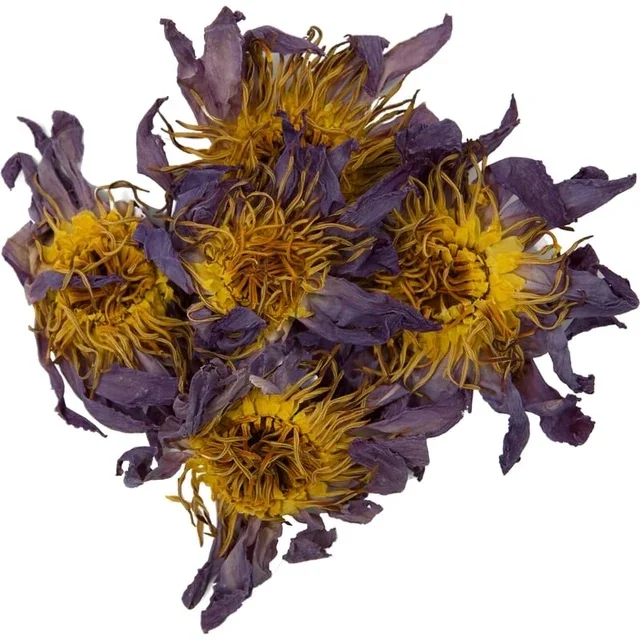
blue lotus extract (Nymphaea caerulea) at a Glance
| Botanical name | Nymphaea caerulea |
|---|---|
| Common names | Blue lotus, Egyptian blue lotus, blue water lily |
| Plant family | Nymphaeaceae |
| Plant type | Aquatic perennial |
| Habitat | Lakes, ponds, rivers, and other aquatic environments |
| Main recognizable feature | Large blue flowers and floating leaves |
| Common botanical products | Dried flowers, extracts, teas, fragrances |
The plant has floating leaves and distinctive blue flowers. Research describes N. caerulea as an aquatic perennial that can occur in freshwater environments across different regions.
A Brief History of Blue Lotus
Blue lotus has an especially interesting cultural history.
Representations of blue lotus have been associated with ancient Egyptian art and archaeological material. Scientific literature reports depictions of the plant in Egyptian papyri and tombs dating back thousands of years.
Because of this historical association, the plant has become one of the most recognizable botanical symbols connected with ancient Egyptian culture.
Traditional accounts have associated blue lotus with relaxation, ceremonial practices, beauty, and spiritual traditions. However, historical use should not automatically be interpreted as proof that a modern extract produces a particular medical effect.
Outbound link opportunity: Link “scientific research on blue lotus” to the peer-reviewed PubMed research discussed below.
Blue Lotus Extract vs. Dried Blue Lotus Flower
One of the most common questions is whether blue lotus extract is the same as dried blue lotus flower.
They are different forms of the same botanical source.
Dried Blue Lotus Flower
Dried blue lotus consists of the harvested and dried plant material. It retains the physical structure of the flower and contains a broad mixture of naturally occurring plant constituents.
Blue Lotus Extract
An extract is processed to obtain selected components from the plant. Because extraction can concentrate or remove different constituents, two extracts made from the same plant may have substantially different chemical profiles.
This is particularly important when comparing commercial products.
A 2023 study examining authentic and commercially available blue lotus products found substantial differences between products and reported that some commercial samples contained synthetic fragrance components or added materials.
What Compounds Are Found in Blue Lotus?
Researchers have identified numerous naturally occurring constituents in Nymphaea caerulea.
Research on the flowers has identified flavonoids, anthocyanins, phenolic compounds, phytosterols, and other plant constituents. One study investigating the flowers isolated several antioxidant-related compounds, including derivatives of myricetin, quercetin, kaempferol, naringenin, gallic acid, and related compounds.
The chemical composition of an extract, however, depends heavily on how it was produced.
Why Do People Use Blue Lotus Extract?
Blue lotus has traditionally been associated with relaxation and ceremonial or spiritual practices. Modern products are also marketed for botanical, aromatic, and wellness-related purposes.
However, it is important to distinguish traditional use from scientifically established medical benefits.
Current research on Nymphaea caerulea is still limited. A recent review noted that relatively few peer-reviewed publications have investigated the plant’s psychoactive and neuropsychiatric effects.
Therefore, claims that blue lotus extract can treat a specific medical condition should be approached cautiously unless they are supported by appropriate clinical evidence.
Blue Lotus Extract and Antioxidant Research
Blue lotus flowers have attracted scientific interest because they contain several compounds with antioxidant activity.
Laboratory research has identified multiple flavonoids and phenolic compounds in Nymphaea caerulea flowers. These compounds are of interest because antioxidant activity is an important area of botanical and phytochemical research.
However, laboratory findings should not be interpreted as proof that consuming a blue lotus extract will produce a particular health benefit in humans.
More clinical research is needed to establish how the plant’s compounds behave in the human body and whether particular preparations have meaningful therapeutic effects.
Blue Lotus Extract and Relaxation
Blue lotus has traditionally been associated with calming or relaxing experiences, which is one reason it continues to attract interest as a botanical product.
Modern literature also describes blue lotus products as being used for relaxation and spiritual experiences.
At the same time, researchers have reported that concentrated or improperly characterized blue lotus products may produce unpredictable effects.
For this reason, it is important not to assume that every blue lotus extract will have the same effects simply because the products carry the same name.
Why Extract Quality Matters
The quality and composition of botanical extracts can vary significantly.
When evaluating a blue lotus extract, consumers should consider:
- Botanical identity
- Source of the plant material
- Extraction method
- Ingredient transparency
- Batch information
- Manufacturing standards
- Independent laboratory testing where available
- Storage conditions
- Clear labeling
A reputable botanical supplier should be able to provide clear information about what a product contains rather than relying solely on broad marketing claims.
Look for Botanical Transparency
The scientific name Nymphaea caerulea can help distinguish blue lotus from other plants that may be marketed under similar common names.
Clear labeling should ideally identify the botanical source and the form of the preparation.
Consider Laboratory Testing
Independent testing can provide additional information about the identity and composition of a botanical product.
For commercial extracts, analytical techniques such as GC-MS can be useful for identifying volatile and semi-volatile constituents. Researchers used GC-MS and other analytical methods when evaluating authentic and commercial blue lotus products.
Is Blue Lotus Extract Safe?
Safety is an important consideration.
Although blue lotus has a long history of traditional use, modern scientific safety information remains limited. A 2023 assessment specifically noted the limited available safety data for Nymphaea caerulea and its extracts.
There have also been published reports describing altered mental status and other symptoms following ingestion or inhalation of blue lotus products. A case series involving five individuals reported symptoms including sedation and perceptual disturbances after using blue lotus products.
A 2026 review likewise emphasized uncertainty surrounding psychoactive effects, product variability, dosage information, and purity standards.
For these reasons, concentrated blue lotus products should not automatically be considered risk-free simply because they are botanical or plant-derived.
People who are pregnant or breastfeeding, taking medications, have underlying health conditions, or are considering ingesting concentrated botanical products should consult an appropriate healthcare professional before use.
Blue lotus products should also be kept away from children and pets.
Why Commercial Blue Lotus Products Can Differ
An important finding from modern research is that commercially available blue lotus products may not always resemble authentic botanical extracts.
In a 2023 investigation, researchers analyzed six authentic Nymphaea caerulea extracts and eleven commercial products. The researchers found substantial differences in chemical composition and reported synthetic fragrance components in the commercial samples they examined.
This highlights an important lesson for botanical consumers:
The name on the label does not tell the whole story.
Source, processing, testing, and ingredient transparency all matter.
How to Store Blue Lotus Extract
Proper storage can help preserve botanical products.
In general, keep botanical extracts:
- In a tightly closed container
- Away from excessive heat
- Away from direct sunlight
- In a dry environment
- Away from moisture
- Out of reach of children and pets
Always follow the storage instructions supplied by the manufacturer because different extract preparations may have different requirements.
Frequently Asked Questions About Blue Lotus Extract
What is blue lotus extract?
Blue lotus extract is a concentrated botanical preparation made from Nymphaea caerulea, an aquatic plant also known as blue lotus or Egyptian blue lotus.
Is blue lotus extract the same as blue lotus flower?
No. Dried blue lotus flower is the dried plant material, while an extract is produced by processing the plant material to obtain particular constituents.
What is blue lotus traditionally used for?
Blue lotus has a long history of cultural and traditional use and is commonly associated with relaxation, ceremonial practices, and spiritual traditions. Modern scientific evidence for specific health benefits remains limited.
Does blue lotus contain naturally occurring active compounds?
Yes. Researchers have identified numerous naturally occurring compounds in Nymphaea caerulea, including flavonoids, phenolic compounds, phytosterols, and alkaloids. The exact composition depends on the plant material and extraction process.
Are all blue lotus extracts the same?
No. Extracts can vary substantially depending on the plant source, extraction process, concentration, and manufacturing practices.
Is there enough research on blue lotus extract?
Research exists, but the evidence base remains relatively small. More research is needed to establish the safety, consistency, pharmacology, and potential applications of different blue lotus preparations.
Final Thoughts
Blue lotus extract is a botanical preparation derived from Nymphaea caerulea, a distinctive aquatic plant with a fascinating history and growing modern interest.
Research has shown that the flowers contain a diverse range of naturally occurring compounds, while analytical studies demonstrate that different commercial preparations can vary considerably in composition.
For anyone researching blue lotus, the most important considerations are botanical identity, product transparency, extraction method, quality control, and an understanding of the limitations of current scientific evidence.
Blue lotus is an interesting botanical with centuries of cultural history, but modern research is still developing. Treating it as a plant worthy of careful study—rather than making unsupported health claims—is the most useful way to understand this fascinating flower.