What Is MHRB Powder?
MHRB powder is a finely ground botanical material made from the root bark of Mimosa tenuiflora, a plant historically known by the name Mimosa hostilis. The species is native to parts of Mexico, Central America, northern South America, and northeastern Brazil. Kew’s Plants of the World Online currently recognizes Mimosa tenuiflora as the accepted botanical name and lists Mimosa hostilis among its synonyms.
Because the plant has a long history of traditional and cultural uses, MHRB powder is of interest to botanists, natural-material enthusiasts, researchers, and people interested in traditional plant knowledge.
The term “MHRB” is commonly used as an abbreviation for Mimosa hostilis root bark, while modern botanical references generally use Mimosa tenuiflora.
Important: Botanical materials can be regulated differently depending on the country and intended use. Always check the laws and regulations that apply where you live before purchasing, possessing, importing, or using plant materials.
Understanding Mimosa tenuiflora
Mimosa tenuiflora belongs to the Fabaceae, or legume, family. Kew describes it as a scrambling shrub or tree occurring primarily in tropical environments. Its native distribution extends from southern Mexico through parts of Central and South America and into northeastern Brazil.
The plant has several traditional and regional names, including jurema-preta and tepezcohuite. These names can vary according to geographic region and cultural context.
The distinction between common names and botanical names is important when researching MHRB powder because common names may sometimes be used inconsistently.
Botanical name at a glance
- Accepted scientific name: Mimosa tenuiflora (Willd.) Poir.
- Family: Fabaceae
- Genus: Mimosa
- Common historical name: Mimosa hostilis
- Native range: Southern Mexico through Central America and parts of South America
- Growth form: Shrub or small tree
For authoritative botanical information, readers can consult Kew’s Plants of the World Online.
[OUTBOUND LINK: Link the words “Plants of the World Online” to Kew’s Mimosa tenuiflora page.]
Why Is It Called MHRB Powder?
MHRB stands for Mimosa Hostilis Root Bark.
Although Mimosa hostilis remains a widely recognized name in online botanical and commercial discussions, Mimosa tenuiflora is the accepted name in current Kew taxonomy. This is why you may encounter both names when researching the same plant.
The word powder simply describes the physical form of the botanical material after it has been mechanically ground.
This is different from shredded or whole bark, which has a larger particle size.
Common forms discussed online include:
- Whole or larger pieces of bark
- Shredded bark
- Coarsely ground bark
- Fine MHRB powder
The particle size can influence how the material looks, feels, stores, and is handled.
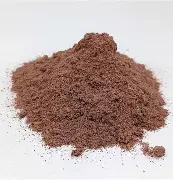
What Does Quality MHRB Powder Look Like?
Appearance alone cannot prove the identity, purity, or chemical composition of a botanical product. However, visual inspection can be useful as an initial quality-control step.
Good-quality botanical powder should generally appear:
- Dry rather than visibly wet
- Relatively uniform in texture
- Free from obvious insects or foreign materials
- Free from visible mold
- Free from unusual non-plant debris
- Consistent with the expected color of the source material
Root bark commonly has a reddish-brown to brown appearance, although color can vary according to growing conditions, processing, age, moisture content, and storage.
A very dark or unusually colored powder should not automatically be considered higher quality. Likewise, a particular color by itself cannot authenticate Mimosa tenuiflora.
Why Moisture Matters
Moisture is an important consideration when storing powdered botanical materials.
Excess moisture can create conditions that encourage:
- Mold growth
- Microbial contamination
- Clumping
- Changes in texture
- Deterioration during long-term storage
For this reason, MHRB powder should be protected from unnecessary humidity and stored in a clean, dry environment.
A sealed container can help reduce exposure to humidity and environmental contaminants.
MHRB Powder vs. Shredded Root Bark
One of the easiest distinctions to understand is particle size.
Shredded root bark consists of larger pieces or strips of bark, while MHRB powder has been ground into much smaller particles.
MHRB powder
Powder has a fine texture and is easier to measure and incorporate into appropriate botanical applications where powdered plant material is permitted and suitable.
Shredded bark
Shredded material retains a larger physical structure and may be preferred for applications where a coarser plant material is more appropriate.
Neither form should automatically be considered “better.” The appropriate form depends on the intended lawful application and the requirements of that application.
Traditional and Cultural Background
Mimosa tenuiflora has a substantial ethnobotanical history.
Scientific literature documents traditional uses of different parts of the plant in Mexico and northeastern Brazil. In Mexico, the bark has historically been associated with traditional applications involving skin injuries and inflammation. Research reviews also document cultural and traditional uses of the species in northeastern Brazil.
It is important, however, to distinguish traditional use from modern clinical evidence.
A historical use does not automatically mean that a product has been clinically proven to treat a medical condition.
For readers interested in the scientific literature, a review published in the International Journal of Molecular Sciences examines traditional uses and biological research involving the Mimosa genus.
[OUTBOUND LINK: Link “International Journal of Molecular Sciences review” to the relevant scientific review.]
MHRB Powder and Natural Plant Compounds
Research into Mimosa tenuiflora has identified numerous naturally occurring compounds in different parts of the plant.
For example, published pharmacognosy research has reported triterpenoid and steroid saponins as well as other compounds in the bark.
However, the chemical composition of plant material can vary according to factors such as:
- Geographic origin
- Soil conditions
- Climate
- Plant age
- Plant part
- Harvesting practices
- Drying conditions
- Storage
- Processing
Therefore, the phrase “MHRB powder” describes a botanical material, not a guaranteed standardized chemical preparation.
How to Evaluate MHRB Powder Quality
When evaluating a botanical powder, consider more than appearance.
1. Botanical identity
Look for clear information identifying the plant as Mimosa tenuiflora and explaining the historical synonym Mimosa hostilis.
2. Source information
A responsible supplier should be able to provide useful information about the general origin and processing of the botanical material.
3. Physical condition
Check for excessive moisture, unusual odors, visible mold, insects, or foreign material.
4. Packaging
Packaging should protect the powder from moisture, contamination, and unnecessary environmental exposure.
5. Testing documentation
Where available, independent laboratory documentation can provide additional information about the material.
A Certificate of Analysis (COA) can be useful when it is applicable to the product and provided by a legitimate laboratory. Testing may address different quality parameters depending on the material and laboratory.
Proper Storage of MHRB Powder
Correct storage can help maintain the physical quality of powdered botanical material.
A practical storage environment should be:
- Cool
- Dry
- Clean
- Protected from direct sunlight
- Protected from excessive humidity
- Free from strong odors and contaminants
Keep the container properly sealed when the product is not being handled.
Avoid repeatedly opening the container in humid environments because introducing moisture can contribute to clumping and deterioration.
For a detailed storage checklist:
MHRB Powder and Responsible Botanical Research
The growing availability of information about Mimosa tenuiflora makes it important to distinguish reliable botanical information from unsupported claims.
When researching MHRB powder, prioritize:
- Scientific botanical databases
- Peer-reviewed research
- University resources
- Government or institutional publications
- Reputable botanical references
Be cautious with websites that make absolute claims about health benefits without providing supporting evidence.
Kew’s botanical database, for example, provides taxonomic information and distribution data that can help establish the identity of the species.
Frequently Asked Questions About MHRB Powder
What does MHRB stand for?
MHRB commonly stands for Mimosa Hostilis Root Bark. The plant is currently accepted botanically as Mimosa tenuiflora (Willd.) Poir.
Is Mimosa hostilis the same as Mimosa tenuiflora?
Mimosa hostilis is listed by Kew as a synonym of Mimosa tenuiflora.
What color is MHRB powder?
MHRB powder is commonly described as reddish-brown or brown, but appearance can vary. Color alone should not be used as proof of botanical identity or quality.
How should MHRB powder be stored?
Store it in a clean, dry, sealed container away from excessive humidity, heat, and direct sunlight.
Is MHRB powder the same as shredded root bark?
No. Powder is finely ground, while shredded root bark consists of larger pieces. Both refer to different physical forms of botanical material.
Does traditional use prove medical effectiveness?
No. Traditional use provides ethnobotanical information but does not by itself establish clinical effectiveness or safety.
Why are both “Mimosa hostilis” and “Mimosa tenuiflora” used?
Mimosa tenuiflora is the currently accepted botanical name in Kew’s Plants of the World Online, while Mimosa hostilis is a historical synonym that remains widely used in common and commercial terminology.
Final Thoughts
MHRB powder refers to powdered root bark associated with Mimosa tenuiflora, a tropical shrub or tree with a long botanical and ethnobotanical history.
Understanding the difference between common and scientific names, recognizing the limitations of visual identification, protecting powdered material from moisture, and consulting reliable scientific sources are all important parts of responsible botanical research.
For anyone researching this plant, the most useful approach is to separate documented botanical information from unsupported claims and to check applicable laws and regulations before purchasing, possessing, importing, or using botanical materials.