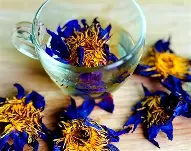
Searching for blue lotus for sale can lead to a variety of products, including dried flowers, botanical materials, ornamental plants, and fragrance ingredients. Understanding the differences between these products can help you make an informed decision and avoid confusion between authentic blue lotus and other plants sold under similar names.
Blue lotus, commonly known as the Egyptian blue lotus or blue water lily, is an aquatic flowering plant with a long history of cultural significance. Its striking appearance and association with ancient Egyptian art have made it a subject of interest among botanical enthusiasts, gardeners, collectors, and researchers.
In this guide, we explain what blue lotus is, the different product forms available, how to assess botanical quality, what to know about responsible sourcing, and the important safety considerations to understand before purchasing.
What Is Blue Lotus?
Blue lotus is the common name generally associated with Nymphaea caerulea, an aquatic plant in the water lily family, Nymphaeaceae. Some botanical authorities classify it as Nymphaea nouchali var. caerulea, so scientific references may use either name.
The plant is known for its distinctive flowers, floating leaves, and association with freshwater environments. It is native to parts of Africa and has a notable place in ancient Egyptian artistic and cultural traditions.
Unlike a terrestrial flower, blue lotus grows in aquatic environments. Its roots and rhizomes develop beneath the water, while its leaves and flowers extend toward or float on the surface.
When researching blue lotus for sale, knowing the botanical name is an important first step because common names are not always applied consistently by sellers.
For further botanical information, consult the Royal Botanic Gardens, Kew plant database.
What Types of Blue Lotus Products Are Available?
Blue lotus products can differ considerably in their appearance, processing, intended use, and composition. Understanding these differences is useful when comparing products from botanical suppliers.
1. Dried Blue Lotus Flowers
Dried blue lotus flowers are botanical materials that have been harvested and dried for storage. They may retain some of the plant’s recognizable flower structure, although their color and appearance can change during drying.
When evaluating dried flowers, look for clear product descriptions, accurate botanical identification, and information about how the material was handled and stored.
Do not assume that all dried flowers are suitable for consumption simply because they are sold as botanical products.
2. Blue Lotus Petals
Some sellers offer petals separately rather than supplying the whole flower. Petal-only products may be easier to inspect for visible plant characteristics, but their appearance alone cannot establish species identity or purity.
Check whether the seller explains how the petals were separated, dried, packaged, and stored.
3. Blue Lotus Plants
Live blue lotus plants are generally of interest to aquatic gardeners and plant collectors. Because this is a water lily, successful cultivation depends on suitable water conditions, sufficient light, and an appropriate growing environment.
Before purchasing a live plant, confirm the species, growing requirements, shipping conditions, and any applicable restrictions on the movement of aquatic plants.
4. Blue Lotus Extracts and Fragrance Ingredients
Extracts and fragrance materials are processed products, not simply interchangeable versions of dried flowers. Their chemical composition depends on the plant material and the extraction or manufacturing process.
A product intended for fragrance use should not automatically be considered suitable for ingestion or other uses. Always follow the product’s stated purpose and safety instructions.
How to Evaluate Blue Lotus Quality Before Buying
When comparing blue lotus products, quality should be assessed using more than price or appearance alone.
Confirm the botanical identity
Look for the scientific name Nymphaea caerulea or a clearly explained botanical synonym. Reliable product descriptions should distinguish blue lotus from true lotus, Nelumbo nucifera, and from other water lily species.
Examine the product description
A useful listing should explain whether the item contains whole flowers, petals, live plants, or a processed extract. It should also identify the intended use and provide clear information about the quantity supplied.
Avoid listings that rely exclusively on vague labels such as “premium lotus” without identifying the plant.
Check handling and storage information
Dried botanical materials should be protected from excess moisture, contamination, and unsuitable storage conditions. Clear packaging and storage instructions provide useful information about how a seller handles its products.
A pleasant smell or vivid color is not proof of purity, authenticity, or safety.
Look for appropriate testing documentation
Where relevant, ask whether the seller can provide documentation covering botanical identity, contamination controls, or product testing.
A certificate of analysis should identify the material tested, the tests performed, the results, and the laboratory responsible. A document that merely displays a company logo or an unexplained list of values is not sufficient evidence of quality.
Testing requirements differ depending on whether the product is an ornamental plant, a fragrance ingredient, or another type of botanical preparation.
Assess the supplier’s transparency
A responsible supplier should provide clear product information, accessible customer support, understandable shipping terms, and an accurate description of the item being sold.
Be cautious of exaggerated claims, missing product details, or promises that cannot be independently verified.
Why Is Blue Lotus Associated With Ancient Egypt?
Blue lotus is strongly associated with ancient Egyptian culture. The flower appears in historical artwork and decorative representations, including imagery connected with ceremonies and symbolic themes.
Its recurring presence in ancient Egyptian visual culture has contributed to modern interest in the plant. The flower is often associated with renewal, the sun, and the cycles of life.
However, historical symbolism should be distinguished from modern claims about the plant’s effects. Ancient artistic representations do not establish that a particular preparation has a specific medical or psychological benefit.
People interested in blue lotus for sale may therefore find it useful to research both the plant’s botanical characteristics and its cultural history.
What Should You Know About Blue Lotus Safety?
Blue lotus is a botanical material, but natural origin does not automatically make a product safe. Research into the safety of the plant and its different preparations remains limited.
A scientific study published in Molecules examined authentic blue lotus extracts and commercial products. The researchers found differences in chemical composition among the samples and highlighted the limited safety information available for the plant and its extracts.
Importantly, findings concerning diluted fragrance ingredients cannot automatically be applied to teas, concentrated extracts, or other preparations.
Before purchasing a blue lotus product, consider the following:
- Confirm whether the product is intended for ornamental, fragrance, or another specific use.
- Do not rely on unsupported claims that it treats medical conditions or guarantees particular effects.
- Be aware that botanical products can vary in composition and may be contaminated or incorrectly identified.
- Consult a qualified healthcare professional before considering ingestion, especially if you take medication or have an underlying health condition.
- Keep products away from children and pets, and follow applicable local laws and product instructions.
For further information, read the peer-reviewed study on the chemical composition and safety assessment of blue lotus extracts.
How to Compare Blue Lotus Suppliers
If you are researching blue lotus for sale from different suppliers, use consistent criteria rather than relying on the lowest advertised price.
Consider these factors:
Botanical identification: Does the listing specify the plant’s scientific name?
Product format: Is it a dried flower, a petal product, a live plant, or an extract?
Quantity and presentation: Is the amount supplied clearly stated, and does the product description match the photographs?
Quality information: Are handling procedures, storage instructions, and relevant testing records available?
Customer support: Can the supplier answer reasonable questions about product identity and intended use?
Shipping and returns: Are shipping charges, delivery estimates, restrictions, and return conditions clearly explained?
Comparing these details can help you distinguish a well-documented listing from one that provides little meaningful information.
Frequently Asked Questions About Blue Lotus for Sale
What is the scientific name of blue lotus?
Blue lotus is commonly identified as Nymphaea caerulea. Some botanical authorities use Nymphaea nouchali var. caerulea.
Are blue lotus and Egyptian blue lotus the same?
These names commonly refer to the same aquatic plant. However, common names can be used inconsistently, so checking the botanical name is advisable.
What forms of blue lotus can be purchased?
Depending on the supplier and local regulations, products may include dried flowers, petals, live ornamental plants, and fragrance extracts. Their intended uses and safety requirements are not necessarily the same.
How can I tell whether blue lotus is authentic?
Start by checking the scientific name, product description, supplier transparency, and relevant documentation. Photographs and color alone cannot reliably establish authenticity.
Does a higher price guarantee better quality?
No. Price alone does not prove botanical identity, purity, or appropriate handling. Compare the available documentation and product details instead.
Is blue lotus proven to provide medical benefits?
Strong clinical evidence establishing blue lotus as a treatment for specific medical conditions is lacking. Historical use and laboratory research should not be presented as proof of clinical effectiveness.