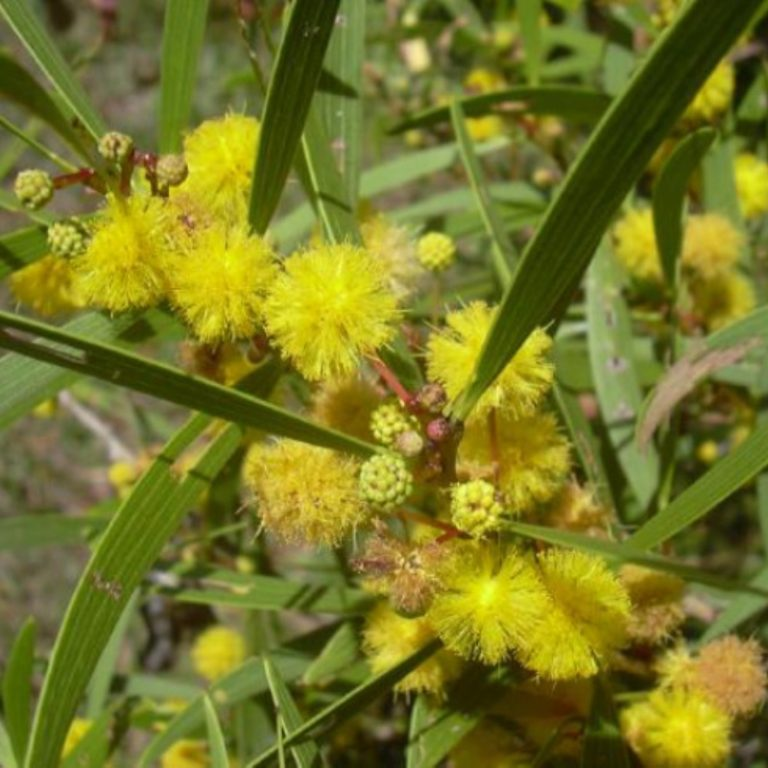
Acacia root bark comes from trees and shrubs in the Acacia genus, a large group of plants in the legume family (Fabaceae). One species that attracts particular botanical interest is Acacia confusa, a tropical tree native to parts of Taiwan, the Philippines, Borneo, Malaya, and Sumatra.
So, what is Acacia confusa root bark used for?
The answer depends on the context. The plant has a history of traditional and practical uses, while its bark has also attracted scientific interest because it contains a variety of naturally occurring plant compounds. Today, researchers, botanists, herbal-product enthusiasts, and people interested in ethnobotany continue to study Acacia confusa and related Acacia species.
In this guide, we will look at the botanical identity of Acacia confusa, traditional and practical uses associated with acacia bark, why the root bark is chemically interesting, and why accurate identification and responsible sourcing matter.
What Is Acacia Confusa?
Acacia confusa Merr. is a species belonging to the family Fabaceae. It is generally described as a shrub or tree associated with tropical environments.
According to the Royal Botanic Gardens, Kew, Acacia confusa has a native range extending from Taiwan through western Malesia to the Philippines. Kew also recognizes Racosperma confusum as a synonym of the species.
The plant is sometimes encountered under common names such as Formosan koa or other regional names, although common names can vary considerably between locations.
For reliable botanical information, it is better to identify the plant by its scientific name, Acacia confusa, rather than relying exclusively on common names.
Botanical classification
- Scientific name: Acacia confusa Merr.
- Family: Fabaceae
- Genus: Acacia
- Growth form: Shrub or tree
- Native region: Taiwan, western Malesia and the Philippines
- Habitat: Primarily tropical environments
For more botanical information, see the Kew Plants of the World Online profile for Acacia confusa.
What Is Acacia Root Bark?
The term acacia root bark refers to the bark collected from the roots of an Acacia species.
It is important to understand that “acacia root bark” is not automatically the same material regardless of where it comes from. There are many Acacia species, and their chemistry, appearance, geographic distribution, and traditional uses can differ.
For that reason, responsible botanical sourcing should identify the species rather than simply labeling a product “acacia bark.”
When discussing Acacia confusa, the term Acacia confusa root bark specifically refers to root-bark material associated with this species.
This distinction is particularly important for researchers, collectors, botanical enthusiasts, and anyone comparing different Acacia species.
What Is Acacia Confusa Root Bark Used For?
Historically and culturally, different parts of Acacia species have been used for a variety of purposes. These can include applications involving natural materials, traditional plant knowledge, research, and other practical uses.
However, it is important not to assume that every reported use of one Acacia species applies to Acacia confusa. Botanical species can have substantially different chemical profiles.
1. Botanical and ethnobotanical research
One of the most important contemporary uses of Acacia root bark is as a subject of botanical and ethnobotanical research.
Researchers study plants such as Acacia confusa to better understand:
- Plant identification
- Traditional knowledge
- Geographic distribution
- Plant chemistry
- Species relationships
- Natural compounds
- Historical uses of plants
Ethnobotany examines the relationships between people and plants, including how communities have historically identified, used, and managed plant resources.
This makes Acacia confusa interesting not only as a plant species but also as part of the broader study of tropical plant knowledge.
2. Study of naturally occurring plant compounds
The bark of many plants contains secondary metabolites—naturally occurring chemical compounds that can help plants interact with their environment.
Scientists investigate these compounds to understand their chemical structures, biological properties, and potential applications.
Acacia confusa is particularly interesting from a phytochemical perspective because scientific literature has identified several naturally occurring constituents in different parts of the plant.
However, the presence of a compound in a plant does not automatically mean that the plant or its bark has a proven medical benefit.
This distinction is important when reading online claims about herbal products.
3. Traditional plant knowledge
Various Acacia species have long histories of traditional use in different parts of the world.
Traditional plant knowledge can include applications involving bark, wood, leaves, seeds, fibers, and other plant parts.
However, traditional use should be presented in its historical and cultural context rather than as proof of a modern medical treatment.
When discussing Acacia confusa root bark, it is especially important to distinguish documented traditional uses from modern internet claims that may not have reliable botanical or scientific sources behind them.
4. Natural-material and plant-product research
Acacia species have also been investigated for practical applications involving natural materials.
Depending on the species, plant parts may contain tannins, pigments, fibers, resins, or other compounds of interest to researchers and natural-material enthusiasts.
The broader Acacia genus has therefore attracted attention in areas such as:
- Natural dyes
- Plant chemistry
- Forestry
- Botanical research
- Environmental studies
- Natural-material research
The exact properties of a plant material depend on the species, plant part, growing conditions, and processing history.
5. Educational study of tropical plants
Another useful context for Acacia root bark is botanical education.
Acacia confusa provides an interesting example for learning about:
- Tropical tree species
- Fabaceae plants
- Plant identification
- Geographic distribution
- Plant morphology
- Ethnobotany
- Plant chemistry
- Species classification
Studying a plant from several perspectives can provide a much more accurate understanding than focusing only on a single claimed “use.”
Why Is Acacia Confusa Interesting to Researchers?
There are several reasons Acacia confusa continues to attract botanical and scientific attention.
First, it has a clearly documented tropical distribution. Kew lists its native range as Taiwan, Borneo, Malaya, the Philippines, and Sumatra, with the species also introduced to various other regions.
Second, the species belongs to the Fabaceae family, one of the major flowering-plant families.
Third, Acacia species are chemically diverse. Different species and plant parts can contain different combinations of naturally occurring compounds.
Finally, Acacia confusa provides an interesting example of how traditional knowledge, botanical science, chemistry, and modern plant research can overlap.