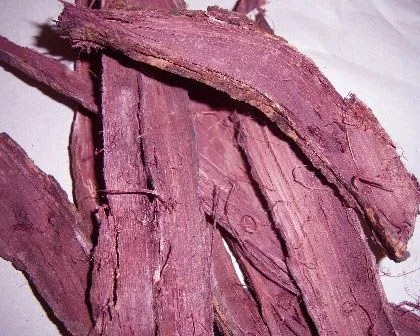
Mimosa tenuiflora bark has attracted attention for generations because of its distinctive botanical characteristics, traditional applications, and importance in several regions of Latin America. Commonly associated with the names tepezcohuite and jurema-preta, this bark comes from a hardy tree or shrub belonging to the legume family, Fabaceae.
Understanding Mimosa tenuiflora bark begins with learning how the plant grows, how its bark is identified, and why it has been used in traditional practices. Modern scientific research has also investigated its chemical composition and potential applications, particularly in skin-related research. However, traditional use should not automatically be interpreted as proven medical effectiveness.
This guide explores the plant’s botanical background, bark characteristics, traditional uses, research, quality considerations, and responsible handling.
What Is Mimosa Tenuiflora Bark?
Mimosa tenuiflora is a woody shrub or small-to-medium-sized tree native to parts of Latin America, including Mexico and northeastern Brazil. It belongs to the Fabaceae family, which includes many trees, shrubs, and other plants that produce seed pods.
The plant is widely known by several regional names, including tepezcohuite, jurema-preta, and black jurema. Its bark has a long history of traditional use, particularly in Mexico and parts of South America.
According to the Royal Botanic Gardens, Kew, Mimosa tenuiflora is an accepted botanical name, although older scientific literature may use names such as Mimosa hostilis. These naming differences are important when researching the plant or comparing botanical references.
The bark is one of the plant’s most discussed parts because it contains a variety of naturally occurring chemical compounds, including tannins and other plant constituents. Researchers have studied these substances to better understand the plant’s traditional applications and biological properties.
Where Does Mimosa Tenuiflora Grow?
Mimosa tenuiflora occurs naturally across parts of southern Mexico, Central America, and northern South America, with northeastern Brazil being an important part of its distribution.
The plant can grow in challenging environmental conditions, including dry forests, thorny vegetation, and areas with seasonal rainfall. Its ability to tolerate a range of soil and climatic conditions helps explain why it is found in different habitats.
Several environmental factors influence its growth:
- Climate: The plant occurs in tropical and subtropical environments, including areas with pronounced dry seasons.
- Soil: It can grow in different soil conditions, depending on the local environment.
- Rainfall: Seasonal moisture influences growth, flowering, and seed development.
- Habitat: Natural populations may occur in dry woodland, scrubland, and disturbed areas.
Understanding the plant’s natural distribution is useful when studying its botanical identity and the environmental conditions associated with its growth.
How to Identify Mimosa Tenuiflora Bark
Identifying botanical material accurately is important because several unrelated plants share similar common names or physical characteristics.
Mimosa tenuiflora bark is often described in botanical literature as reddish-brown to grayish, with a fibrous texture and a wrinkled exterior. The appearance can vary according to the plant’s age, the part collected, processing, and storage conditions.
1. Color and external appearance
The bark may display reddish-brown, dark brown, or grayish tones. Differences in color do not necessarily establish whether a sample is authentic, because natural variation and processing can affect its appearance.
2. Fibrous texture
The bark is described as fibrous in published botanical research. When examined closely, its structure may appear layered or stringy rather than uniformly smooth.
3. Natural variation
Bark collected from different parts of a plant may differ in thickness, texture, and color. Stem bark and root bark should not automatically be treated as interchangeable, because they can differ in chemical composition and documented uses.
4. Botanical verification
Appearance alone is not a reliable method of confirming species identity. When accuracy matters, a qualified botanist, authenticated reference material, or suitable laboratory analysis can provide stronger evidence than color or texture alone.
For additional botanical context, consult the Royal Botanic Gardens, Kew plant database.
Traditional Uses of Mimosa Tenuiflora Bark
The traditional use of Mimosa tenuiflora varies between communities and regions. Its history includes applications involving skin care, traditional medicine, and cultural practices.
Traditional skin care
In Mexico, the bark is commonly associated with the name tepezcohuite and has traditionally been used in preparations intended for skin wounds and burns.
This history has contributed to scientific interest in the plant’s chemical constituents and their possible interactions with skin cells.
However, traditional applications are not equivalent to clinical proof. The effectiveness and safety of a particular preparation depend on factors such as its composition, concentration, purity, and intended use.
Traditional botanical knowledge
In parts of Latin America, knowledge of Mimosa tenuiflora has been passed between generations. This knowledge forms part of broader traditions involving locally available plants and their cultural significance.
Documenting such practices responsibly means distinguishing historical records from claims that have been confirmed through modern scientific research.
Botanical and material uses
Like other woody plants, Mimosa tenuiflora has also been used for practical purposes, including fuel and certain local materials. These uses illustrate that the plant has significance beyond its bark’s traditional medicinal associations.
What Does Scientific Research Say About Mimosa Tenuiflora Bark?
Scientific interest in Mimosa tenuiflora bark focuses partly on its chemical composition and the biological activity of certain constituents.
Researchers have identified various compounds in the bark, including tannins, saponins, lipids, phytosterols, and other plant-derived substances. The precise composition can vary with the plant material and the method used to analyze it.
Some laboratory studies have investigated compounds obtained from the bark in connection with skin-cell activity and wound-healing research.
For example, a study indexed in PubMed examined constituents isolated from aqueous bark extracts and their effects on dermal fibroblasts and keratinocytes in laboratory settings. The findings were not uniformly positive: some preparations affected cell viability and proliferation differently from isolated fractions.
This distinction matters. A laboratory result does not establish that raw bark or a commercially available preparation will produce the same effect in humans.
More research is needed to determine which preparations, if any, have reliable clinical benefits and what risks may be associated with different forms of exposure.
Mimosa Tenuiflora Bark and Tepezcohuite: Are They the Same?
The terms are closely related, but their use can depend on the region and context.
Mimosa tenuiflora is the scientific name of the plant. Tepezcohuite is a common name particularly associated with the plant in Mexico and with its traditional skin-related applications.
The term Mimosa hostilis also appears in older literature and commercial descriptions as a scientific synonym for the same species.
When reading product descriptions or scientific publications, it is helpful to compare the scientific name rather than relying exclusively on common names.
This is especially important when distinguishing Mimosa tenuiflora from other plants in the genus Mimosa, including Mimosa pudica, which is a different species with different botanical characteristics.
What Influences the Quality of Mimosa Tenuiflora Bark?
The quality of botanical bark depends on several factors. No single visual characteristic can establish its purity, identity, or suitability for a particular application.
Correct botanical identity
A clearly documented scientific name is a useful starting point. Suppliers and researchers should avoid relying only on broad labels such as “mimosa bark,” because those words may refer to different species.
Collection and processing
The part of the plant collected, the condition of the raw material, and subsequent processing can influence its characteristics. Reliable documentation helps buyers and researchers understand what a sample actually contains.
Storage conditions
Moisture, heat, and unsuitable storage environments can contribute to deterioration or microbial contamination. Botanical materials should be stored according to appropriate product-specific guidance, with packaging that protects against moisture and contamination.
Testing and documentation
Where appropriate, independent testing can help assess botanical identity, microbial contamination, heavy metals, pesticides, and other relevant quality parameters.
Laboratory results should be interpreted according to the test performed. For example, a test confirming species identity does not automatically establish that a material is free of contaminants or safe for every intended use.
Responsible Sourcing and Sustainability
Responsible sourcing is an important consideration for botanical materials. Demand for a particular plant can affect how it is collected, processed, and traded.
When evaluating a supplier, consider asking about the material’s origin, botanical identification procedures, harvesting practices, and quality-control documentation.
Sustainable sourcing may include responsible collection practices, cultivation where suitable, and measures that avoid unnecessary damage to established plants or local habitats.
Consumers should also be cautious of unsupported claims about a product’s origin, purity, or environmental benefits. Clear documentation provides a stronger basis for evaluating these claims.
Safety Considerations
Natural origin does not automatically mean that a botanical material is safe. The safety of Mimosa tenuiflora bark depends on its composition, preparation, route of exposure, and intended application.
Research into traditional skin applications should not be taken as proof that raw bark is suitable for treating burns, open wounds, eczema, or other medical conditions.
Do not apply unverified botanical material to damaged skin or use it as a substitute for appropriate medical care. Significant burns and deep or infected wounds require professional medical assessment.
Mimosa tenuiflora is also associated with compounds that may be subject to drug-control laws. Laws differ between countries and can apply to particular plant materials, extracts, or preparations. Anyone considering purchasing, transporting, or possessing such material should check the applicable local laws and import restrictions.