Where to Buy Blue Lotus Tea: A Complete Guide to Choosing Quality Blue Lotus
If you are wondering where to buy blue lotus tea, the most important thing is not simply finding the cheapest product. Quality, botanical identification, sourcing information, processing methods, and clear labeling can all make a difference when choosing dried blue lotus for tea.
Blue lotus, scientifically known as Nymphaea caerulea, is an aquatic flowering plant historically associated with ancient Egyptian culture. Today, dried blue lotus flowers are commonly sold for herbal preparations, including tea.
This guide explains what blue lotus tea is, what to look for when buying it, how to evaluate an online seller, and important considerations before consuming botanical products.
What Is Blue Lotus Tea?
Blue lotus tea is an herbal infusion prepared using dried blue lotus flowers, usually identified botanically as Nymphaea caerulea.
The plant is also known by names including blue Egyptian lotus and blue water lily. Kew’s Plants of the World Online recognizes Nymphaea caerulea as a synonym associated with Nymphaea nouchali var. caerulea.
Unlike traditional teas made from Camellia sinensis, blue lotus tea is a herbal infusion and naturally contains no tea leaves.
The dried flowers are generally valued for their floral character and long history of traditional and cultural use.
Where Can You Buy this flower?
Blue lotus tea and dried blue lotus flowers are available from various online botanical retailers, herbal shops, specialty tea suppliers, and marketplaces.
However, not every listing provides the same level of information.
When searching for blue lotus tea, look for a seller that clearly identifies:
- The botanical name
- The plant part being sold
- Country or region of sourcing where available
- Whether the flowers are whole or cut
- Net weight
- Storage recommendations
- Batch or lot information when available
- Clear product labeling
- Contact information for the seller
Buying Blue Lotus Tea Online
Online purchasing can be convenient, particularly if local tea shops do not carry blue lotus.
Before ordering, examine the product page carefully rather than relying solely on photographs or marketing claims.
A useful product page should explain exactly what the customer is purchasing.
How to Choose Quality Blue Lotus Tea
Quality is one of the most important considerations when buying botanical products.
A high-quality listing should provide enough information for you to identify the product and understand how it has been prepared.
1. Check the Botanical Name
Look for Nymphaea caerulea on the product label or description.
Common names can sometimes create confusion because several water-lily species have similar names. Using the botanical name makes it easier to determine exactly which plant is being sold.
2. Look at the Appearance
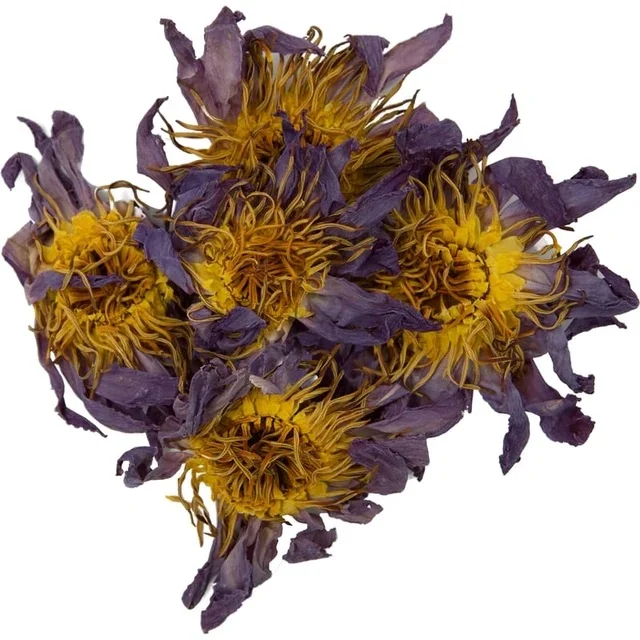
Dried blue lotus flowers should retain recognizable botanical characteristics rather than appearing like an unidentified mixture of plant material.
Depending on processing and storage, dried flowers may vary in color. Therefore, appearance alone should not be treated as proof of authenticity.
Instead, consider appearance together with botanical identification, sourcing information, packaging, and seller transparency.
3. Check the Product Description
A professional seller should explain whether the product consists of:
- Whole dried flowers
- Cut flowers
- Petals
- A loose herbal blend
- Powder
- Extract
This distinction matters because different preparations can have different compositions and concentrations.
Research from the National Institutes of Health notes that the preparation of a botanical can affect its constituents and safety profile.
4. Examine Packaging and Storage Information
Good packaging should protect dried botanicals from excessive moisture, heat, and light.
Look for packaging that is properly sealed and includes useful information such as the product name, weight, botanical identity, and storage guidance.
5. Consider Testing and Quality Documentation
For customers purchasing botanical products online, transparency can be valuable.
Where available, look for information about:
- Batch testing
- Identity testing
- Microbial testing
- Heavy-metal testing
- Pesticide screening
- Certificates of analysis
Testing is particularly useful when a seller makes specific claims about purity or authenticity.
What Does Blue Lotus Tea Taste Like?
This flower is generally described as having a mild floral and botanical character.
The exact flavor can vary according to the plant material, drying process, freshness, and preparation.
Some people enjoy it on its own, while others combine floral herbs with other caffeine-free ingredients.
If you are purchasing blue lotus specifically for its flavor, buying whole or recognizable dried flowers can make it easier to evaluate the raw material before preparation.
Blue Lotus Tea and Its Historical Background
Blue lotus has a particularly interesting cultural history.
Ancient Egyptian artwork and archaeological evidence have long been associated with Nymphaea species. Research has discussed depictions of blue lotus in Egyptian papyri, tombs, and ritual contexts dating back thousands of years.
This historical association is one reason blue lotus remains popular among people interested in traditional botanicals and ancient plant culture.
However, historical use should not automatically be interpreted as scientific evidence that a plant treats a particular medical condition.
Blue Lotus Tea: Traditional Uses vs. Modern Evidence
Blue lotus has been associated with traditional practices and modern herbal use, including claims relating to relaxation and sleep.
Scientific literature confirms that the plant contains a range of naturally occurring compounds, but research on the safety and effects of blue lotus preparations in humans remains limited.
This distinction is important.
Traditional use: describes how a plant has been used historically or culturally.
Scientific evidence: requires controlled research capable of establishing whether a particular effect actually occurs, at what dose, and under what conditions.
Therefore, it is better to describe blue lotus tea as a traditional herbal infusion rather than making unsupported claims that it treats anxiety, insomnia, pain, or other medical conditions.
Is Blue Lotus Tea Safe?
Anyone considering an unfamiliar botanical should approach it with appropriate caution.
The available scientific literature indicates that safety information for blue lotus and its preparations is limited. Researchers have also reported differences between commercial blue lotus products, making product identity and preparation important considerations.
Botanical products can also vary considerably depending on whether they are sold as whole plant material, tea, tinctures, concentrates, or extracts.
The NIH’s Office of Dietary Supplements emphasizes that the safety of a botanical depends on factors including its chemical composition, preparation, amount used, and interactions with other substances.
Important: People who are pregnant or breastfeeding, taking prescription medications, managing a medical condition, or considering concentrated botanical extracts should speak with a qualified healthcare professional before using blue lotus products.
Blue Lotus Tea vs. Blue Lotus Extract
These products should not automatically be treated as equivalent.
This flower generally refers to an infusion made from dried botanical material.
Blue lotus extract is produced using an extraction process that can concentrate particular constituents.
The preparation method can significantly influence the chemical composition of a botanical product. Consequently, information about a whole dried flower should not automatically be applied to a concentrated extract.
For this reason, customers should read the product description carefully and determine whether they are buying dried flowers, tea material, powder, tincture, or an extract.
Questions to Ask Before Buying Blue Lotus Tea Online
Before placing an order, ask:
Is the botanical name listed?
A reputable product description should identify the plant clearly.
Is the product actually blue lotus?
Check whether the seller identifies the material as Nymphaea caerulea rather than relying only on the common name.
What form is being sold?
Determine whether you are buying whole flowers, petals, cut material, powder, or extract.
Is the weight clearly stated?
The package size should be clearly displayed so you can compare products accurately.
Does the seller provide contact information?
A transparent business should provide a way for customers to contact them with questions about their products.
Does the packaging provide adequate information?
Look for product identification, weight, storage instructions, and other relevant labeling.
How to Store Dried Blue Lotus
Once purchased, dried botanicals should generally be protected from moisture, excessive heat, and direct sunlight.
A suitable storage approach includes:
- Keep the product tightly sealed.
- Store it in a cool, dry location.
- Avoid humid environments.
- Keep it away from direct sunlight.
- Avoid repeatedly exposing the material to moisture.
- Follow any storage instructions supplied by the seller.
Proper storage can help preserve the quality and aroma of dried botanical material.
Internal link opportunity: Link “how to store dried blue lotus flowers” to your related Blue Lotus storage article if you have one.
Why Seller Transparency Matters
When buying blue lotus tea online, the seller is an important part of the purchasing decision.
A professional botanical retailer should make it easy for customers to understand what they are purchasing.
Useful signs include:
- Accurate botanical identification
- Detailed product descriptions
- Clear product photographs
- Transparent packaging information
- Clearly stated quantities
- Accessible customer support
- Appropriate safety information
- Consistent product labeling
Be cautious of listings that make dramatic medical claims without providing credible evidence.
Frequently Asked Questions About Blue Lotus Tea
Where can I buy blue lotus tea?
Blue lotus tea can be found through specialty herbal retailers, botanical shops, and online stores. When purchasing online, look for products that clearly identify the botanical as Nymphaea caerulea and provide detailed information about the material.
What is the botanical name for blue lotus?
Blue lotus is commonly identified as Nymphaea caerulea. Kew currently lists Nymphaea caerulea as a synonym associated with Nymphaea nouchali var. caerulea.
Is blue lotus the same as white lotus?
No. Blue lotus and white lotus can refer to different Nymphaea species. For example, Kew treats Nymphaea lotus as a separate accepted species.
Is blue lotus tea the same as regular tea?
No. Blue lotus tea is a herbal infusion made from blue lotus botanical material. Traditional tea comes from Camellia sinensis.
What should I look for when buying blue lotus?
Look for accurate botanical identification, clear labeling, product form, weight, sourcing information, appropriate packaging, and transparent seller information.
Does blue lotus tea contain caffeine?
Blue lotus is not Camellia sinensis, the plant used to make traditional black, green, white, and oolong teas. Therefore, it should not be categorized as conventional caffeinated tea simply because it is prepared as an infusion.
Final Thoughts: Choosing Blue Lotus Tea Online
Finding blue lotus tea online is relatively easy, but finding a clearly identified and transparently described product requires more attention.
Before purchasing, check the botanical name, product form, quantity, packaging, seller information, and available quality documentation. Most importantly, distinguish traditional uses from scientifically established effects.
If you are interested in exploring dried blue lotus as a botanical ingredient, choose a supplier that provides clear product information rather than relying on exaggerated claims.
For educational information about blue lotus, its botanical characteristics, and available forms, explore our related Blue Lotus Flower resources.