How to Identify Quality Mimosa Hostilis Root Bark: A Complete Buyer’s Guide;
Introduction
When purchasing botanical materials online, appearance alone does not always tell the complete story. This is especially true when buying Mimosa Hostilis root bark, which may be offered as whole bark, shredded bark, or finely processed powder.
Knowing what to look for can help buyers distinguish a carefully processed botanical product from material that is old, poorly stored, contaminated, incorrectly identified, or inadequately packaged.
Mimosa Hostilis is a commonly used name for Mimosa tenuiflora (Willd.) Poir., a plant in the Fabaceae family. The Royal Botanic Gardens, Kew currently recognizes Mimosa tenuiflora as the accepted species name and lists Mimosa hostilis as a synonym. Its native range extends from southern Mexico through parts of Central America to northeastern Brazil. [OUTBOUND LINK: Kew Plants of the World Online]
Whether you are purchasing bark for botanical study, traditional craft applications, natural-material projects, or other lawful purposes, quality begins with knowing exactly what you are buying.
What Is Mimosa Hostilis Root Bark?
Mimosa Hostilis, scientifically known as Mimosa tenuiflora, is a thorny shrub or small tree belonging to the legume family, Fabaceae.
The plant occurs naturally across parts of tropical and subtropical regions of the Americas. Kew’s botanical database records its native distribution across areas including Brazil, Mexico, Colombia, Venezuela, Honduras, Nicaragua, Panama, and other parts of the region. [OUTBOUND LINK: Kew botanical profile]
The term “Mimosa Hostilis root bark” generally refers to the bark material obtained from the roots of this plant.
Commercially, it may be sold in several physical forms:
- Whole or larger pieces of bark
- Shredded root bark
- Coarsely ground bark
- Fine root bark powder
The form you choose depends on the intended lawful application.
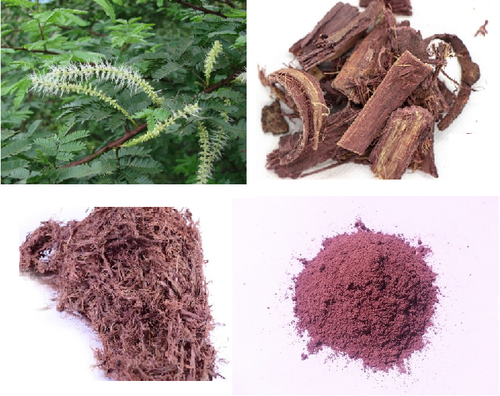
1. Start With Correct Botanical Identification
One of the most important factors when buying any botanical material is confirming the scientific identity.
“Mimosa Hostilis” is an older botanical name. Kew’s Plants of the World Online lists Mimosa hostilis Benth. as a synonym of Mimosa tenuiflora (Willd.) Poir. [OUTBOUND LINK: Kew taxonomy reference]
This distinction matters because common names can sometimes be used loosely in the botanical marketplace.
What should a reputable supplier provide?
Ideally, product information should include:
- Scientific name
- Common or historical name
- Plant part
- Country or region of origin
- Form of the material
- Processing information
- Batch information where available
A supplier that clearly identifies the botanical material gives customers much more information than a listing that simply says “Mimosa bark.”
2. Examine the Natural Appearance
Appearance can provide useful clues about the condition of bark, although it should never be the only quality test.
Depending on processing and origin, genuine root bark can vary naturally in color.
You may see shades ranging from:
- Reddish brown
- Brown
- Tan
- Deep brown
- Reddish-purple or darker tones
Natural botanical products are not manufactured plastics, so every batch does not necessarily look identical.
What should concern you?
Be cautious if the material shows obvious signs of:
- Unusual discoloration
- Visible mold
- Excessive moisture
- Foreign objects
- Synthetic-looking coloring
- Excessive dust or debris unrelated to the plant material
A slightly different color between batches does not automatically mean that one batch is poor quality. Growing conditions, age, processing, and storage can all affect appearance.
3. Check the Texture
Texture is another useful quality indicator.
For shredded bark, the material should generally have a recognizable fibrous or bark-like structure rather than looking like an unidentified mass of debris.
For powder, consistency should be relatively uniform according to the supplier’s stated grind.
Extremely inconsistent material may indicate poor processing or inadequate screening.
However, texture alone cannot prove botanical identity. A professional supplier should be able to provide additional information about sourcing and processing.
4. Look for Clean Processing
Quality botanical material should be processed in a clean environment and protected from unnecessary contamination.
Before purchasing, look for information about:
- Cleaning
- Sorting
- Drying
- Grinding
- Screening
- Packaging
- Storage conditions
A product containing large amounts of sticks, stones, soil, plastic, or unrelated plant material is a poor choice.
A good supplier should take reasonable steps to prevent foreign material from entering the finished product.
5. Pay Attention to Moisture
Moisture is one of the biggest concerns when storing dried botanical materials.
Excess moisture can encourage:
- Mold growth
- Microbial contamination
- Unpleasant odors
- Product degradation
- Clumping in powdered material
Quality dried bark should not arrive visibly wet or unusually damp.
Powder that has become heavily clumped can also indicate exposure to humidity.
This is why proper packaging is just as important as the original quality of the plant material.
6. Evaluate the Aroma
Natural bark has a characteristic earthy, woody botanical smell.
The aroma can vary depending on age, processing, and storage.
A strong chemical, solvent-like, rotten, or otherwise unusual odor should be treated as a warning sign.
If the product smells contaminated or significantly different from what you would expect from dried plant material, contact the supplier before using it for any purpose.
7. Consider the Processing Method
Different customers prefer different forms of root bark.
Whole or larger pieces
Larger pieces allow the buyer to see more of the original plant material and can make visual inspection easier.
Shredded bark
Shredded material is smaller and easier to handle than whole pieces while still retaining visible bark structure.
Powder
Powder is the most finely processed form and is convenient for applications that require a consistent botanical material.
However, because powder contains very small particles, it can be more difficult for a buyer to visually inspect the original bark.
For this reason, transparency about processing is particularly important when purchasing powdered products.
8. Check Packaging Quality
Even excellent botanical material can deteriorate if it is packaged poorly.
Look for packaging that is:
- Clean
- Sealed properly
- Moisture-resistant
- Clearly labeled
- Appropriate for the product
- Protected from excessive heat and humidity
The package should ideally identify the product and provide relevant batch or sourcing information where available.
Avoid products that arrive in damaged, leaking, unsealed, or visibly contaminated packaging.
9. Ask About Country and Region of Origin
Origin is another useful piece of information.
Mimosa tenuiflora has a broad natural range, and Kew records the species as native to several countries in the Americas, including Brazil and Mexico.
A reputable seller should be transparent about the stated source of its material.
However, “Brazilian” or “Mexican” alone should not automatically be treated as a guarantee of superior quality.
The most important factors are still:
Correct botanical identity + clean processing + proper storage + transparent sourcing.
10. Look at the Supplier, Not Just the Product
A good product description is useful, but the supplier’s overall practices can tell you much more.
Before ordering, look for:
Clear product information
The listing should explain what the product actually is rather than relying entirely on vague marketing language.
Consistent communication
A professional seller should be able to answer basic questions about sourcing, processing, packaging, and product form.
Transparent policies
Look for clear shipping, return, and customer-service policies.
Quality control
Where appropriate, suppliers may provide information about batch handling, contaminant screening, or other quality-control practices.
Professional packaging
Presentation is not everything, but careful packaging demonstrates attention to the product’s condition.
11. Red Flags When Buying Mimosa Hostilis Root Bark
Before purchasing, be cautious of suppliers that:
- Do not provide the scientific name
- Make exaggerated claims about product quality
- Refuse to explain where the material comes from
- Provide no information about processing
- Ship material in poorly sealed packaging
- Have descriptions full of contradictory information
- Use misleading botanical names
- Make impossible guarantees about color or potency
- Cannot answer basic questions about their own product
A low price is not necessarily a bargain if the material is poorly processed or incorrectly identified.
12. How to Compare Two Suppliers
If two websites sell what appears to be the same product, compare them using a simple checklist.
| Quality Factor | Supplier A | Supplier B |
|---|---|---|
| Scientific name provided | ✓ / ✗ | ✓ / ✗ |
| Plant part clearly stated | ✓ / ✗ | ✓ / ✗ |
| Country of origin stated | ✓ / ✗ | ✓ / ✗ |
| Processing explained | ✓ / ✗ | ✓ / ✗ |
| Packaging described | ✓ / ✗ | ✓ / ✗ |
| Batch information | ✓ / ✗ | ✓ / ✗ |
| Clear customer policies | ✓ / ✗ | ✓ / ✗ |
| Product form clearly stated | ✓ / ✗ | ✓ / ✗ |
The supplier providing the most transparent and verifiable information is generally the better starting point.
13. How to Store Mimosa Hostilis Root Bark
Once you purchase dried botanical material, proper storage helps preserve its physical condition.
Keep it:
- In a dry environment
- Away from direct sunlight
- Away from excessive heat
- Protected from humidity
- In properly sealed packaging
- Away from strong-smelling chemicals or contaminants
Powdered material deserves particular attention because its larger surface area can make it more susceptible to moisture exposure.
Always follow the supplier’s storage recommendations when they are available.
[INTERNAL LINK: Link the phrase “how to store Mimosa Hostilis root bark powder” to your existing storage guide if you have one.]
14. Why Quality Matters for Natural Dye and Craft Applications
Mimosa bark is also discussed in connection with traditional and natural-material uses.
For craft and natural-dye applications, consistency of the raw material can be particularly important.
Differences in:
- Plant material
- Processing
- Moisture
- Storage
- Particle size
- Batch composition
can influence the final result.
This is another reason why buyers should pay attention to sourcing and processing rather than judging a botanical product solely by its price.
[INTERNAL LINK: Link “Mimosa Hostilis for natural dyeing” to your natural-dyeing article.]
Frequently Asked Questions
Is Mimosa Hostilis the same as Mimosa tenuiflora?
Mimosa Hostilis is an older name that is currently treated as a synonym of Mimosa tenuiflora by Kew’s Plants of the World Online.
What should quality root bark look like?
Dried root bark can naturally vary in color and texture. The material should look like clean, properly processed botanical bark and should not show obvious mold, excessive moisture, or large amounts of foreign material.
Is darker bark always better?
No. Color alone is not a reliable measure of quality. Natural variation, processing, age, and storage can all influence appearance.
Is powder better than shredded bark?
Not necessarily. Powder and shredded bark are simply different forms of processed material. The best choice depends on the lawful application and the buyer’s preference.
How should dried root bark be stored?
Keep it sealed and protected from moisture, heat, direct sunlight, and contamination. Always follow the supplier’s specific storage recommendations.
What is the best way to verify quality?
Look at several factors together: botanical identity, sourcing transparency, physical condition, processing, packaging, storage, and supplier reputation. No single visual characteristic can guarantee quality.
Final Thoughts
Buying quality Mimosa Hostilis root bark is about more than finding the lowest price.
A reliable product should have clear botanical identification, transparent sourcing, appropriate processing, clean packaging, and good storage practices.
Remember that Mimosa hostilis is currently treated as a synonym of Mimosa tenuiflora in Kew’s botanical database, so checking the scientific name is a useful first step when evaluating product listings.
Whether you are interested in botanical materials, natural-dye projects, educational research, or other lawful applications, taking the time to evaluate the source can help you make a much more informed purchasing decision.
Always check the laws and regulations applicable to your location and intended use before purchasing or importing botanical materials.