What Is Mimosa Bark?
Mimosa bark is the bark obtained from certain species in the Mimosa genus. One particularly well-known species is Mimosa tenuiflora, a tree native to parts of Mexico and northeastern Brazil.
The plant has a long history of traditional use, particularly in regions of Latin America. Scientific literature has documented interest in its bark because it contains naturally occurring compounds such as tannins and other polyphenolic substances.
It is important to distinguish Mimosa tenuiflora from other plants commonly called “mimosa.” The name can refer to several different species, and their chemistry and traditional applications can vary considerably.
1. Traditional Skin and Bark Uses
One of the best-documented traditional applications of Mimosa tenuiflora bark is topical use for skin-related purposes.
In Mexico, the bark has traditionally been associated with the plant known as tepescohuite and has been used in preparations relating to burns, wounds and skin lesions. Research has investigated extracts of the bark for wound-healing applications, although this does not mean raw bark should be considered a substitute for established medical treatment.
The interest in the bark partly comes from its relatively high concentration of tannins. One pharmacognostic study reported tannins as the major component group in authentic M. tenuiflora bark.
Important distinction
Traditional use and laboratory research are not the same as proof that a raw botanical product can treat a medical condition. More research is needed to establish appropriate preparations, concentrations, safety and clinical applications.
2. Natural Dye Applications
Another interesting use of mimosa bark is as a source of natural color.
Plant materials containing tannins and other polyphenolic compounds have historically been important sources of natural colorants. Research on the Mimosa genus also documents applications of plant materials as colorants in textile-related contexts.
Depending on the plant material, preparation, fabric and dyeing conditions, natural colors can range through earthy shades such as:
- Brown
- Tan
- Beige
- Reddish-brown
- Pinkish or muted tones
The final color is not determined by the bark alone. Fabric type, water chemistry, mordants, temperature and processing conditions can all influence the resulting shade.
3. Tannin Content
Tannins are among the most interesting naturally occurring compounds found in Mimosa tenuiflora bark.
A pharmacognostic study of genuine Mimosa tenuiflora bark found tannins to be the major component group and reported a tannin content of approximately 16% in the studied material. The researchers noted that the tannins were mainly proanthocyanidins.
Other research has also reported substantial tannin levels in M. tenuiflora, although measured values can vary according to the plant part, location, growing conditions and analytical method.
This is one reason mimosa bark has attracted interest for:
- Natural dyeing
- Botanical research
- Tannin research
- Traditional plant preparations
- Natural-product studies
The percentage reported by one laboratory should therefore not automatically be treated as the guaranteed composition of every batch of bark.
4. Antioxidant and Other Research Interest
Researchers have investigated various species in the Mimosa genus for biological activities associated with their phytochemical compounds.
Reviews of the scientific literature describe research involving antioxidant, antimicrobial, anti-inflammatory and wound-healing activity among different Mimosa species.
However, an important point for readers is that research on an extract, isolated compound or particular Mimosa species should not automatically be interpreted as evidence that ordinary raw mimosa bark produces the same effect.
This distinction is especially important when reading online claims about herbal products.
What Does “Yield Percentage” Mean?
The phrase yield percentage can mean different things depending on what is being measured.
For botanical materials, it generally describes how much usable material or a particular product is obtained compared with the starting material.
A basic calculation is:
Yield (%) = (Final mass ÷ Starting mass) × 100
For example, if a botanical processing experiment starts with 100 grams of dried plant material and produces 20 grams of a particular non-volatile product, the reported mass yield would be 20%.
However, this number alone doesn’t tell you whether one batch is “better” than another.
Why Mimosa Bark Yield Can Vary
There is no single universal mimosa bark yield percentage because the result depends on several factors.
1. Plant species
Different Mimosa species have different chemical profiles and physical characteristics.
Correct botanical identification is therefore important when comparing research results.
2. Plant part
Root bark, stem bark, branches and other plant parts can contain different concentrations of naturally occurring compounds.
Scientific studies specifically distinguish between these plant parts when reporting their findings.
3. Growing conditions
Climate, rainfall, soil conditions, plant age and geographic location can influence plant chemistry.
Consequently, bark harvested from different regions may not have identical characteristics.
4. Moisture content
Wet bark and properly dried bark cannot be compared directly by weight.
For example, a batch containing considerable moisture will weigh more than the same amount of completely dried botanical material.
This is why laboratory comparisons often specify whether measurements are based on fresh weight or dry weight.
5. Particle size
Whole, shredded and powdered botanical materials can behave differently during laboratory analysis and processing.
For this reason, quality specifications should clearly state the physical form of the material being tested.
Is a Higher Yield Always Better?
Not necessarily.
This is an important point when evaluating botanical materials.
A higher mass yield does not automatically mean higher quality. The result could be affected by:
- Moisture
- Plant material composition
- Processing method
- Non-target plant components
- Soluble tannins and other compounds
- Measurement methodology
For commercial botanical quality control, it is more useful to consider identity, purity, moisture, composition and consistency rather than relying on a single yield percentage.
Mimosa Bark vs. Mimosa Powder
Mimosa bark may be sold or studied in several physical forms.
Whole or larger pieces
Larger pieces retain more of the original physical structure and can make visual inspection easier.
Shredded bark
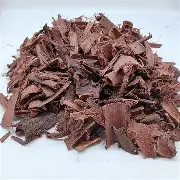
Shredding increases the surface area while still leaving the botanical material relatively recognizable.
Powdered bark
Powder has a much smaller particle size and can be convenient for certain legitimate botanical applications and laboratory analysis.
However, powder can also make visual authentication more difficult because characteristics such as bark structure and fiber arrangement are less obvious.
This is one reason botanical authentication and supplier quality documentation can be valuable.
How to Evaluate Mimosa Bark Quality
If you are researching or purchasing botanical bark for legitimate applications such as educational study, natural dyeing or botanical research, several characteristics are worth considering.
Botanical identity
The scientific name should be clearly stated rather than relying only on the common name “mimosa.”
Appearance
Authentic plant material should have characteristics consistent with the stated species and plant part.
Moisture
Excessive moisture can contribute to deterioration during storage.
Cleanliness
The material should be reasonably free from obvious foreign matter.
Consistency
Large differences between batches can indicate variation in sourcing, harvesting or processing.
Laboratory documentation
For commercial botanical materials, analytical documentation such as a certificate of analysis can provide additional information about identity and measured characteristics.
How Should Mimosa Bark Be Stored?
Proper storage helps preserve the quality of dried botanical material.
For dried bark or powder, general botanical-storage principles include:
- Keep the material dry.
- Use a clean, sealed container.
- Avoid prolonged exposure to direct sunlight.
- Minimize exposure to humidity.
- Keep it away from strong odors and contaminants.
- Label the material with its botanical name and date of storage.
- Monitor for signs of moisture, mold or deterioration.
For powdered material, humidity control can be particularly important because the larger surface area can make the material more susceptible to environmental exposure.
Safety and Responsible Use
Although Mimosa tenuiflora has a long history of traditional use and scientific research, this does not mean every preparation is safe for every person.
The literature on the Mimosa genus includes both potentially beneficial biological activities and toxicological research, and different species can have substantially different chemical profiles.
Mimosa bark should therefore not be presented as a proven treatment for medical conditions.
Anyone considering a plant-derived preparation for a medical purpose should consult an appropriately qualified healthcare professional, particularly when pregnant, taking medication or managing an existing medical condition.
Frequently Asked Questions About Mimosa Bark
What is mimosa bark used for?
Mimosa bark has documented traditional and research interest in areas including natural dyeing, tannin research and traditional topical applications. Mimosa tenuiflora bark has particularly been studied in relation to skin and wound-care preparations.
What compounds are found in mimosa bark?
Mimosa tenuiflora bark contains tannins and other naturally occurring phytochemicals. One pharmacognostic study identified tannins as the major component group in the examined bark.
What is the yield percentage of mimosa bark?
There is no single standard yield percentage for mimosa bark. Yield depends on what is being measured, the starting material, moisture content, plant part and analytical or processing method.
Can mimosa bark be used as a natural dye?
Yes. Plant materials from the Mimosa genus have documented applications as natural colorants, and tannin-rich bark can produce earthy natural shades depending on the dyeing conditions.
Is mimosa bark the same as mimosa powder?
Not exactly. Powder is simply a smaller particle-size form of botanical material. The underlying plant species and plant part should still be identified