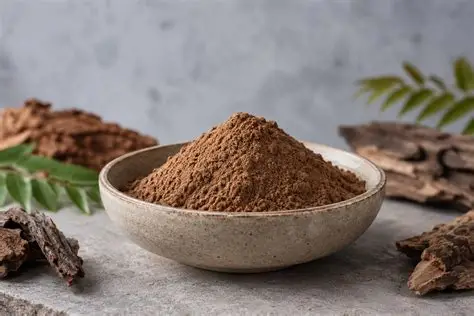
If you have been researching where to buy mimosa hostilis root bark powder, it is important to understand the plant’s botanical identity, the differences between raw plant materials and processed products, and the documentation that responsible botanical suppliers should provide.
Mimosa hostilis, commonly associated with the accepted botanical name Mimosa tenuiflora, is a woody plant native to parts of the Americas. It is also known by regional names such as Jurema Preta and tepezcohuite. Its bark has a history of traditional use and has attracted scientific interest because of its chemical composition.
This guide explains what Mimosa hostilis root bark powder is, how to understand its botanical identity, what quality documentation means, and why legal and safety considerations matter when researching botanical products.
Readers exploring botanical information on HostilisBark.com should also consider the importance of transparent product descriptions, accurate species identification, and compliance with the laws applicable to their location and intended use.
What Is Mimosa Hostilis Root Bark Powder?
Mimosa hostilis root bark powder is a processed botanical material made from the bark of the roots of a plant commonly identified as Mimosa tenuiflora.
The plant belongs to the Fabaceae family, which includes many trees, shrubs, and herbaceous species. It grows in tropical and subtropical environments, including seasonally dry regions.
The words “Mimosa hostilis” are widely used in older botanical literature and commercial descriptions. However, botanical classification recognizes Mimosa tenuiflora as the accepted name in major plant databases, with Mimosa hostilis treated as a synonym.
When reading product descriptions, research papers, or botanical references, it is useful to recognize both names while checking that the material is actually associated with the intended species.
Botanical characteristics
Mimosa tenuiflora can grow as a woody shrub or small tree. It has compound leaves made up of numerous small leaflets, clustered flowers, and seed-bearing fruits characteristic of legumes.
The plant is associated with regions of Mexico, Central America, and South America, including northeastern Brazil.
Its bark has been studied for its anatomy and chemical constituents. However, botanical identity alone does not establish the composition, purity, or safety of any particular processed material.
Understanding the Difference Between Root Bark, Whole Bark, and Powder
Botanical materials can be described according to the plant part from which they originate and how they have been processed.
Root bark refers to bark tissue associated with the plant’s roots. It is distinct from stem bark and from other plant tissues.
Whole or unprocessed bark describes material that has not been reduced to a fine powder. Its appearance can vary depending on the plant, the tissue, and the degree of processing.
Powdered botanical material is plant material that has undergone mechanical processing to produce smaller particles. The word “powder” describes its physical form, not its botanical identity or chemical purity.
These distinctions are important in botanical research, labeling, and quality documentation. A product’s appearance alone cannot establish which species it contains or whether it has been processed appropriately.
How to Evaluate Botanical Identity and Product Documentation
When researching botanical materials, prioritize evidence that identifies the plant and describes the product accurately.
1. Check the scientific name
A reliable botanical description should provide the scientific name, not just a common or commercial name.
For this species, look for the relationship between Mimosa tenuiflora and the synonym Mimosa hostilis. Botanical references can help confirm whether a name is accepted or historical.
2. Look for clear plant-part labeling
The description should identify which part of the plant the material represents. Root bark, stem bark, leaves, and other tissues are not interchangeable botanical categories.
3. Understand what a certificate of analysis means
A certificate of analysis, or COA, is a document reporting results from specified analytical tests. Its value depends on what was tested, which methods were used, the identity of the sample, and the laboratory responsible for the results.
A COA does not automatically establish that a botanical product is safe for consumption, suitable for medical use, or lawful for every intended purpose.
4. Review sourcing and traceability information
Responsible botanical documentation may explain the plant’s geographical origin, the identity of the species, and relevant harvesting or processing practices.
Claims about sustainability, purity, or origin should be supported by information that can be independently evaluated rather than relying solely on marketing language.
5. Be cautious about unsupported health claims
Descriptions that promise to cure medical conditions or guarantee particular biological effects should be approached critically.
Traditional use, laboratory research, and clinical evidence are different categories of information. One should not be presented as proof of another.
Why Botanical Authentication Matters
Plant names can be inconsistent across regions, commercial markets, and older publications. Species authentication is therefore an important part of responsible botanical research.
Mimosa tenuiflora is one member of a large genus. Related species may share certain physical characteristics, but they can differ in their botanical classification and chemical composition.
A product’s color, texture, or common name cannot independently establish its identity.
For botanical research, use recognized taxonomic databases, herbarium records, and appropriate analytical documentation. These resources provide a stronger foundation than visual appearance or a supplier’s unsupported description.
Legal and Safety Considerations
The legal status of botanical materials and their associated compounds can differ between countries and jurisdictions. Laws may also distinguish between the plant itself, isolated substances, extracts, and products intended for particular uses.
Before researching or handling a botanical product, consider:
- Whether the plant material and any associated compounds are permitted in your jurisdiction.
- Whether import, export, possession, sale, or transport is subject to additional restrictions.
- Whether a product is represented as suitable for food, cosmetic, research, or another regulated purpose.
- Whether its labeling and documentation support that intended use.
Do not assume that a botanical product is legal simply because it is described as natural or sold online. Consult the relevant government or regulatory authority for current requirements.
The same caution applies to safety. A botanical material may contain biologically active compounds, and its safety cannot be established from its natural origin alone. Avoid consuming unidentified plant materials or using unverified products as medical treatments.