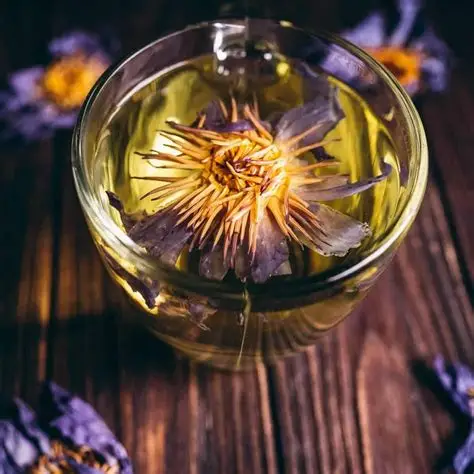
Blue lotus flower tea is a botanical infusion associated with ancient Egyptian culture and the aquatic plant Nymphaea caerulea. Recognized for its distinctive blue flowers and historical significance, this herbal preparation has attracted interest from people exploring traditional plants, floral teas, and botanical research.
Today, blue lotus flower tea is often discussed in connection with relaxation, sleep, and traditional wellness practices. However, its historical reputation is not the same as scientific proof of health benefits. Understanding the plant’s origins, traditional uses, preparation methods, and safety considerations can help readers make informed decisions.
In this guide, we explore everything you need to know about blue lotus flower tea, including its botanical identity, cultural history, potential effects, and the available scientific evidence.
What Is Blue Lotus Flower Tea?
Blue lotus flower tea is an infusion made from the flowers or dried floral material of Nymphaea caerulea, commonly known as the Egyptian blue lotus or blue water lily.
Despite its name, blue lotus is technically a water lily rather than a true lotus. It belongs to the family Nymphaeaceae, while the true lotus, Nelumbo nucifera, belongs to a different botanical family.
The plant grows in aquatic environments and is recognized by its floating leaves and distinctive flowers. Its association with ancient Egyptian art and traditions has contributed to its continued popularity in modern botanical discussions.
Blue lotus products are sold in several forms, including dried flowers, loose botanical material, tea preparations, and concentrated extracts. These products may differ significantly in composition, so the name alone cannot establish their purity, strength, or suitability for consumption.
The History of Blue Lotus Flower Tea
The blue water lily has a long-standing association with ancient Egyptian culture. Representations of the flower appear in historical artwork, tomb decorations, and ceremonial imagery.
In ancient Egyptian symbolism, the flower was associated with themes such as renewal, the sun, and the cycles of life. Its opening and closing pattern may have contributed to these associations.
The flower also appears in artistic depictions of gatherings and ceremonial activities. These historical representations demonstrate its cultural significance, although they do not establish every detail of how the plant was prepared or consumed.
Modern descriptions sometimes suggest that contemporary blue lotus tea reproduces ancient Egyptian rituals. Such claims should be treated cautiously unless supported by reliable historical evidence.
Nevertheless, the plant remains an important subject for people interested in ancient Egyptian botanical traditions, aquatic plants, and the history of herbal preparations.
What Are the Potential Benefits of Blue Lotus Flower Tea?
Blue lotus flower tea is commonly associated with relaxation, sleep, and traditional wellness practices. However, scientific research involving humans is limited, and there is not enough reliable evidence to confirm most of the health benefits promoted in modern marketing.
1. Traditional relaxation practices
Blue lotus is often described as a plant associated with relaxation. Some people incorporate blue lotus preparations into personal wellness routines.
However, there is insufficient high-quality clinical evidence to establish that drinking the tea reliably reduces stress or produces a calming effect.
Personal experiences vary, and a reported effect does not necessarily demonstrate a medical benefit.
2. Interest in sleep support
Blue lotus tea is sometimes marketed as a bedtime beverage or natural sleep aid.
At present, there is insufficient clinical evidence to establish that it improves sleep quality or treats insomnia. People experiencing persistent sleep difficulties should seek appropriate medical guidance rather than relying on an inadequately studied botanical preparation.
3. Botanical and chemical research
Researchers have investigated the chemical composition of Nymphaea caerulea and various products derived from the plant.
A 2023 study published in Molecules analyzed six authentic blue lotus extracts and eleven commercial products. The researchers found differences in composition and noted that the commercial samples did not consistently resemble the authentic extracts examined.
Importantly, the research focused on extracts and product composition rather than demonstrating the health benefits of drinking blue lotus tea.
Read the scientific study on blue lotus composition and safety.
4. Cultural and botanical interest
Blue lotus flower tea also attracts attention because of its connection with ancient Egyptian history and aquatic plant identification.
Learning about the plant can provide useful insight into traditional botanical practices, historical symbolism, and the differences between true lotus plants and water lilies.
These cultural and educational interests are valuable independently of claims about physiological effects.
How Is Blue Lotus Flower Tea Prepared?
Blue lotus flower tea is generally described as a floral infusion made by steeping dried botanical material in hot water. However, preparation methods and product instructions vary.
If you are researching or evaluating a tea product, consider the following points.
Choose correctly identified botanical material
Look for the scientific name Nymphaea caerulea rather than relying exclusively on common names such as Egyptian lotus or blue lotus.
Correct identification is important because different plants can be marketed under similar names.
Check the product instructions
Use only products specifically intended for preparing a beverage, and follow their stated directions.
Do not assume that concentrated extracts, essential oils, fragrance ingredients, or ornamental flowers are suitable for consumption.
Use clean water and appropriate handling
Clean drinking water and hygienic handling are important when preparing any herbal infusion. Dried botanical materials should be stored according to the manufacturer’s instructions to minimize moisture exposure and contamination.
Avoid assuming that stronger is better
Concentrated extracts may differ substantially from ordinary floral infusions. Using larger amounts does not establish a greater benefit and could increase the risk of unwanted effects.
There is currently no well-established, evidence-based dosage of blue lotus tea that can be recommended for everyone.
What Does Blue Lotus Flower Tea Taste Like?
Descriptions of blue lotus flower tea vary depending on the botanical material, its processing, and the preparation method.
Floral infusions are often described in terms of their aroma and delicate botanical character. However, the taste of a particular blue lotus product cannot be reliably predicted from its name alone.
Drying, storage, and processing can influence a plant’s aroma and composition. Blended products may also contain other herbs or flavoring ingredients.
Anyone evaluating a commercial product should check its ingredient list and avoid assuming that all blue lotus teas have the same flavor or composition.
Blue Lotus Flower Tea Compared With Other Herbal Teas
Blue lotus differs from familiar herbal teas in its botanical origin, cultural history, and available scientific evidence.
| Feature | Blue lotus tea | Chamomile tea | Peppermint tea |
|---|---|---|---|
| Botanical source | Nymphaea caerulea | Commonly Matricaria chamomilla | Mentha × piperita |
| Plant type | Aquatic water lily | Flowering herb | Aromatic herb |
| Traditional associations | Ancient Egyptian symbolism and modern wellness practices | Traditional relaxation practices | Traditional digestive use |
| Evidence for health claims | Limited | Depends on the specific claim | Depends on the specific claim |
| Main identification consideration | Confirm the correct water lily species | Confirm the chamomile species | Confirm the mint species |
Traditional use alone does not prove that any herbal tea treats a medical condition. Each plant requires its own assessment of effectiveness, safety, and possible interactions.
Is Blue Lotus Flower Tea Safe?
Safety is an important consideration when evaluating any botanical beverage.
Research into blue lotus preparations remains limited, and commercially available products may differ in their identity, chemical composition, concentration, and purity.
A published case series described five patients who developed altered mental status after using blue lotus products. Four had vaped blue lotus products, while one had consumed an infused beverage. Although this small report cannot establish how frequently such reactions occur, it demonstrates that unwanted effects are possible.
Potential concerns include drowsiness, impaired judgment, altered perception, product contamination, and interactions with medications or other substances.
Consider these precautions:
- Avoid combining blue lotus products with alcohol, sedatives, or other psychoactive substances.
- Do not drive or operate machinery if you experience drowsiness, dizziness, confusion, or impaired coordination.
- Consult a qualified healthcare professional before use if you take medication, have an underlying medical condition, or are pregnant or breastfeeding.
- Do not give blue lotus preparations to children.
- Check that products clearly identify their ingredients and intended use.
- Seek urgent medical assistance if serious symptoms develop after consuming a botanical product.
Evidence about a diluted fragrance extract applied to the skin cannot automatically be use to establish the safety of a tea consume by mouth. Different preparations and routes of exposure require separate assessments.
For more information, read the published case series on toxicity associated with blue lotus products.
How to Evaluate the Quality of Blue Lotus Flower Tea
Product quality is an important consideration when researching or purchasing botanical teas.
Botanical identification
Look for the scientific name Nymphaea caerulea. A common name alone may not provide enough information to verify the species.
Transparent ingredients
Check whether the product contains only the stated flower or includes additional herbs, flavorings, extracts, or other ingredients.
Quality-control information
Where available, look for information about botanical identification, contamination testing, and batch-specific quality controls.
A certificate of analysis may be helpful, but its reliability depends on the tests performed, the laboratory, and whether the document corresponds to the actual product batch.
Packaging and storage
Packaging should protect dried botanical materials from excessive moisture and contamination. Follow the storage instructions supplied by the manufacturer.
These checks can help readers evaluate product information, but no label or certificate alone guarantees safety for every intended use.
Frequently Asked Questions About Blue Lotus Flower Tea
What is blue lotus flower tea made from?
It is generally made from the flowers or dried floral material of Nymphaea caerulea, an aquatic water lily commonly associated with ancient Egypt.
What is blue lotus flower tea traditionally use for?
The plant has historical and cultural associations with ancient Egyptian traditions. Modern products are often marketed for relaxation and sleep, but strong clinical evidence supporting these benefits is lacking.
Does blue lotus flower tea help you sleep?
There is insufficient high-quality human research to confirm that blue lotus tea improves sleep or treats insomnia.
Is Egyptian blue lotus the same as blue lotus?
These names commonly refer to Nymphaea caerulea. However, common names used in commerce are not always reliable proof of botanical identity.
Can blue lotus flower tea cause side effects?
Unwanted effects are possible, and the full safety profile is not well established. Published case reports have described altered mental status following the use of blue lotus products.
Is blue lotus tea the same as blue lotus extract?
No. Tea is a water-base infusion, whereas extracts are produce using other methods that may concentrate or selectively extract different plant constituents. Their compositions and safety profiles cannot be assume to be equivalent.
Is blue lotus flower tea suitable for everyone?
No. Its safety has not been adequately establish for everyone, particularly children, pregnant or breastfeeding individuals, and people taking medications that may interact with botanical products. Professional advice is appropriate when safety is uncertain.