What Is a Certificate of Analysis (COA) and Why Your MHRB Vendor Needs One?
When buying botanical products online, trust matters.mProduct photographs, descriptions, and customer reviews can tell you something about a supplier, but they cannot provide the same type of information as independent laboratory testing. This is where a Certificate of Analysis (COA) becomes important.
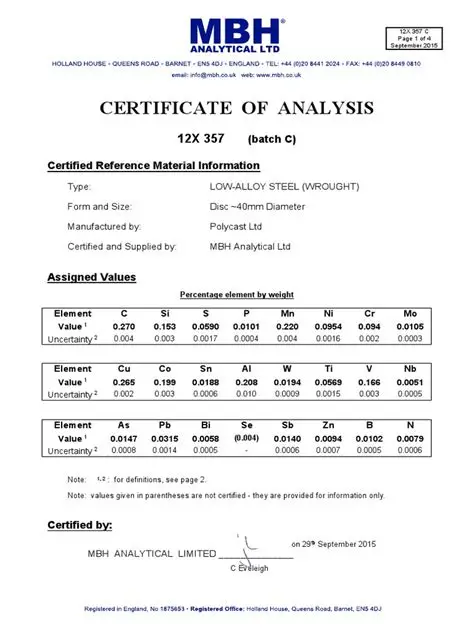
A COA is a laboratory or quality-control document that reports the testing performed on a particular batch of material, the analytical methods used, applicable specifications or acceptance limits, and the resulting measurements or findings. For botanical materials, the exact tests can vary depending on what characteristics need to be evaluated.
For customers interested in Mimosa Hostilis Root Bark (MHRB), a transparent vendor that can provide meaningful batch-level testing documentation offers an additional layer of confidence.
This article explains what a COA is, what information you should look for, how laboratory techniques such as HPLC and GC-MS work at a high level, and why responsible vendors should treat laboratory documentation as part of a broader quality-control program.
What Does COA Mean?
COA stands for Certificate of Analysis.
It is a document associated with a particular product or batch that summarizes analytical testing and quality results.
A useful COA can contain information such as:
- Product or botanical name
- Batch or lot number
- Date of testing
- Date of manufacture or sampling, where applicable
- Laboratory name
- Testing methods
- Specifications or acceptance criteria
- Actual analytical results
- Units of measurement
- Pass/fail or conformity statement
- Authorized laboratory or quality personnel
- Additional notes or observations
Regulatory quality guidance illustrates why these details matter. FDA guidance for pharmaceutical materials, for example, describes COAs that identify the material and batch and list tests, acceptance limits, and numerical results where applicable. It also emphasizes checking the reliability of supplier certificates.
For a botanical supplier, the exact format will depend on the product and testing program.
Why Should an MHRB Vendor Provide a COA?
A COA can help answer a basic customer question:
“What evidence do you have about the quality of this particular batch?”
This is different from simply saying:
“Our product is high quality.”
A laboratory report provides measurable information that can be independently reviewed.
For botanical materials, this can be particularly valuable because plants are naturally variable.
The composition of plant material can be influenced by factors such as:
- Geographic origin
- Growing conditions
- Plant maturity
- Harvesting
- Drying
- Storage
- Processing
- Batch variation
FDA’s botanical-drug guidance recognizes that botanical materials can be complex and variable and discusses the importance of appropriate quality-control testing and analytical characterization.
A COA does not eliminate natural variation, but it can make a supplier’s quality-control process more transparent.
What Should an MHRB COA Contain?
Not every COA looks identical.
However, customers should be cautious of documents that contain little more than a product name and the word “PASS.”
A meaningful report should provide enough information to understand what was tested, how it was tested, which batch was tested, and what the laboratory actually found.
1. Product Name
The COA should clearly identify the material that was tested.
For example, it may identify the botanical material by its accepted scientific name and/or commonly used commercial name.
Because botanical naming can vary, a strong supplier should make its nomenclature clear.
Scientific literature identifies Mimosa tenuiflora as the botanical species associated with material historically referred to as Mimosa hostilis. Research has also investigated morphological, chemical, and molecular approaches to authenticating the plant material.
2. Batch or Lot Number
This is one of the most important details.
A COA should be connected to a specific batch or lot.
Why?
Because testing one batch does not automatically prove that every future batch has identical characteristics.
A customer should be able to connect the report to the material being sold.
For example:
Product: Mimosa tenuiflora botanical material
Batch: MHRB-2026-001
Testing date: September 2026
The exact format will vary by supplier.
The important thing is traceability.
3. Laboratory Name and Information
A credible report should identify the laboratory responsible for the analysis.
Depending on the testing arrangement, the report may include:
- Laboratory name
- Address
- Contact information
- Laboratory identification
- Report number
- Authorized analyst or reviewer
This gives customers a way to understand where the analysis originated.
4. Date of Analysis
Testing date matters because laboratory results are associated with a particular sample at a particular point in time.
A useful COA should therefore identify when the sample was tested.
Where relevant, it can also include:
- Sample received date
- Sample collection date
- Report date
- Release date
5. Analytical Method
This is one of the most important parts of a COA.
A report should not simply say:
“Laboratory tested — PASS.”
It is much more informative when the report identifies the analytical method used.
Depending on the objective, methods can include:
- HPLC
- GC-MS
- LC-MS
- FTIR
- Microscopy
- Moisture analysis
- Microbiological testing
- Other validated analytical techniques
FDA guidance on analytical procedures emphasizes that testing methods should be appropriate for the quality attribute being evaluated and that analytical procedures may be used to support identity, strength, quality, purity, and other characteristics.
What Is HPLC?
HPLC stands for High-Performance Liquid Chromatography.
It is an analytical technique used to separate components within a sample so that individual compounds or groups of compounds can be studied.
At a simplified level, an HPLC system:
- Introduces a prepared sample into the instrument.
- Carries the sample through a chromatographic column.
- Separates components based on their chemical interactions.
- Detects components as they leave the column.
- Produces analytical data that can be interpreted by the laboratory.
HPLC is widely used in analytical chemistry and pharmaceutical quality control.
USP’s analytical standards include HPLC among recognized chromatographic techniques.
For botanical materials, chromatographic testing can be useful when a laboratory wants to examine a characteristic chemical profile or quantify selected constituents.
What Is GC-MS?
GC-MS stands for Gas Chromatography–Mass Spectrometry.
It combines two analytical techniques:
Gas Chromatography
GC separates compounds based on their behavior as they travel through a chromatographic system.
Mass Spectrometry
MS then helps identify compounds based on their mass spectral characteristics.
Together, GC-MS can provide powerful information about the chemical composition of suitable samples.
Researchers have specifically used GC-MS in scientific studies of Mimosa tenuiflora bark to investigate its chemical characteristics.
However, there is an important distinction:
A GC-MS result is not automatically proof that a product is authentic simply because the words “GC-MS” appear on a document.
The laboratory method, sample preparation, reference standards, interpretation, and reported results all matter.
HPLC vs. GC-MS: What’s the Difference?
HPLC and GC-MS are not interchangeable.
| Feature | HPLC | GC-MS |
|---|---|---|
| Full name | High-Performance Liquid Chromatography | Gas Chromatography–Mass Spectrometry |
| Main function | Separates and analyzes compounds in liquid-phase workflows | Separates and identifies suitable volatile/semi-volatile compounds |
| Detection | Can use UV/DAD, MS and other detectors | Uses mass spectrometry |
| Typical strength | Many nonvolatile or thermally sensitive compounds | Many volatile/semi-volatile compounds |
| Useful for botanicals | Chemical profiling and targeted analysis | Chemical identification/profiling where compounds are GC-suitable |
| Best choice | Depends on analytical objective | Depends on analytical objective |
The important point is not that one method is universally “better.”
The correct analytical method depends on what the laboratory is trying to measure.
FDA’s botanical guidance specifically notes that botanical chemical profiles can be characterized using chromatographic and spectroscopic techniques and that complementary methods may be appropriate when one method does not provide sufficient resolution.
What Can Laboratory Testing Tell You About Botanical Material?
Laboratory testing can provide information that visual inspection cannot.
For example, testing may investigate:
- Chemical identity
- Chemical profile
- Selected constituents
- Moisture
- Microbial quality
- Contaminants
- Heavy metals, where included in the testing program
- Pesticide residues, where included
- Other specified quality attributes
The exact panel should be appropriate for the intended product and regulatory context.
This is important because there is no universal “MHRB COA test.”
Different laboratories may test different characteristics.
A COA Is More Than a “PASS” Stamp
One of the biggest mistakes consumers make is assuming that any document labeled “COA” has equal value.
It doesn’t.
Compare these two examples.
Weak documentation
Product: MHRB
Result: PASS
There is very little information here.
You don’t know:
- Which batch was tested
- Who performed the analysis
- What method was used
- What was measured
- What the acceptance criteria were
- What the actual numerical result was
More useful documentation
Product: Clearly identified botanical material
Batch: Specific lot number
Laboratory: Identified laboratory
Test: Named analytical method
Specification: Defined acceptance criterion
Result: Actual measured result
Date: Testing date
Authorization: Responsible laboratory personnel
The second format gives the customer substantially more information.
FDA quality guidance similarly describes COAs as documents containing tests, acceptance limits, and results, and recommends periodic verification of certificate reliability in relevant manufacturing contexts.
Does a COA Prove That MHRB Is Authentic?
Not necessarily.
This is a critical distinction.
A COA is only as meaningful as:
- The sample submitted
- The laboratory
- The analytical method
- The reference standards
- The interpretation
- The connection between the tested sample and the customer’s batch
Botanical authentication can be complicated.
Scientific research on Mimosa tenuiflora has used morphological, chemical, and molecular approaches to distinguish genuine material from adulterants.
Therefore, a supplier should avoid making exaggerated statements such as:
“Our COA guarantees that every package is authentic.”
A more responsible statement is:
“Our batch-level laboratory documentation provides additional evidence about the tested material and supports our quality-control program.”
That is a much more defensible claim.
Why Batch Testing Matters
Imagine a supplier tests one batch in January and then receives a completely different shipment several months later.
Can the January report automatically be used as proof of the new shipment?
No.
The batches may differ.
This is why batch or lot identification is so important.
A strong quality system should maintain traceability between:
Source → Batch → Sample → Laboratory → COA → Inventory
This allows a supplier to determine which analytical report corresponds to which material.
What Does “Third-Party Tested” Mean?
You may see vendors describe their products as third-party tested.
Generally, this means testing is performed by an external laboratory rather than solely by the company selling the product.
This can provide an additional layer of independence.
However, consumers should still ask:
- Who performed the testing?
- What exactly was tested?
- What method was used?
- Which batch was analyzed?
- What were the actual results?
- Does the report identify the laboratory?
- Can the report be verified?
The phrase “third-party tested” by itself is not enough information.
Why Laboratory Accreditation Matters
Laboratory competence is another consideration.
Where appropriate, customers can look for information about laboratory accreditation, scope, analytical methods, and quality systems.
However, accreditation should not be treated as a magic word either.
The important question is whether the laboratory’s accredited scope actually covers the type of testing being discussed.
A laboratory can be reputable while a particular test falls outside a specific accreditation scope.
Therefore, look at the details, not just the logo.
What Other Tests Can Appear on a Botanical COA?
Depending on the product and intended market, a quality program may include additional testing.
Moisture Testing
Moisture analysis can help evaluate whether dried botanical material meets a defined moisture specification.
This can be relevant to storage stability and handling.
Microbiological Testing
Microbiological testing can investigate specified microorganisms or microbial counts.
The exact panel should depend on the product and applicable requirements.
Heavy-Metal Testing
Some botanical quality programs include testing for elements such as:
- Lead
- Cadmium
- Arsenic
- Mercury
Whether these tests are appropriate depends on the product, intended use, and applicable standards.
Pesticide-Residue Testing
Where relevant, laboratories can test for specified pesticide residues.
Again, the appropriate testing panel depends on the product and regulatory requirements.
Identity Testing
Identity testing attempts to determine whether the material corresponds to the claimed botanical identity.
This may involve:
- Macroscopic examination
- Microscopy
- Chromatography
- Spectroscopy
- DNA-based approaches
- Other validated techniques
Scientific research on Mimosa tenuiflora has demonstrated the value of combining morphological, chemical, and molecular approaches for botanical authentication.
How to Read an MHRB COA
If a vendor gives you a COA, don’t just look for the word “PASS.”
Work through these questions.
1. What exactly was tested?
Identify the product and botanical material.
2. What batch was tested?
Look for a batch or lot number.
3. When was it tested?
Check the testing date.
4. Who performed the analysis?
Look for the laboratory name.
5. What method was use?
Look for HPLC, GC-MS, microscopy, moisture testing, microbiological testing, or other relevant methods.
6. What was the specification?
Determine what standard or acceptance criterion was being applied.
7. What was the actual result?
Numerical results are generally more informative than an unexplained “PASS.”
8. Can the report be connected to the product being sold?
This is essential for meaningful batch traceability.
Red Flags on a COA
Customers should be cautious when a purported COA has obvious documentation problems.
Watch for:
- No batch number
- No laboratory name
- No testing date
- No analytical method
- No actual results
- Only a generic “PASS”
- Product name that doesn’t match the item being sold
- Suspiciously identical reports for supposedly different batches
- Missing laboratory contact information
- Unexplained editing or inconsistent formatting
- Claims that exceed what the test actually measures
A professional-looking PDF is not automatically a reliable laboratory report.
Documentation should be evaluate for substance, not appearance.
Why COAs Help Build Trust in an MHRB Store
For a specialist botanical retailer, quality transparency can become a meaningful part of the customer experience.
Instead of asking customers to simply trust marketing language, a vendor can explain:
- How batches are track
- What quality attributes are evaluated
- Which laboratories perform testing
- Which analytical methods are use
- How reports are review
- How material is store
- How suppliers are evaluated
This creates a stronger quality story.
A vendor that invests in appropriate laboratory testing and transparent documentation can differentiate itself from sellers who provide only product photographs and broad quality claims.
COA vs. Product Description: What’s the Difference?
These two things serve completely different purposes.
Product description
A product page tells customers:
- What the product is
- Available forms
- Packaging
- General characteristics
- Shipping information
- Other commercial details
Certificate of Analysis
A COA provides analytical documentation associated with a particular tested batch.
The two should complement one another.
A product page says:
“Here is what we sell.”
A COA says:
“Here is analytical information about this tested batch.”
Why a Premium MHRB Vendor Should Take Testing Seriously
The botanical marketplace contains many different levels of quality control.
Some sellers focus almost entirely on price.
Others focus on presentation.
A quality-focused supplier should go further.
That can mean developing a system involving:
- Reliable sourcing
- Batch identification
- Controlled storage
- Appropriate sampling
- Independent laboratory testing
- Documented analytical methods
- COA review
- Traceability
- Transparent customer communication
The goal isn’t simply to have a PDF to show customers.
The goal is to build a repeatable quality-control system.
FDA’s botanical guidance similarly emphasizes characterization and quality control for complex botanical materials and recognizes that multiple analytical approaches may be necessary.
What a High-Quality COA Page Could Look Like on Your Website
If your store provides legitimate laboratory testing, consider creating a dedicated Laboratory Testing & COA page.
It could explain:
Our Quality Process
1. Batch identification
Each tested lot receives a unique identification number.
2. Sample collection
Representative samples are collected according to the laboratory’s sampling requirements.
3. Laboratory analysis
Appropriate analytical methods are selected base on the characteristics being evaluated.
4. Results review
Laboratory reports are review for completeness and consistency.
5. Documentation
Relevant batch documentation is retain for traceability.
6. Customer transparency
Where appropriate, customers can review applicable testing documentation.
This type of page can be especially useful for establishing your store as a quality-focused botanical supplier.