If you are searching for mimosa tenuiflora for sale, it is worth learning about the plant before choosing a botanical product. Known by names such as Jurema Preta, tepezcohuite, and Mimosa hostilis, Mimosa tenuiflora is a tropical woody plant with a distinctive appearance, a broad natural distribution, and a history of traditional and practical uses.
The species attracts interest from botanists, plant enthusiasts, researchers, and people exploring natural plant materials. However, products sold under similar common names may differ in botanical identity, plant part, processing, and intended use.
This guide explains what Mimosa tenuiflora is, how to recognize it, what to consider when evaluating botanical products, and why responsible sourcing and legal awareness matter.
For readers exploring botanical materials, HostilisBark.com is a place to review the information provided about the business and its products. Always check the individual product description, intended use, and applicable shipping and legal requirements before making a purchase.
What Is Mimosa Tenuiflora?
Mimosa tenuiflora (Willd.) Poir. is a woody flowering species in the legume family, Fabaceae. It grows as a shrub or small tree and is native to parts of Mexico, Central America, and South America, including northeastern Brazil.
The plant is commonly associated with dry and seasonally dry tropical environments, although its distribution extends across several types of habitat.
The name Mimosa hostilis is also frequently used in historical, botanical, and commercial references. The Royal Botanic Gardens, Kew, recognizes Mimosa tenuiflora as the accepted name and lists Mimosa hostilis among its synonyms.
Understanding these names is useful when searching botanical literature or comparing product descriptions.
Basic botanical facts
- Accepted scientific name: Mimosa tenuiflora (Willd.) Poir.
- Family: Fabaceae
- Growth form: Woody shrub or tree
- Common names: Jurema Preta, tepezcohuite, and Mimosa hostilis
- Native range: Parts of Mexico, Central America, and South America
- Botanical features: Compound leaves, small clustered flowers, woody stems, and seed-bearing fruits
For formal classification and distribution information, consult Plants of the World Online, maintained by the Royal Botanic Gardens, Kew.
How to Identify Mimosa Tenuiflora
Botanical identification is an important first step when evaluating a product or researching a plant.
Leaves and branches
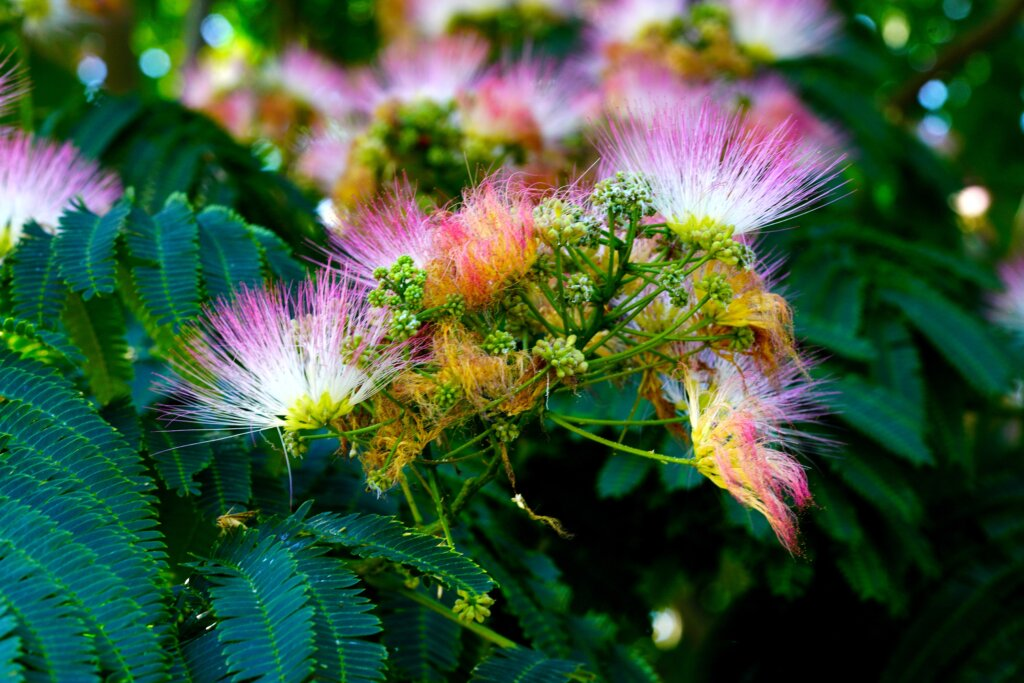
Mimosa tenuiflora produces finely divided compound leaves containing numerous small leaflets. The foliage gives the plant a delicate, feathery appearance, while its branches and stems develop a woody structure.
Flowers
The plant produces small flowers grouped into compact clusters. Examining the flower arrangement alongside the leaves and growth habit can help distinguish it from other members of the genus Mimosa.
Bark
The bark of mature plants may appear brown to dark brown, with its texture and color varying according to age, growing conditions, and the particular part of the tree.
Dried or processed bark can look different from bark on a living plant. Color alone is not sufficient to confirm species identity.
Natural habitat
The species occurs in tropical and subtropical environments. Its distribution includes different landscapes, and specimens can vary in appearance depending on local conditions.
When identifying a plant, use several botanical features together. A common name or product photograph alone may not establish that the material is genuinely Mimosa tenuiflora.
What Botanical Products May Be Associated With Mimosa Tenuiflora?
The plant is discussed in connection with several kinds of botanical material. Product terminology can vary between suppliers, so it is important to read descriptions carefully.
Bark-based botanical materials
Bark is one of the plant parts that has attracted interest in traditional practices and botanical research. In Mexico, the name tepezcohuite is associated with traditional external applications of bark.
Research into bark composition has examined naturally occurring plant compounds, including tannins and other constituents. The composition of a particular material can vary with its origin and processing.
Dried botanical specimens
Plant enthusiasts and researchers may encounter dried botanical specimens used for identification, reference, or educational purposes.
A useful description should make clear what plant part is being offered, how it has been prepared, and whether it is suitable for the buyer’s stated purpose.
Botanical and educational materials
mimosa tenuiflora for sale is also of interest to people studying tropical vegetation, ethnobotany, plant taxonomy, and the history of traditional plant use.
The intended application matters: material sold for botanical study or external use should not automatically be treated as suitable for consumption or medical use.
Mimosa Tenuiflora for Sale: What Should You Check?
When researching mimosa tenuiflora for sale, focus on clear product information rather than relying solely on photographs, promotional claims, or common names.
1. Check the botanical identity
Look for the scientific name Mimosa tenuiflora. A description that also mentions Mimosa hostilis should clarify how the names are being used.
If the identity is uncertain, seek additional documentation or a reliable botanical reference before proceeding.
2. Read the product description
A transparent description should identify the plant material, its form, and its intended purpose.
Check whether the product is described as a botanical specimen, an ingredient for a particular lawful application, or something else. Do not assume that different forms are interchangeable.
3. Look for accurate sourcing information
When available, review information about the material’s country or region of origin and the supplier’s sourcing practices.
Origin information can help provide context, but it does not independently prove authenticity, purity, or quality.
4. Review processing and storage information
Botanical materials may be dried, stored, or otherwise processed. These factors can affect their condition and suitability for a stated purpose.
Look for clear storage instructions and information about how the material is handled. Avoid relying on unsupported claims about purity or safety.
5. Examine the seller’s business information
Before buying, review the seller’s contact details, business policies, payment terms, shipping conditions, and refund or return provisions.
If you are considering HostilisBark.com, review the information available on the website and confirm the relevant product details and policies directly. Do not assume a particular certification, testing procedure, or delivery guarantee unless the seller provides verifiable evidence.
6. Consider legal requirements
Rules concerning Mimosa tenuiflora and products derived from it can differ between countries and jurisdictions. Some uses or preparations may be subject to additional restrictions.
Check the laws that apply where you live and where the product is shipped from. A product being advertised online does not establish that it is lawful to purchase, possess, import, or use in every location.
Traditional Uses and Botanical Research
Mimosa tenuiflora has a documented history of traditional use, especially in regions where the plant is native.
Tepezcohuite and traditional external applications
In Mexico, tepezcohuite bark has historically been associated with external applications for skin injuries. This tradition has contributed to scientific interest in the plant’s bark and chemical constituents.
However, traditional use is not the same as demonstrated medical effectiveness. The safety and effectiveness of a particular preparation depend on factors such as its formulation, concentration, purity, and intended application.
Cultural importance of Jurema Preta
In northeastern Brazil, Jurema Preta has cultural and religious significance in certain traditional communities. Ethnobotanical studies describe the plant within local practices and cultural contexts.
These traditions should be discussed respectfully and should not be reduced to commercial claims.
Scientific interest
Researchers have studied Mimosa tenuiflora to better understand its taxonomy, ecology, chemistry, and traditional uses.
Laboratory research may help identify compounds or investigate biological activity, but findings from laboratory experiments cannot automatically be applied to human health outcomes.
Readers interested in the research should consult peer-reviewed publications and distinguish scientific evidence from marketing language.
Responsible Sourcing and Environmental Considerations
Responsible botanical sourcing involves more than identifying a species. It also includes considering how plant materials are collected, transported, and handled.
Protecting native habitats
Mimosa tenuiflora occurs in natural ecosystems across parts of the Americas. Collection practices should avoid unnecessary damage to wild populations and surrounding vegetation.
Where possible, look for credible information about sourcing practices and whether material is obtained in a way that respects local environmental requirements.
Respecting local communities
Plants with traditional and cultural significance may be connected to knowledge held by Indigenous and local communities.
Responsible discussion of such species should acknowledge their cultural context and avoid presenting traditional knowledge as an unrestricted commercial resource.
Following import and transport rules
Botanical materials may be subject to customs, plant-health, or other import requirements. Rules vary according to the country, product form, and intended use.
Before ordering, check the relevant official guidance for your destination. Do not rely solely on a seller’s general statement that a product can be shipped internationally.
Frequently Asked Questions About Mimosa Tenuiflora for Sale
Is Mimosa tenuiflora the same as Mimosa hostilis?
These names are commonly used for the same species in botanical and commercial references. Kew accepts Mimosa tenuiflora as the scientific name and lists Mimosa hostilis as a synonym.
What is Jurema Preta?
Jurema Preta is a common name associated with Mimosa tenuiflora, particularly in Brazil. Common names can differ by region, so the scientific name is more reliable for botanical identification.
What is tepezcohuite?
Tepezcohuite is a name associated with Mimosa tenuiflora in Mexico, especially in discussions of its bark and traditional external applications.
What should I look for when researching a botanical seller?
Review the scientific identification, product description, stated intended use, sourcing information, business contact details, and relevant shipping and refund policies. Look for claims that can be verified rather than relying on promotional language.
Is Mimosa tenuiflora suitable for medicinal use?
The plant has a history of traditional use and has been investigated scientifically. However, this does not establish that an unstandardized product is safe or effective for treating a medical condition. Seek qualified medical guidance for health concerns.
Can I order Mimosa tenuiflora internationally?
That depends on the destination, product form, and applicable laws. Check official import and customs requirements before placing an order.
Conclusion
Mimosa tenuiflora is a distinctive tropical woody plant with an important botanical, ecological, and cultural history. Understanding its scientific identity, natural distribution, bark characteristics, and traditional uses provides a stronger foundation for evaluating information about the species.
If you are researching mimosa tenuiflora for sale, take time to examine the product description, botanical identification, sourcing information, and relevant legal requirements.
You can visit HostilisBark.com to review the website’s botanical information and product listings. Make sure to check the details of any specific product and confirm that its intended use and shipment are permitted in your location.