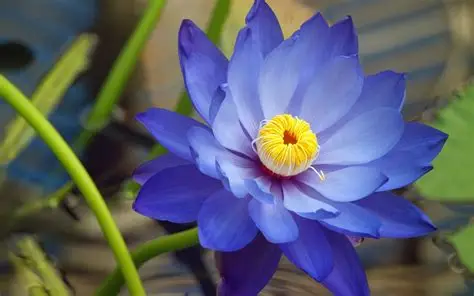
Egyptian blue lotus flowers are among the most recognizable plants associated with ancient Egyptian culture. Known for their beautiful blue petals and connection to the Nile River, these flowers have attracted interest from botanists, historians, gardeners, and people curious about traditional plants for centuries.
Despite their common name, Egyptian blue lotus flowers are technically water lilies rather than true lotus flowers. Their botanical name is Nymphaea caerulea, and their distinctive appearance and cultural importance make them fascinating subjects for botanical study.
In this guide, we explore the botanical identity of Egyptian blue lotus flowers, their natural habitat, historical significance, traditional uses, cultivation requirements, and important safety considerations.
What Are Egyptian Blue Lotus Flowers?
Egyptian blue lotus flowers are aquatic blooms belonging to the water lily family, Nymphaeaceae. The plant is commonly known as the blue lotus, Egyptian lotus, or blue water lily.
Its botanical name is Nymphaea caerulea. Although the word “lotus” is widely used in its common name, it should not be confused with the true lotus, Nelumbo nucifera, which belongs to a different plant family.
The blue water lily is particularly notable for its pointed petals, attractive blue coloration, and association with freshwater habitats.
Key Botanical Characteristics
- Scientific name: Nymphaea caerulea
- Common names: Egyptian blue lotus, blue lotus, and blue water lily
- Plant family: Nymphaeaceae
- Plant type: Aquatic perennial
- Habitat: Freshwater ponds, lakes, and slow-moving waterways
- Flower color: Commonly blue to violet-blue
- Growth structure: Floating leaves supported by submerged stems and rhizomes
These characteristics help distinguish Egyptian blue lotus flowers from other aquatic plants that may have similar names or appearances.
The History of Egyptian Blue Lotus Flowers
Egyptian blue lotus flowers have a long association with ancient Egyptian art, religious imagery, and ceremonial traditions. Images of blue water lilies appear in historical paintings, tomb decorations, and other archaeological materials.
The flower was frequently associated with the sun, renewal, and the recurring cycles of nature. Its daily opening and closing pattern may have contributed to its symbolic connection with rebirth and the renewal of life.
Blue water lilies also appeared in funerary decorations and artistic representations of ceremonies. Their presence in ancient Egyptian visual culture demonstrates that the plant held significance beyond its physical beauty.
However, it is important to distinguish historical evidence from modern interpretations. Although the flower is often discussed in connection with ancient rituals, individual practices and the precise meaning of every depiction cannot always be established with certainty.
Where Do Egyptian Blue Lotus Flowers Grow Naturally?
Egyptian blue lotus flowers are associated with Africa, particularly the Nile region and other freshwater environments. The species is adapted to aquatic habitats where its roots and rhizomes can grow in submerged sediment while its leaves and flowers extend toward the water surface.
Suitable habitats generally include:
- Shallow freshwater ponds
- Lakes and lake margins
- Sheltered water channels
- Slow-moving waterways
- Wetland environments with sufficient sunlight
Water conditions, temperature, sunlight, and water depth all influence the plant’s development.
Although the flower has a strong historical connection with Egypt, the name alone does not establish where a particular commercially sold product was grown. Buyers and researchers should check botanical identification and sourcing information when geographical origin matters.
How to Identify Egyptian Blue Lotus Flowers
Correct identification is important because several aquatic plants are marketed under similar common names.
1. Examine the flower
The flowers of Nymphaea caerulea typically have numerous narrow, pointed petals arranged around a central cluster of reproductive structures. Their color is commonly blue or violet-blue, although appearance can vary.
2. Look at the leaves
The plant produces broad, floating leaves that are generally rounded or oval. The leaves rest on the water surface and connect to submerged structures through long stalks.
3. Consider the growing environment
The plant is aquatic, so it is normally associated with freshwater habitats rather than dry ground. Its growth structure differs considerably from terrestrial flowering plants.
4. Confirm the botanical name
A common name is not sufficient to establish the identity of a plant. Look for the scientific name Nymphaea caerulea in botanical references, supplier documentation, or reliable plant identification records.
These characteristics are useful for preliminary identification, but a photograph or common name alone may not be enough to authenticate a dried or processed flower.
Traditional Uses of Egyptian Blue Lotus Flowers
Egyptian blue lotus flowers have been associated with several traditional and cultural uses. Their historical significance should be understood separately from the evidence supporting modern health claims.
Cultural and ceremonial significance
Historical representations show blue water lilies in artistic and ceremonial contexts. The plant’s association with renewal and the natural cycles of life contributed to its lasting place in Egyptian visual culture.
Ornamental gardening
Blue water lilies are of interest to aquatic gardeners because of their distinctive flowers and floating leaves. Water lilies can add visual appeal to suitable ponds and water gardens when the species and climate are appropriate.
Fragrance and botanical research
The flower has attracted interest in fragrance research and the chemical study of botanical extracts. Researchers have investigated its chemical composition, but different extraction methods and products may have substantially different compositions.
Traditional wellness practices
Blue lotus is sometimes discussed in traditional wellness contexts and is sold in some markets as dried flowers, teas, tinctures, and extracts. However, historical use does not establish that a product is effective or safe for a particular health condition.
Scientific evidence concerning its effects in humans remains limited. It should not be presented as a proven treatment for anxiety, insomnia, pain, or any other medical condition.
What Does Scientific Research Say About Blue Lotus?
Scientific investigations have examined compounds found in blue lotus materials and the composition of commercial extracts.
A 2023 study published in Molecules analyzed authentic blue lotus extracts alongside commercial products. The researchers found differences in chemical composition and noted that certain compounds often associated with the plant’s psychoactive reputation were virtually absent from the authentic extracts they examined.
This is an important distinction: the chemical profile of a flower, fragrance extract, dried plant material, and commercial preparation may not be identical.
The researchers also highlighted the limited safety information available for the plant and its extracts. Evidence concerning a particular diluted fragrance ingredient cannot automatically be applied to teas, concentrated extracts, or other preparations.
Read the full scientific paper: Chemical Composition, Market Survey, and Safety Assessment of Blue Lotus Extracts.
How to Grow Egyptian Blue Lotus Flowers
Growing Egyptian blue lotus flowers requires an appropriate aquatic environment. The plant is not generally cultivated in the same way as an ordinary garden flower.
Water and planting conditions
Choose a suitable aquatic container or pond with room for the plant’s submerged growth structures and floating leaves. Water depth and container size should be appropriate for the particular plant and its growth stage.
Sunlight
Water lilies generally benefit from ample sunlight. A bright location helps support flowering, although local climate and water temperature also influence growth.
Temperature
Warm conditions are generally favorable for tropical water lilies. In cooler climates, growth may slow or the plant may require protection from cold temperatures.
Water quality
Use water suitable for aquatic plants and avoid contamination from pesticides, detergents, or other chemicals. Healthy water conditions help support both the plant and the wider pond ecosystem.
Seasonal maintenance
Remove decaying plant material when necessary and monitor the plant for overcrowding or pests. Follow species-specific cultivation guidance rather than assuming all water lilies have identical requirements.
Before purchasing seeds or live plants, confirm the botanical identity and check local rules governing aquatic plant cultivation and transport.
Egyptian Blue Lotus Flowers vs. True Lotus Flowers
Egyptian blue lotus and true lotus are often confused because both have cultural importance and attractive flowers. Botanically, however, they are different plants.
| Feature | Egyptian blue lotus | True lotus |
|---|---|---|
| Botanical name | Nymphaea caerulea | Nelumbo nucifera |
| Family | Nymphaeaceae | Nelumbonaceae |
| Common description | Blue water lily | Sacred or Indian lotus |
| Leaf position | Commonly floating on water | Often held above the water |
| Flower appearance | Usually pointed blue petals | Commonly pink or white petals |
| Plant structure | Water lily growth form | Distinct lotus growth form |
This distinction matters when researching plant history, identifying specimens, or selecting plants for an aquatic garden.Potential concerns include unwanted psychoactive effects, drowsiness, impaired judgment, product contamination, and interactions with medications or other substances.