Mimosa Sensitive Plant Care: What You Need to Know
The mimosa sensitive plant care, scientifically known as Mimosa pudica, is one of the most fascinating plants you can grow at home. Its delicate, fern-like leaves fold inward when touched, disturbed, or exposed to certain environmental changes.
This unusual movement is one reason Mimosa pudica has become a popular houseplant and educational plant. It is also an interesting member of the legume family, Fabaceae.
However, keeping a sensitive plant healthy requires more than simply placing it on a windowsill. Proper mimosa sensitive plant care involves providing sufficient light, consistent moisture, warm temperatures, good drainage, and adequate humidity.
The Royal Horticultural Society recommends growing Mimosa pudica in full sun or partial shade and keeping the soil moist but well drained.
In this guide, you’ll learn exactly how to care for a sensitive plant and how to recognize common problems before they become serious.
What Is a Sensitive Plant?
Mimosa pudica is commonly called the sensitive plant, touch-me-not, shameplant, or action plant.
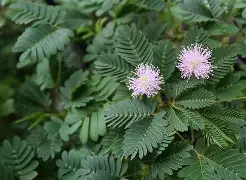
It is a tropical plant with finely divided leaves, small stems, and rounded pink or purple flower heads. The plant is particularly famous for closing its leaves when touched.
Unlike ordinary plants that remain relatively still, Mimosa pudica can react visibly within seconds.
The plant is native to tropical regions of Central and South America and is now cultivated in many warm regions around the world.
Why does the sensitive plant close its leaves?
The movement is a biological response rather than a sign that the plant is dying.
When the leaves are stimulated, specialized structures at the base of the leaflets called pulvini change their water pressure. This causes the leaflets to fold inward.
The sensitive plant also has a daily rhythm in which its leaves fold at night and reopen during the day. Researchers have studied this behavior as an example of plant circadian rhythms.
Important: You don’t need to repeatedly touch your plant to make it move. Frequent stimulation can unnecessarily stress the plant.
Mimosa Sensitive Plant Care Requirements
Successful mimosa sensitive plant care comes down to creating conditions that resemble the plant’s naturally warm environment.
Here are the major requirements:
| Care Requirement | What the Plant Needs |
|---|---|
| Light | Bright light, with sun or partial shade |
| Water | Consistently moist but well-drained soil |
| Soil | Loose, fertile, well-draining mix |
| Temperature | Warm conditions; protect from cold |
| Humidity | Moderate to high humidity |
| Fertilizer | Balanced fertilizer during active growth |
| Pot | Container with drainage holes |
| Pruning | Occasional trimming to control leggy growth |
| Propagation | Mainly from seeds |
1. Give Your Sensitive Plant Plenty of Light
Light is one of the most important parts of mimosa sensitive plant care.
Sensitive plants grow best when they receive plenty of bright light. Depending on your climate, they can tolerate full sun or partial shade. The RHS lists both full sun and partial shade as suitable positions.
For indoor plants, place your Mimosa pudica near a bright window.
An east- or west-facing window can provide useful natural light, while a very bright south-facing window may require some protection during extremely hot periods.
Signs your plant isn’t getting enough light
You may notice:
- Long, weak stems
- Large gaps between leaves
- Slow growth
- Pale foliage
- Reduced flowering
- Leaves remaining closed or appearing less vigorous
If your plant becomes tall and thin, gradually move it toward a brighter location.
Avoid sudden changes
If a plant has been growing in low light, don’t immediately place it under intense midday sunlight.
Increase its exposure gradually to reduce the risk of leaf stress.
2. Watering a Sensitive Plant
Watering is another major part of proper mimosa sensitive plant care.
Mimosa pudica prefers soil that remains consistently moist but not waterlogged. The RHS specifically recommends moist, well-drained growing conditions.
A good approach is to check the soil before watering.
If the upper layer has started to dry, water thoroughly until some water drains from the bottom of the container.
Then empty excess water from the saucer.
Avoid keeping the roots underwater
Although sensitive plants like moisture, constantly saturated soil can reduce oxygen around the roots and increase the risk of root problems.
A pot with drainage holes is therefore essential.
During winter
If your plant is growing indoors and growth slows during cooler months, it may require less water.
Don’t continue watering on a rigid schedule. Instead, check the soil and adjust according to temperature, light, and plant growth.
3. Use Well-Draining Soil
Sensitive plants don’t need heavy, compact soil.
Choose a loose potting mix that holds some moisture while allowing excess water to drain away.
A quality general-purpose potting mix amended with material that improves drainage can work well.
The RHS recommends a loam-based, peat-free growing medium for Mimosa pudica.
A good soil should:
- Drain excess water easily
- Retain moderate moisture
- Allow air around the roots
- Avoid becoming compacted
- Support healthy root development
The container should also have drainage holes.
4. Maintain Warm Temperatures
Mimosa pudica is a tropical plant and does not tolerate cold conditions well.
For indoor cultivation, keep it away from:
- Cold windows
- Air-conditioning vents
- Cold drafts
- Unheated rooms
- Sudden temperature changes
The RHS recommends winter temperatures above approximately 13°C (55°F) under glass, while other horticultural guidance recommends warmer conditions for active growth.
In general, warm and stable conditions are preferable.
5. Provide Adequate Humidity
Humidity can make a significant difference to the appearance of a sensitive plant.
Dry indoor air can contribute to stressed foliage, especially when the plant is also exposed to heat or strong air movement.
You can increase local humidity by:
- Grouping plants together
- Using a humidifier
- Placing the pot near other plants
- Using a suitable humidity tray
However, don’t allow the plant’s pot to sit directly in standing water.
A humid environment combined with poor airflow can also encourage fungal problems, so balance humidity with good ventilation.
6. Fertilizing Mimosa pudica
Sensitive plants generally benefit from feeding during active growth.
A balanced liquid fertilizer can be applied according to the manufacturer’s instructions. The RHS recommends a balanced liquid fertilizer approximately monthly during the growing season.
Avoid the temptation to overfertilize.
Too much fertilizer can damage roots and create excessive soft growth.
A simple feeding schedule is usually better than frequent heavy applications.
7. Pruning Your Sensitive Plant
Mimosa pudica can become somewhat leggy, particularly when grown in insufficient light.
Light pruning can help maintain a more compact appearance.
Remove:
- Dead stems
- Damaged foliage
- Excessively long shoots
- Weak growth
Always use clean pruning tools.
You generally don’t need aggressive pruning. The goal is simply to maintain healthy growth and encourage a more attractive shape.
8. Repotting Mimosa pudica
A sensitive plant may need repotting when its roots begin filling the container.
Signs that repotting may be necessary include:
- Roots emerging from drainage holes
- Water running through the pot unusually quickly
- Stunted growth
- The plant becoming unstable
- The existing soil breaking down
Choose a container only moderately larger than the previous one.
An excessively large pot can retain more moisture than the plant needs, increasing the risk of root problems.
9. How to Grow Sensitive Plant From Seed
One of the easiest ways to propagate Mimosa pudica is from seed.
Kew notes that sensitive plant seeds can be scarified and soaked overnight before sowing.
Basic propagation process
Step 1: Prepare the seeds
Soak seeds in water overnight.
Step 2: Prepare the growing medium
Use a clean, well-draining seed-starting mix.
Step 3: Sow the seeds
Place the seeds on or just beneath the surface according to the requirements of your seed-starting medium.
Step 4: Maintain moisture
Keep the medium moist but avoid making it soggy.
Step 5: Provide warmth
Keep the container in a warm location with bright light.
Step 6: Wait for germination
Once seedlings emerge, continue providing adequate light and moisture.
Step 7: Transplant carefully
When seedlings become established, move them into individual containers if necessary.
Kew reports that its sensitive plant seeds are grown in warm conditions with bright light and moisture.
Why Does My Mimosa Sensitive Plant Keep Closing Its Leaves?
Leaf folding is normally one of the plant’s most interesting natural behaviors.
The leaves may close because of:
- Touch
- Physical disturbance
- Changes in light
- Darkness
- Environmental stress
The nighttime movement is particularly interesting because it follows an internal biological rhythm rather than simply being a reaction to darkness.
Therefore, closed leaves aren’t automatically a sign that your plant is unhealthy.
However, if the leaves remain closed during the daytime and the plant also looks wilted, yellow, or weak, investigate its growing conditions.
Common Sensitive Plant Problems
Yellow Leaves
Yellow leaves can have several causes.
Possible reasons include:
- Too much water
- Poor drainage
- Insufficient light
- Nutrient problems
- Root stress
Check the soil before watering again and make sure excess water can drain freely.
Brown or Crispy Leaves
Brown edges may indicate:
- Underwatering
- Very dry air
- Excessive sunlight
- Heat stress
- Root problems
Look at the plant’s entire environment rather than assuming that one symptom has only one cause.
Leggy Growth
Leggy stems usually indicate that the plant isn’t receiving enough usable light.
Move it toward a brighter location gradually and consider trimming weak, stretched growth.
Leaves Drooping
Drooping can result from either too little or too much water.
Check the soil.
If the soil is very dry, the plant may need water. If it is constantly wet, improve drainage and allow the growing medium to dry slightly before watering again.
Sensitive Plant Pests
Although Mimosa pudica can be relatively easy to grow, pests can still occur.
Common problems include:
- Spider mites
- Thrips
- Mealybugs
Kew specifically identifies red spider mites, thrips, and mealybugs among pests that can affect sensitive plants.
Inspect the undersides of leaves regularly.
Early detection is much easier to manage than a severe infestation.
If you see insects, isolate the affected plant from other houseplants while you identify the pest and choose an appropriate treatment.
How Long Does a Sensitive Plant Live?
One important thing new growers should understand about mimosa sensitive plant care is that Mimosa pudica is not necessarily a long-lived houseplant.
The RHS describes it as a short-lived perennial, while other horticultural sources note that it is often grown as an annual because plants can decline as they age.
Therefore, a mature plant declining doesn’t always mean you have done something wrong.
Growing new plants from seed can be part of the normal cultivation cycle.
Can You Grow a Sensitive Plant Outdoors?
Yes, provided your climate is warm enough.
In tropical and frost-free environments, Mimosa pudica can be grown outdoors. In colder climates, it is generally better treated as a container plant that can be protected from cold weather.
The plant is frost tender, so freezing conditions should be avoided.
In warm climates, also research whether Mimosa pudica is considered invasive or problematic in your particular region before planting it outdoors.
Sensitive Plant Care: Quick Weekly Checklist
Use this simple checklist to keep your plant healthy.
Every few days
- Check the soil moisture
- Inspect the leaves
- Look for pests
- Check that the plant is receiving enough light
Weekly
- Inspect the undersides of leaves
- Remove dead or damaged foliage
- Check drainage
- Rotate the container if growth is becoming one-sided
Monthly during active growth
- Consider balanced liquid fertilizer according to label directions
- Check whether the plant has become root-bound
- Inspect stems and new growth for pests
Frequently Asked Questions About Mimosa Sensitive Plant Care
How much sunlight does Mimosa pudica need?
Sensitive plants prefer bright light and can grow in full sun or partial shade. Indoors, place them in a bright location while protecting them from excessively harsh conditions.
How often should I water a sensitive plant?
There isn’t one universal schedule. Check the soil regularly and water when the growing medium begins to dry while avoiding waterlogged conditions.
Why does my sensitive plant close when I touch it?
Touch triggers a rapid physiological response involving specialized structures called pulvini, causing the leaflets to fold.
Does Mimosa pudica like humidity?
Yes. Because it is a tropical plant, moderate to high humidity generally supports healthy foliage.
Can I grow Mimosa pudica indoors?
Yes. It can be grown as a container plant indoors if it receives sufficient light, warmth, moisture, and humidity.
Does the sensitive plant flower?
Yes. Mature plants can produce small rounded pink or purple flower heads, particularly when growing conditions are favorable.
Is Mimosa pudica the same as Mimosa hostilis?
No. Mimosa pudica and Mimosa hostilis/Mimosa tenuiflora are different species. The word “Mimosa” appears in both names, but they should not be treated as the same plant.