Can Mimosa Bark Fight Aging?
Natural skincare enthusiasts are increasingly interested in botanical ingredients that can support healthy-looking skin. One plant that often attracts attention is Mimosa tenuiflora, commonly known as Mimosa hostilis or tepezcohuite.
Mimosa bark has a long history of traditional topical use, particularly in preparations intended to support damaged or irritated skin. Modern research has also investigated Mimosa tenuiflora extracts in connection with wound healing and skin care.
But can Mimosa bark actually fight aging?
The answer requires some nuance.
There is promising interest in the plant’s natural compounds and traditional dermatological applications, but there isn’t enough clinical evidence to say that Mimosa bark itself is a proven anti-aging treatment that removes wrinkles or reverses biological aging.
Instead, it may be more appropriate to think of Mimosa-based skincare as a botanical addition to a broader skin-supporting routine.
In this guide, we’ll look at what is known about Mimosa bark, how it may fit into skincare, and a simple DIY Mimosa body oil-inspired face serum you can make at home.
Important: This recipe is a cosmetic DIY concept, not a treatment for wrinkles, eczema, burns, infections, or other skin conditions. Always patch-test botanical preparations before facial use.
What Is Mimosa Bark?
Mimosa tenuiflora is a tree native to parts of Mexico and northeastern Brazil and is known by several traditional names, including tepezcohuite.
Its bark has attracted attention because it contains a variety of naturally occurring plant compounds. Researchers have investigated Mimosa extracts for antioxidant activity and topical applications.
Historically, preparations made from the bark have been used traditionally for skin-related purposes.
Why Is Mimosa Bark Interesting for Skin?
One reason Mimosa bark is interesting in natural skincare is its history of topical use.
Research has examined Mimosa tenuiflora preparations in wound-care settings. For example, clinical research involving a Mimosa tenuiflora cortex extract investigated its use in venous leg ulcers, although wound treatment should not be confused with cosmetic anti-aging treatment.
This distinction is important.
A botanical ingredient may have properties that make it interesting for skin research without being scientifically proven to erase wrinkles.
Potential areas of interest include:
- Antioxidant activity
- Skin-supporting botanical compounds
- Traditional topical applications
- Support for healthy-looking skin
- Moisture-focused skincare when combined with suitable carrier oils
These properties make Mimosa an interesting ingredient for people who enjoy botanical skincare.
Can Mimosa Bark Really Reduce Wrinkles?
This is where it’s important to separate traditional use, laboratory research, and clinical evidence.
Wrinkles develop through several processes, including natural collagen changes, reduced skin elasticity, repeated facial movement, dehydration and cumulative UV exposure.
Mimosa bark has not been established as a replacement for clinically studied anti-aging ingredients such as retinoids.
The American Academy of Dermatology recommends daily sun protection and moisturizer as foundational anti-aging measures. It also notes that retinoids can help with fine lines, wrinkles, pigmentation and skin texture.
So, rather than saying:
“Mimosa bark eliminates wrinkles,”
a more scientifically responsible statement is:
“Mimosa bark is an interesting botanical ingredient that may complement a skin-supporting routine.”
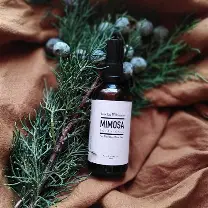
Antioxidants and Skin Aging
Oxidative stress is one of the factors researchers investigate when studying skin aging.
Environmental exposure, including UV radiation and pollution, can contribute to oxidative damage in skin.
This is one reason antioxidants are frequently included in modern skincare formulations.
Mimosa bark contains naturally occurring plant compounds that have been studied for antioxidant-related properties. However, the activity of a laboratory extract doesn’t automatically mean that applying raw bark or homemade bark preparations to your face will produce the same effect.
This is an important consideration when making DIY skincare.
DIY Mimosa Body Oil-Inspired Face Serum
If you’re interested in incorporating Mimosa into a personal skincare routine, an oil-based botanical infusion can be simpler than making a water-based cream.
An oil-based preparation also avoids adding water, which greatly simplifies preservation concerns.
Ingredients
For a small batch:
- 30 ml jojoba oil
- 10 ml rosehip seed oil
- 5 ml squalane
- A very small amount of cosmetic-grade Mimosa bark extract intended for topical use
If you are working with raw Mimosa bark rather than a properly formulated cosmetic extract, I recommend not applying an improvised raw-bark infusion directly to the face. Raw botanical material can vary in composition and cleanliness, and homemade preparations are not standardized.
For a true diy mimosa body oil, a professionally prepared cosmetic Mimosa extract is the safer starting point.
Why These Oils?
Jojoba Oil
Jojoba is commonly used in facial and body skincare because its texture is relatively lightweight and it can help reduce moisture loss from the skin.
Rosehip Seed Oil
Rosehip seed oil is popular in botanical skincare because it contains various fatty acids and naturally occurring compounds associated with skin conditioning.
Squalane
Squalane provides a lightweight, silky feel and can help make an oil serum feel less heavy.
Mimosa Botanical Extract
The Mimosa component is included primarily for its botanical appeal and potential skin-supporting properties.
However, the exact properties depend heavily on the extraction method, concentration and formulation.
How to Make the Serum
Step 1: Clean Your Equipment
Wash and thoroughly dry the mixing container, measuring tools and dropper bottle.
Water contamination can shorten the shelf life of homemade skincare.
Step 2: Add the Carrier Oils
Add the jojoba oil, rosehip seed oil and squalane to a clean glass container.
Step 3: Add Your Cosmetic Mimosa Extract
Follow the supplier’s recommended usage rate.
Don’t assume that more botanical extract means better results. Cosmetic ingredients are normally formulated within specific concentration ranges.
Step 4: Mix Thoroughly
Stir or gently mix the ingredients until they are evenly distributed.
Step 5: Transfer to a Dark Bottle
A dark glass dropper bottle can help limit unnecessary exposure to light.
Step 6: Label the Bottle
Write the ingredients and date of preparation on the bottle.
This is particularly useful when experimenting with homemade skincare.
How to Use Your DIY Serum
Start with 1–2 drops on clean, slightly damp skin.
Gently spread it over:
- Cheeks
- Forehead
- Jawline
- Neck
Avoid getting the serum into your eyes.
For beginners, using the product a few evenings per week is a sensible way to see how your skin responds.
If irritation occurs, stop using it.
The American Academy of Dermatology recommends testing skincare products on a small area before applying them more broadly and stopping products that cause burning or significant irritation.
Don’t Forget Sunscreen
If you’re serious about maintaining youthful-looking skin, this is arguably more important than any DIY botanical serum.
UV exposure is a major contributor to premature skin aging.
Dermatologists recommend broad-spectrum sunscreen with SPF 30 or higher as part of a daily anti-aging routine.
A simple morning routine could therefore look like:
Cleanser → moisturizer → SPF 30+ sunscreen
And your evening routine could be:
Cleanser → Mimosa-inspired serum → moisturizer
If you’re using a clinically proven anti-aging ingredient such as retinoid or retinol, introduce it carefully rather than adding numerous active products simultaneously.
DIY Mimosa Body Oil vs. Face Serum
Although the terms are sometimes used interchangeably online, body oils and facial serums don’t necessarily have the same formulation goals.
A diy mimosa body oil can be designed primarily to soften and condition larger areas of skin.
A face serum generally needs to consider:
- Facial sensitivity
- Pore congestion
- Fragrance
- Ingredient concentration
- Skin type
- Stability
- Irritation potential
For this reason, something suitable for your arms or legs isn’t automatically appropriate for your face.
Can Mimosa Be Used for Dry Skin?
An oil-based Mimosa skincare preparation may help condition dry-feeling skin, particularly because carrier oils can reduce moisture loss.
However, oils don’t replace water-based hydration.
For dry skin, a good routine generally combines a gentle cleanser, moisturizer and appropriate sunscreen.
The American Academy of Dermatology notes that moisturizers trap water in the skin and can temporarily make fine lines appear less noticeable.
Important Safety Considerations
DIY botanical skincare requires caution.
1. Always Patch-Test
Apply a small amount to an inconspicuous area first.
Wait and monitor your skin for redness, itching, swelling or burning.
2. Don’t Apply Raw Bark Powder Directly to Your Face
Raw bark is not the same thing as a standardized cosmetic extract.
Particles can also be abrasive and irritating.
3. Avoid Broken Skin
Don’t apply homemade preparations to open wounds, burns or infected skin.
4. Keep the Recipe Simple
Combining numerous essential oils, acids, retinoids and botanical extracts can increase irritation.
5. Don’t Expect Overnight Results
Healthy-looking skin comes from consistent skincare habits rather than one miracle ingredient.
The AAD specifically warns against exaggerated anti-aging promises and recommends realistic expectations from skincare products.
Who Should Avoid DIY Mimosa Face Products?
Anyone with very sensitive or reactive skin should be particularly cautious with homemade botanical preparations.
You should also speak with a dermatologist before experimenting if you have:
- Persistent facial redness
- Severe acne
- Eczema
- Rosacea
- Open wounds
- An unexplained rash
- Significant skin discoloration
If you’re pregnant, breastfeeding, taking medication or undergoing dermatological treatment, ask your healthcare professional before introducing new botanical products.
How to Build a Better Natural Anti-Aging Routine
You don’t need dozens of products.
A simple routine can be more effective than constantly changing products.
Morning
- Gentle cleanser
- Antioxidant skincare product if appropriate
- Moisturizer
- Broad-spectrum SPF 30+
Evening
- Gentle cleanser
- Mimosa-inspired botanical serum
- Moisturizer
If you want stronger evidence-based wrinkle treatment, discuss retinoids or other clinically studied ingredients with a dermatologist.