How to Spot Authentic Mimosa Hostilis Root Bark (MHRB Quality Guide)
When buying dried botanical material, appearance can tell you a lot—but it should never be the only factor used to judge authenticity. Mimosa Hostilis Root Bark (MHRB) is commonly associated with the botanical name Mimosa tenuiflora, and older literature and commercial sources may use the name Mimosa hostilis.
For anyone purchasing dried MHRB as a botanical material, understanding its natural color, fibrous texture, dryness, cleanliness, and overall appearance can make it easier to recognize material that looks consistent with genuine bark.
This guide explains what to look for, what warning signs to avoid, and why appearance alone cannot provide definitive botanical authentication.
What Is Mimosa Hostilis Root Bark?
Mimosa tenuiflora is a woody plant in the Fabaceae family. The name Mimosa hostilis has historically been used as a synonym for the species in botanical and commercial contexts.
The bark of Mimosa tenuiflora has been the subject of pharmacognostical research examining its morphology, chemical composition, and methods for authenticating genuine plant material.
Researchers have found that botanical authentication can involve macroscopic and microscopic characteristics, chemical analysis, and even molecular methods. This is particularly important because visually similar plant materials can sometimes enter commercial supply chains.
For consumers, however, the first inspection usually begins with something much simpler:
What does the dried bark actually look and feel like?
What Does Authentic MHRB Usually Look Like?
Dried root bark can vary depending on the age of the plant, growing conditions, harvesting practices, drying process, and degree of processing.
Therefore, there is no single color, size, or texture that proves a sample is genuine.
Nevertheless, good-quality dried material should generally have a natural woody and fibrous appearance, rather than looking artificially colored, excessively wet, moldy, or contaminated.
Three characteristics are particularly useful when performing a basic visual inspection:
- Color
- Fibrous inner texture
- Moisture and dryness
Let’s examine each one.
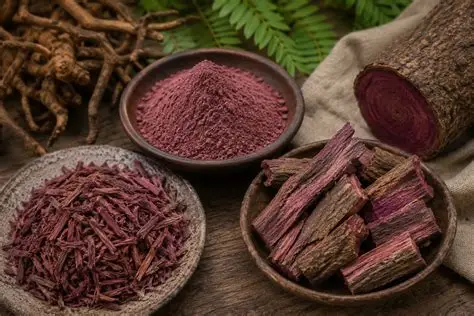
1. Look at the Natural Reddish-Brown Color
One of the first characteristics people notice when examining MHRB is its color.
Dried Mimosa tenuiflora bark can appear in shades ranging from brown and reddish-brown to deeper earthy tones depending on the material and processing conditions.
The interior of bark pieces may show a stronger reddish or reddish-brown coloration than the outer surface.
However, color should be treated as a visual clue rather than a laboratory test.
What you want to see
Quality dried bark should generally have:
- Natural brown to reddish-brown coloration
- Variation between individual pieces
- An earthy, woody appearance
- No obvious artificial dye
- No unusual glossy coating
- No bright or unnatural coloration
Natural botanical material does not necessarily have perfectly uniform color.
In fact, slight variation between pieces can be completely normal.
Be cautious with extremely uniform color
If every piece appears almost identical in color, especially if the color looks unusually bright or artificial, take a closer look.
Color can change naturally because of:
- Plant maturity
- Growing conditions
- Drying
- Exposure to air
- Storage
- Processing
This means that color alone should never be used as proof of authenticity.
2. Examine the Fibrous Inner Texture
The internal structure of bark is another useful visual characteristic.
When dried bark is broken or cut, the interior can display a fibrous, woody structure rather than looking like a completely smooth or synthetic material.
The fibers may run along the length of the bark and create a stringy or layered appearance.
What healthy dried bark can look like
Look for:
- Visible natural fibers
- Woody strands
- Irregular pieces
- Layered internal structure
- A relatively dry and brittle texture
The appearance will depend on how the bark was harvested and processed.
Large pieces may retain more recognizable structure, while shredded material will naturally have smaller fragments.
Once botanical material is finely powdered, many of the visual characteristics that help with identification become much harder to observe.
This is one reason researchers studying botanical authentication use more than simple visual inspection. Scientific work on Mimosa tenuiflora has established morphological characteristics that can assist with authentication and detection of adulterants.
3. Check the Moisture Level
Moisture is one of the most important practical quality considerations when evaluating dried botanical material.
Properly dried bark should feel dry rather than damp, sticky, or unusually soft.
Excess moisture can create problems during storage and can encourage deterioration.
Properly dried material should generally:
- Feel dry to the touch
- Break or snap rather than feel wet
- Have no sticky surface
- Have no visible condensation
- Have no signs of mold
- Have no strong musty odor
A little natural flexibility in larger bark pieces does not automatically mean the material is wet.
The important distinction is between normal woody flexibility and obvious moisture.
4. Check for Mold or Fungal Growth
Mold is one of the clearest reasons to reject dried botanical material.
Inspect the bark carefully for:
- White fuzzy growth
- Green spots
- Black patches
- Unusual gray growth
- Powdery fungal-looking deposits
- Strong musty or rotten odors
Do not assume that an unusual white or pale area is automatically part of the plant.
When in doubt, questionable material should not be used.
Proper drying and storage are important because moisture can significantly affect the quality of dried plant materials.
5. Look for Foreign Material
Another important part of a quality inspection is cleanliness.
Dried bark should not contain excessive amounts of unrelated material such as:
- Soil
- Stones
- Plastic
- Insects
- Leaves from unrelated plants
- Large quantities of wood debris
- Packaging fragments
- Visible mold
A small amount of natural plant debris can occur during harvesting and processing, but excessive contamination suggests poor handling.
A reputable supplier should be able to explain how the material was sourced, processed, packaged, and stored.
6. Examine the Bark’s Overall Structure
Authentic-looking botanical material generally has an irregular natural appearance.
Pieces may differ in:
- Length
- Width
- Thickness
- Color
- Fiber pattern
- Surface texture
This variation is not necessarily a quality problem.
Plants are biological materials, not manufactured products.
A batch in which every piece is exactly the same size and appearance may deserve closer inspection, although uniformity can also result from mechanical processing.
The key is to consider multiple characteristics together rather than relying on one visual feature.
MHRB Color: What Is Normal?
There is no scientifically reliable rule saying that genuine MHRB must have one exact shade of red.
Instead, think in terms of a natural color range.
| Appearance | What It May Indicate |
|---|---|
| Brown | Normal botanical variation |
| Reddish-brown | Common natural appearance |
| Deep brown | Can occur depending on processing/storage |
| Mixed brown and reddish tones | Natural variation may be present |
| Extremely bright/artificial color | Worth investigating |
| Black, wet-looking patches | Possible deterioration |
| Green/white fuzzy growth | Possible mold |
Remember that color does not establish species identity.
Scientific authentication studies of Mimosa tenuiflora have used multiple morphological and chemical characteristics precisely because appearance by itself has limitations.
Why the Inner Fibers Matter
The fibrous nature of bark is particularly useful when examining larger pieces.
Unlike a uniform manufactured powder, natural bark contains structural tissues.
Breaking a piece open may reveal:
- Long fibers
- Woody strands
- Layered material
- Different shades within the same piece
This can help distinguish natural bark material from heavily processed or contaminated material.
However, it still does not provide definitive botanical identification.
For scientific authentication, researchers can examine microscopic morphology and chemical characteristics. Studies have also investigated DNA-based approaches for identifying Mimosa tenuiflora.
How Moisture Affects Dried Bark Quality
Moisture is especially important because dried botanical materials are intended to remain stable during storage.
If bark absorbs moisture from the surrounding environment, several problems can develop.
Excess moisture may contribute to:
- Mold growth
- Unpleasant odors
- Deterioration
- Changes in texture
- Reduced storage stability
- Clumping in processed material
For this reason, dried bark should be kept in appropriate packaging and protected from humid environments.
A good supplier should pay attention to drying and packaging rather than simply placing freshly processed plant material into a container.
What Does Poor-Quality MHRB Look Like?
Poor-quality botanical material can sometimes be identified by obvious physical problems.
Watch for combinations of:
Excessive moisture
Material feels damp, soft, or sticky.
Mold
Visible fungal growth or a strong musty odor.
Excessive contamination
Large amounts of soil, stones, unrelated plant material, insects, or other foreign matter.
Unusual coloration
Artificial-looking colors or unexplained discoloration.
Severe deterioration
Material that looks rotten, unusually dark in patches, or smells strongly unpleasant.
Poor packaging
Packaging that allows moisture, dirt, or environmental contamination to enter.
None of these signs alone can tell you exactly what species the material is, but they can help you identify material that has obvious quality problems.
Can You Identify MHRB by Color Alone?
No.
This is one of the most important points in any MHRB quality guide.
A reddish-brown color may be consistent with the expected appearance of dried Mimosa tenuiflora bark, but it cannot prove that the material is genuine.
Different botanical materials can have similar colors.
Likewise, genuine material can vary in appearance.
Scientific authentication of Mimosa tenuiflora has used morphological characteristics and chemical analysis, while researchers have also investigated molecular methods for species-specific identification.
Therefore:
Color + texture + dryness = useful preliminary inspection
but:
Laboratory authentication = much stronger evidence of identity.
Can You Identify MHRB by Texture Alone?
Again, no.
Fibrous texture is useful because natural bark contains recognizable plant tissues, but texture can vary considerably according to:
- Harvesting
- Drying
- Cutting
- Shredding
- Storage
- Plant maturity
Finely processed material also loses much of its original morphology.
For that reason, a knowledgeable buyer should evaluate the entire presentation of the material rather than expecting one characteristic to provide absolute certainty.
A Simple MHRB Quality Checklist
Before accepting a batch of dried botanical bark, consider the following checklist.
Appearance
☐ Natural brown/reddish-brown coloration
☐ No obvious artificial coloring
☐ Natural variation between pieces
☐ No unexplained dark or wet patches
Texture
☐ Fibrous woody structure
☐ Natural-looking bark fibers
☐ Dry rather than wet or sticky
☐ Appropriate texture for the stated processing level
Cleanliness
☐ No visible mold
☐ No insects
☐ Minimal foreign material
☐ No excessive soil or stones
Smell
☐ Normal earthy/woody botanical odor
☐ No strong rotten smell
☐ No obvious moldy or musty odor
☐ No unusual chemical smell
Supplier information
☐ Botanical name clearly stated
☐ Source information available
☐ Processing information available
☐ Storage information available
☐ Supplier can answer basic quality questions
Why Supplier Transparency Matters
Visual inspection is only one part of evaluating botanical quality.
A trustworthy supplier should be able to provide basic information about the material.
Useful questions include:
- What botanical name is used?
- Is the material whole, shredded, or powdered?
- How was it dried?
- How was it packaged?
- How was it stored?
- How long has it been stored?
- What steps are taken to prevent contamination?
- Is there documentation supporting botanical identity?
These questions are especially important because scientific research has documented the need for quality-control methods for commercial Mimosa tenuiflora plant material and has demonstrated that adulterants can occur in botanical markets.
Whole Bark, Shredded Bark, and Powder
Processing changes how easy it is to visually inspect botanical material.
Whole or larger bark pieces
These retain more natural structural characteristics and are generally easier to visually inspect.
Shredded bark
Shredding reduces the size of individual pieces but can still leave visible fibers and woody structures.
Powder
Powder is much more difficult to authenticate visually because grinding removes many of the macroscopic features that help distinguish plant materials.
This is an important reason why laboratory authentication methods can become particularly valuable for highly processed botanical products.
How to Store Dried MHRB Properly
Even good-quality material can deteriorate if stored poorly.
Dried botanical bark should generally be protected from:
- Humidity
- Direct sunlight
- Excessive heat
- Water exposure
- Contaminated environments
- Poorly sealed packaging
The goal is to maintain a clean, dry, stable storage environment.
If material becomes damp, develops mold, or develops a strong unusual odor, it should not be treated as normal high-quality dried bark.
Authenticity vs. Quality: They Are Not the Same Thing
This distinction is often overlooked.
A sample can look clean and well dried but still require additional testing to establish botanical identity.
Likewise, material could potentially be botanically genuine but have poor quality because of:
- Mold
- Excess moisture
- Contamination
- Poor storage
- Degradation
Think of quality assessment as two separate questions:
Question 1: Is it actually the claimed plant material?
This is an identity/authentication question.
Question 2: Has the material been properly handled and preserved?
This is a quality-control question.
The best suppliers should pay attention to both.
What Laboratory Testing Can Tell You
When high-confidence authentication is required, laboratory methods can provide information that visual inspection cannot.
Scientific studies of Mimosa tenuiflora have investigated:
- Macroscopic morphology
- Microscopic anatomy
- Chemical characteristics
- Chromatographic analysis
- Molecular identification
One pharmacognostical study specifically developed morphological and chemical parameters for authenticating Mimosa tenuiflora bark and detecting adulterants.
This demonstrates an important principle:
A photograph or visual inspection can suggest that material looks consistent with MHRB, but it cannot guarantee its identity.
Common Mistakes When Buying MHRB
Mistake 1: Assuming redder means better
Color variation is natural. A darker or redder sample is not automatically superior.
Mistake 2: Believing one photograph proves authenticity
Photographs can be edited, affected by lighting, or taken from a carefully selected portion of a batch.
Mistake 3: Ignoring moisture
Even material that looks attractive can have storage problems if it has absorbed excessive moisture.
Mistake 4: Buying based only on price
Extremely low prices can sometimes indicate differences in sourcing, processing, packaging, or quality.
Mistake 5: Assuming powder can be authenticated visually
Fine powder contains much less recognizable plant morphology than larger bark pieces.
Mistake 6: Treating appearance as chemical testing
Visual appearance cannot determine the chemical composition or potency of a botanical sample.