How to Identify quality Mimosa Hostilis root bark
Introduction:
Buying dried botanical materials online can sometimes be confusing. Product descriptions may use different names, grades, colors, processing methods, and claims, making it difficult to determine what you are actually purchasing.
Mimosa Hostilis is a commonly used name for Mimosa tenuiflora, a plant native to parts of tropical and subtropical America. Because the species has several scientific and common names, understanding botanical identification is an important first step when evaluating its root bark.
quality Mimosa Hostilis root bark should not be judged by one characteristic alone. Instead, buyers should consider several factors, including correct botanical identification, cleanliness, moisture, processing, packaging, storage, traceability, and supplier transparency.
This guide explains what to look for when evaluating Mimosa Hostilis root bark and how to make a more informed purchasing decision.
What Is Mimosa Hostilis Root Bark?
Mimosa hostilis is a historical scientific name associated with Mimosa tenuiflora (Willd.) Poir.
The species belongs to the Fabaceae family and naturally occurs in parts of Mexico, Central America, northern South America, and Brazil.
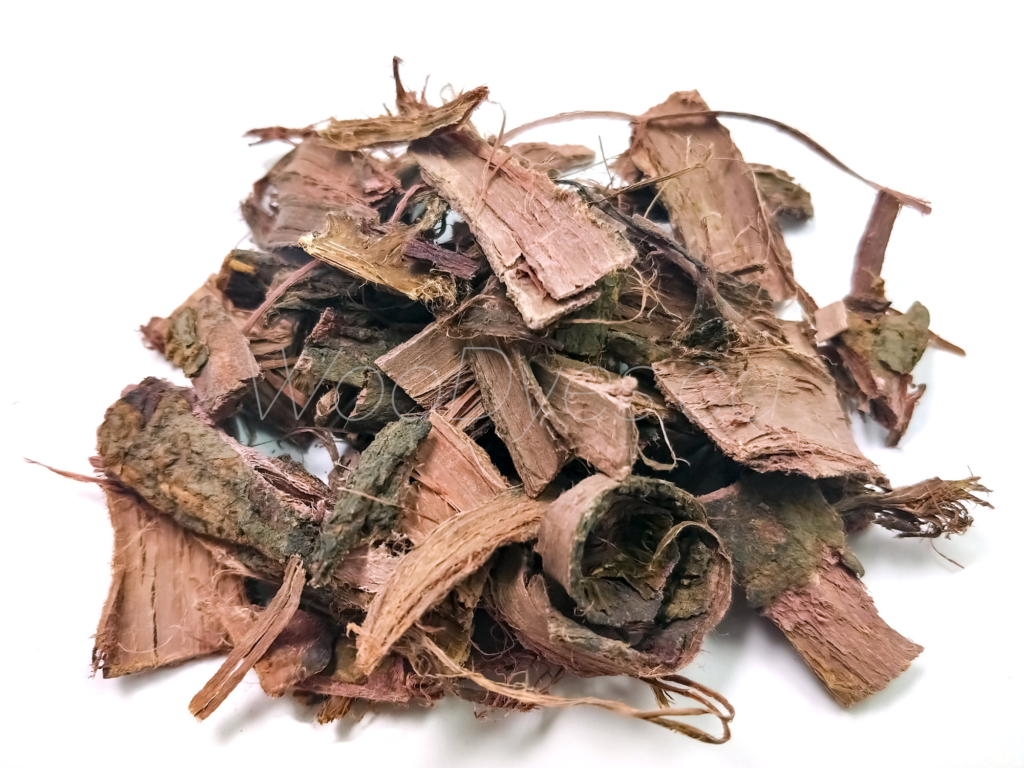
The term “root bark” refers specifically to the bark or outer tissue associated with the plant’s roots. Commercial botanical products may be sold as larger pieces, shredded material, or powder.
Understanding the botanical name is important because common names can sometimes be used inconsistently in the botanical-products market.
Why Does Quality Matter?
Quality matters because dried botanical materials can vary considerably.
Two products may both be advertised under the same common name while differing in:
- Botanical identity
- Geographic origin
- Processing
- Particle size
- Moisture content
- Cleanliness
- Packaging
- Storage conditions
- Age of the material
- Supplier quality controls
A professional evaluation therefore requires looking at the whole product, rather than relying on one visual characteristic.
1. Start With Botanical Identification
The first question to ask is:
Is the material actually identified as the correct plant species?
Look for the scientific name Mimosa tenuiflora and, where relevant, recognition that Mimosa hostilis is a historical synonym.
Scientific names are generally more precise than common names.
A trustworthy supplier should be able to clearly state:
- Scientific name
- Common name
- Plant part
- Country or region of origin, where available
- Form of the material
Why this matters
Correct identification is fundamental to botanical quality.
Research into Mimosa tenuiflora bark has also examined methods for authenticating the material and distinguishing genuine bark from adulterated or substituted material.
2. Check the Plant Part
If a product is advertised specifically as Mimosa Hostilis root bark, the product description should clearly identify the plant part.
Do not automatically assume that:
- Stem bark
- Branch bark
- Leaves
- Roots
- Root bark
are interchangeable.
Different parts of a plant can have different physical and chemical characteristics.
A transparent product description should therefore tell you exactly what part of the plant is being offered.
3. Examine the Physical Appearance
Appearance can provide useful information, but it should not be treated as definitive proof of botanical identity.
Depending on processing and storage, dried root bark may vary in:
- Color
- Particle size
- Texture
- Shape
- Surface appearance
Whole or larger pieces may allow you to inspect the material more easily than finely powdered material.
However, color alone should not be used as a guaranteed quality test.
Natural botanical materials can vary between batches because of differences in plant age, environment, processing, and storage.
4. Look for Clean, Properly Processed Material
Quality botanical material should be reasonably clean and free from obvious foreign matter.
When visually inspecting a product, look for signs such as:
- Excessive dirt
- Stones
- Plastic or packaging fragments
- Unidentified plant material
- Insects
- Unusual debris
- Visible mold
A small amount of natural variation is expected in plant material, but obvious contamination is a reason to contact the supplier before using the product.
5. Moisture Is an Important Quality Factor
Moisture can be a significant concern when storing dried botanical materials.
Excess humidity may contribute to:
- Clumping
- Deterioration
- Unwanted microbial growth
- Changes in appearance
- Reduced shelf stability
Powder can be particularly sensitive to humidity because its larger surface area allows it to interact more readily with the surrounding environment.
A quality supplier should package dried material in a way that protects it from excessive moisture.
6. Check for Signs of Mold or Spoilage
Visible mold should never be ignored.
Warning signs may include:
- Fuzzy growth
- Unusual patches
- Persistent dampness
- Strong musty odor
- Unexpected discoloration
A botanical product showing clear signs of mold or significant spoilage should not be treated as normal variation.
If you suspect contamination, contact the supplier and follow appropriate safety guidance.
7. Consider the Processing Method
Mimosa Hostilis root bark can be offered in several physical forms.
Common descriptions include:
Whole or Larger Pieces
These retain more of the original plant structure.
Shredded Bark
The material has been cut or broken into smaller pieces.
Coarse Powder
The bark has been mechanically reduced into relatively larger particles.
Fine Powder
The material has been processed into smaller particles.
Each form has different handling characteristics.
The processing method should be clearly stated by the supplier.
8. Look at Packaging Quality
Packaging is often overlooked, but it can make a significant difference to the condition of dried plant materials.
Good packaging should help protect the product from:
- Moisture
- Excessive humidity
- Dirt
- Light exposure
- Physical damage
- External contamination
A product that arrives in damaged, damp, or poorly sealed packaging deserves closer inspection.
Packaging should also provide useful information such as:
- Product name
- Botanical name
- Net weight
- Batch information where applicable
- Supplier information
- Storage instructions
9. Ask About Storage Conditions
Even high-quality botanical material can deteriorate if it is stored improperly.
Ideally, dried root bark should be protected from:
- Excess humidity
- Direct sunlight
- Excessive heat
- Water
- Contaminated environments
If you are purchasing from a supplier, consider asking how the material is store before shipment.
[INTERNAL LINK: Link “How to Store Mimosa Hostilis Root Bark Powder” here if you have not already linked it above.]
10. Consider Geographic Origin
Geographic origin can provide useful context.
Mimosa tenuiflora naturally occurs across parts of Mexico, Central America, northern South America, and Brazil.
Different regions can have different:
- Climate
- Soil
- Rainfall
- Temperature
- Seasonal conditions
These environmental differences can contribute to natural variation between plant populations.
However, geographic origin should not automatically be treated as a guarantee of superior quality.
A “Brazilian” label, for example, does not by itself prove that a product is better than material from another region.
11. Climate and Soil Can Influence Natural Variation
Plants are influence by the environments in which they grow.
Factors such as:
- Soil composition
- Rainfall
- Temperature
- Sunlight
- Water availability
- Seasonal drought
can influence plant development.
This is one reason botanical products can naturally differ between batches.
12. Don’t Judge Quality by Color Alone
One of the most common mistakes when evaluating botanical materials is assuming that a specific color automatically means high quality.
Natural plant materials can vary in appearance for many reasons.
Color can be influence by:
- Plant origin
- Plant age
- Drying
- Processing
- Storage
- Oxidation
- Natural chemical variation
Therefore, statements such as “the darker it is, the better it is” should be treated cautiously.
Color is one observation—not a laboratory quality test.
13. Don’t Rely on Smell Alone
Odor can sometimes indicate problems such as moisture or contamination, but smell is not a reliable standalone method for confirming botanical identity or quality.
For example, an unusual musty odor may indicate a storage problem.
However, a particular natural smell should not be presented as definitive proof that a sample is genuine.
For more rigorous authentication, laboratory or botanical identification methods are more reliable than subjective sensory testing.
14. Ask About Testing and Documentation
If a supplier offers laboratory documentation, look at what the documentation actually tests.
Depending on the product and applicable regulations, quality documentation may address issues such as:
- Botanical identity
- Microbial contamination
- Heavy metals
- Pesticide residues
- Moisture
- Other quality parameters
A Certificate of Analysis (COA) can be useful when it is genuine, current, and clearly associated with the relevant batch.
Do not assume that a document labeled “lab tested” automatically means the product has been comprehensively tested.
Look for:
- Laboratory name
- Test date
- Batch or lot number
- Testing methods
- Parameters tested
- Results
15. Look for Supplier Transparency
A reliable botanical supplier should be willing to provide basic information about its products.
Useful information can include:
- Scientific name
- Plant part
- Country of origin
- Product form
- Processing information
- Storage recommendations
- Batch information
- Applicable testing information
Be cautious of websites that make extraordinary claims without providing evidence.
Transparency is generally more useful than marketing language.
16. Check the Product Description Carefully
Before ordering, read the entire product listing.
Look for inconsistencies between:
- Product title
- Product description
- Images
- Scientific name
- Plant part
- Weight
- Country of origin
If the listing says “root bark” in one place and “bark” in another without clarification, contact the supplier.
A clear product description reduces misunderstandings.
17. Compare Suppliers—Not Just Prices
The cheapest product is not necessarily the best value.
When comparing suppliers, consider:
| Factor | Questions to Ask |
|---|---|
| Botanical identity | Is the scientific name provided? |
| Plant part | Is it specifically identified as root bark? |
| Origin | Is geographic origin stated? |
| Processing | Is the form clearly explained? |
| Packaging | Is the material protected from moisture? |
| Testing | Is relevant documentation available? |
| Storage | Are storage conditions explained? |
| Transparency | Does the supplier answer reasonable questions? |
| Reviews | Are reviews consistent and credible? |
This approach gives you a much better basis for comparison than price alone.
18. Understand Natural Batch Variation
No two plants are necessarily identical.
Even plants growing in the same region can experience different conditions throughout their lives.
Variation may result from:
- Genetics
- Climate
- Soil
- Rainfall
- Plant age
- Harvest timing
- Drying
- Processing
- Storage
Therefore, some variation between batches is normal.
A supplier should not necessarily be expected to provide botanical material that looks absolutely identical from one batch to another.
19. Quality Does Not Mean “More Potent”
It is important to distinguish quality from claims about potency or chemical concentration.
A clean, correctly identified, properly stored botanical material may be consider higher quality from a product-integrity perspective.
That does not automatically mean it has a particular chemical concentration or biological effect.
Claims about chemical composition should ideally be supported by appropriate laboratory testing rather than appearance or marketing descriptions.
A Simple Quality Checklist
Before purchasing Mimosa Hostilis root bark, ask yourself:
Botanical Identity
☐ Is Mimosa tenuiflora clearly identify?
Plant Part
☐ Does the listing clearly state “root bark”?
Appearance
☐ Does the material appear reasonably clean?
Moisture
☐ Is there any obvious dampness or clumping?
Contamination
☐ Are there signs of mold, insects, or foreign material?
Processing
☐ Is it whole, shredded, coarse, or powdered?
Origin
☐ Is the stated geographic origin clear?
Packaging
☐ Is the product properly seal?
Documentation
☐ Is relevant testing or batch information available?
Supplier
☐ Does the seller provide transparent product information?
The more of these questions you can answer confidently, the better informed your purchasing decision will be.
What Should You Avoid?
Be cautious when a seller:
- Cannot provide the botanical name
- Cannot identify the plant part
- Makes extraordinary unsupported claims
- Uses only stock images without useful product information
- Provides contradictory descriptions
- Cannot explain basic sourcing information
- Offers laboratory documents that cannot be verified
- Ships material in visibly poor packaging
- Makes guarantees based solely on color or appearance
A professional supplier should be able to explain what the product is and how it has been handle.